Curly Dock Identification Guide
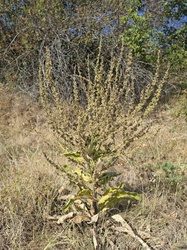
Identify curly dock (Rumex crispus) by its long wavy-curled-edged leaves, papery sheaths at the leaf nodes, and tall rusty-brown seed stalks.
Read the full Curly Dock encyclopedia entry →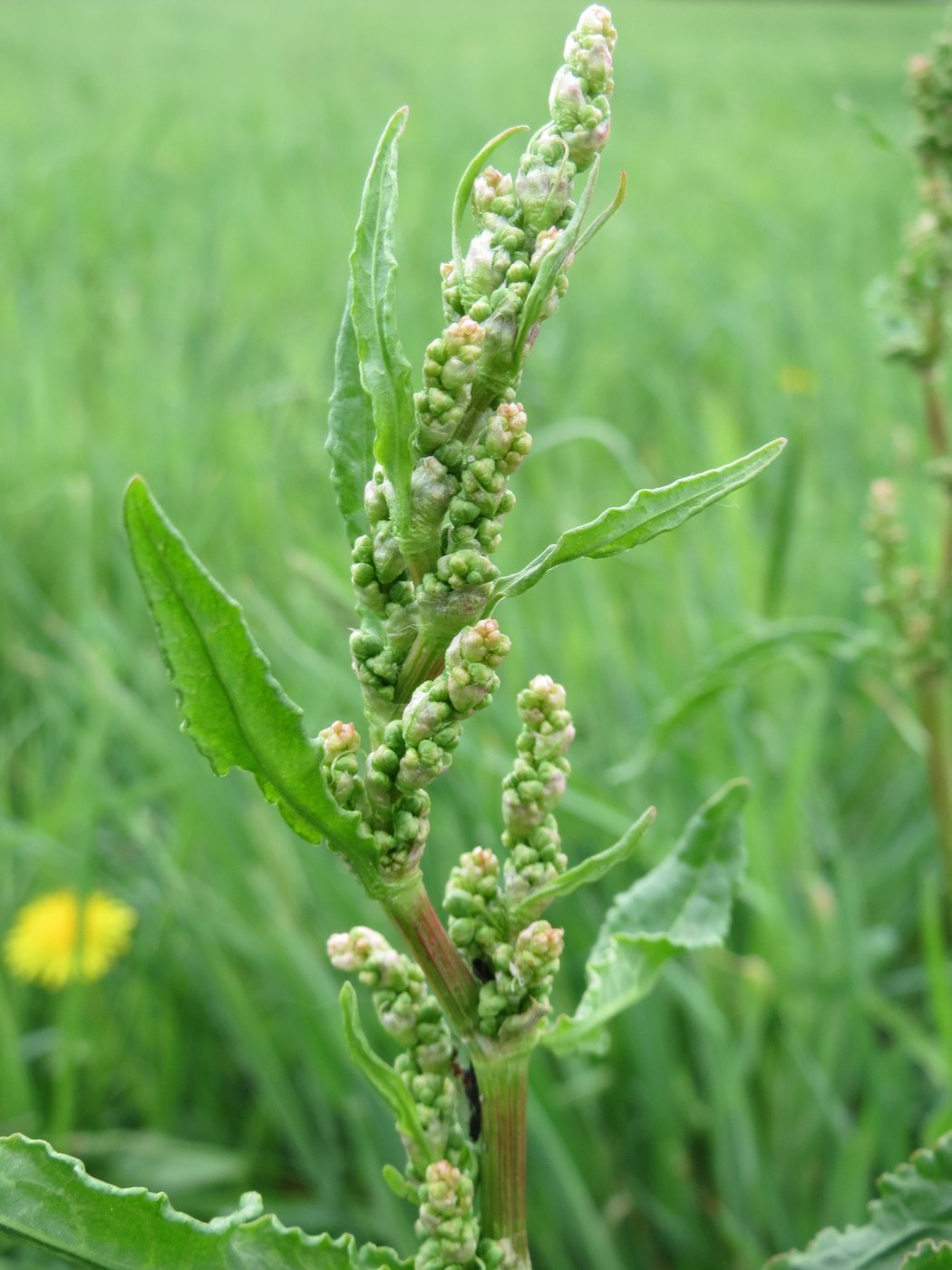
Key Identifying Features
Curly dock (Rumex crispus), also called yellow dock, is a stout perennial broadleaf weed in the buckwheat family. Its name comes from the strongly wavy, curled (crisped) edges of its long leaves. In late summer it is unmistakable thanks to its tall, rusty-brown clusters of papery seeds that persist into winter.
- Long, lance-shaped leaves with distinctly wavy, curled margins
- A papery sheath (ocrea) wrapping the stem at each leaf node
- Tall flower/seed stalks turning rusty reddish-brown
- Stout, deep yellowish taproot
Leaves & Stems
Leaves are long (6-12 inches), narrow, lance-shaped, with crinkled, wavy-curled edges, forming a basal rosette in the first year. The midrib is often reddish. A signature buckwheat-family trait is the ocrea: a thin, papery, translucent sheath that wraps around the stem where each leaf attaches. Stems are erect, ridged, often reddish, unbranched below the flower head, reaching 2-4 feet.
Flowers & Fruit
Flowering occurs in early to mid summer. Tiny greenish flowers are borne in dense, whorled clusters along upright branched stalks. As they mature, they ripen into rusty reddish-brown, papery, three-winged seed structures that cover the upper stalk and persist through winter, turning the plant a distinctive dark brown. Each winged seed has heart-shaped valves; one valve typically bears a swollen tubercle. These rusty seed stalks are visible from a distance and are highly diagnostic.
How to Tell It Apart from Look-Alikes
- Broadleaf dock (Rumex obtusifolius): has much wider, blunter leaves with flat (not curled) edges and toothed seed valves; curly dock leaves are narrow with wavy curled margins.
- Smartweeds (Persicaria): share the papery ocrea but have pink flower spikes and broader, flat leaves.
- Burdock: has huge fuzzy leaves and hooked burs, unrelated.
The wavy-curled narrow leaves + papery ocrea + rusty-brown persistent seed stalks confirm curly dock.
Where You'll Find It
Curly dock grows in disturbed, moist to average soils: roadsides, ditches, pastures, fields, gardens, fence lines, and waste ground across North America, Europe, and worldwide. It tolerates compacted and poorly drained soil and its deep taproot makes it persistent.
Quick ID Checklist
- Perennial, 2-4 feet, with a deep yellow taproot
- Long lance leaves with wavy, curled edges
- Papery sheath (ocrea) at each leaf node
- Tall rusty reddish-brown seed stalks persisting into winter
- Basal rosette in the first year
- Disturbed, often moist ground
Frequently asked questions
How did curly dock get its name?
From the strongly wavy, curled (crisped) edges of its long, narrow leaves, which give the foliage a crinkled appearance that distinguishes it from flat-leaved docks.
What is the easiest way to spot it in late summer?
Look for tall stalks of rusty reddish-brown, papery seeds that persist on the dead stems through fall and winter, often standing out against surrounding green or dry vegetation.
What is the papery sheath on the stem?
It is the ocrea, a thin translucent sheath wrapping the stem at each leaf node. It is a hallmark of the buckwheat family (Polygonaceae) and helps confirm dock.
How do I tell curly dock from broadleaf dock?
Curly dock has narrow leaves with wavy, curled edges, while broadleaf dock has much wider leaves with flat margins and seed valves edged with small teeth.
Curly Dock identified by the community
Recent Curly Dock specimens identified with Plant Identifier.