Cyclamen Identification Guide
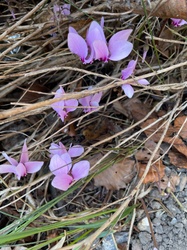
Identify cyclamen by its swept-back, reflexed petals and heart-shaped, silver-marbled leaves rising from a tuber.
Read the full Cyclamen encyclopedia entry →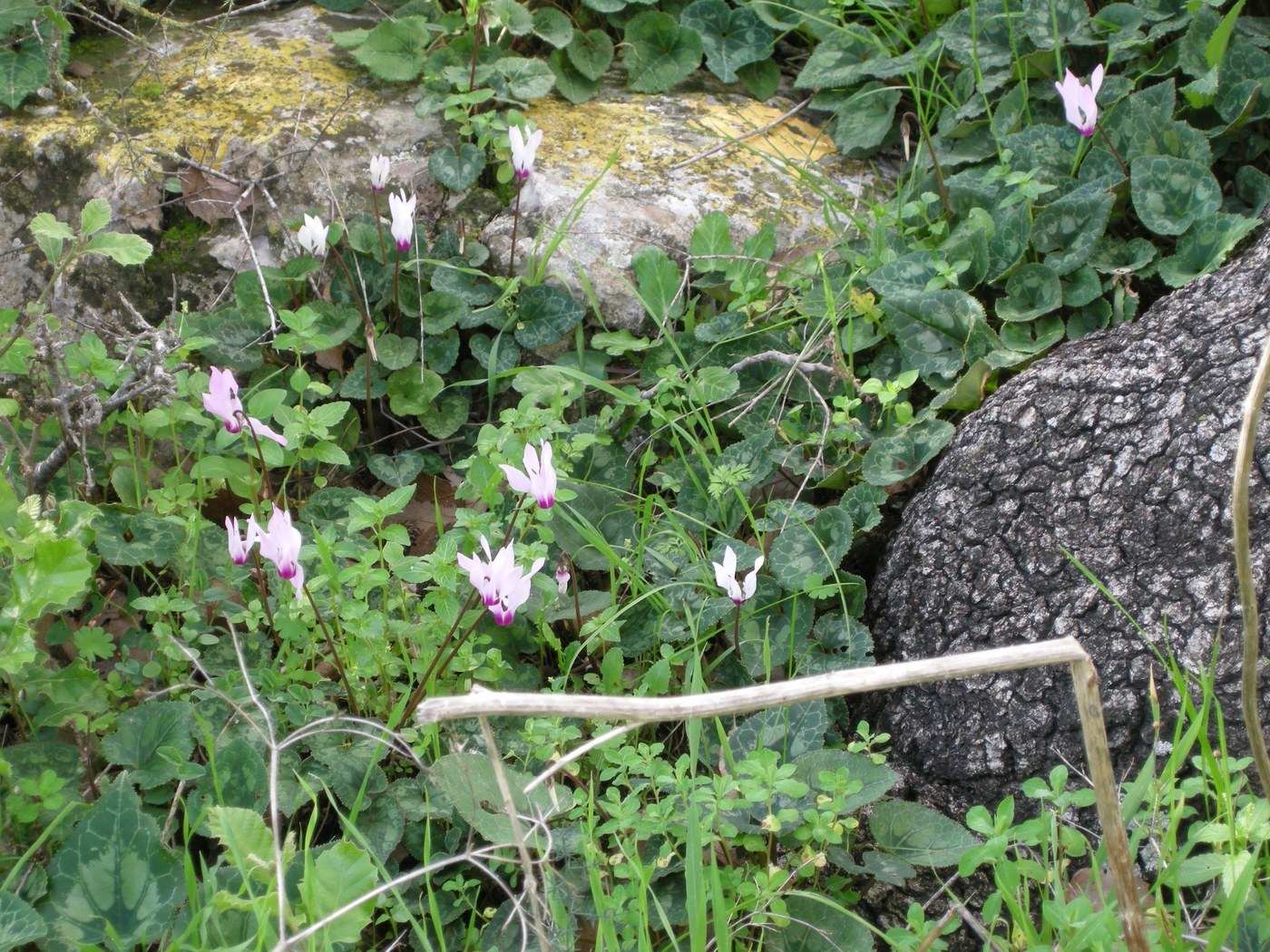
Key Identifying Features
Cyclamen is recognized by its upswept, reflexed flowers — petals that bend sharply backward and upward, giving each bloom the look of a shooting star or shuttlecock. Flowers nod on bare, leafless stalks above a low mound of patterned leaves.
- Reflexed petals that twist back from a downward-facing flower
- Heart- or kidney-shaped leaves, usually with silver-grey marbling
- Flowers held above the foliage on leafless stems
- Grows from a flattened, round tuber (corm)
Leaves & Stems
Leaves are rounded to heart-shaped, often with scalloped or shallowly toothed margins. The upper surface typically shows a silver, grey, or pewter marbled pattern over dark green, while the underside is frequently flushed maroon or purple-red. Leaves and flower stalks both arise directly from the tuber on long, fleshy petioles — there is no upright leafy stem. In some species, flower stalks coil into a spring after flowering to pull seed capsules down to the ground.
Flowers & Fruit
Each solitary flower sits at the top of a slender stalk, hanging downward, with five petals that flip backward. Colors range from white through pink, rose, magenta, and deep red, often with a darker stain at the petal mouth. The florist's Cyclamen persicum is the large-flowered houseplant type; hardy garden species like C. hederifolium and C. coum are smaller. Bloom time depends on species — many flower in autumn or winter, an unusual trait. The fruit is a round capsule on a coiled stalk that releases sticky seeds.
How to Tell It Apart from Look-Alikes
- Shooting star (Dodecatheon): Also has reflexed petals, but its flowers are clustered on a tall single stem and leaves form a flat rosette without silver marbling.
- Alpine violet confusion: Cyclamen is sometimes called "Persian violet" but has no relation to true violets — violets have flat, forward-facing flowers.
- Other tuberous plants: The combination of leafless flower stalks + reflexed petals + marbled heart-shaped leaves is unique to cyclamen.
Where You'll Find It
Florist cyclamen are common indoor pot plants sold in autumn and winter. Hardy species naturalize in woodland, under shrubs, and on shady banks across the Mediterranean, Europe, and Western Asia, growing from tubers that persist for decades. They prefer cool, shaded, well-drained spots and go dormant in summer heat.
Quick ID Checklist
- Petals swept sharply backward (reflexed)
- Nodding flowers on leafless stalks
- Heart-shaped leaves with silver marbling
- Leaf undersides often purple-red
- Grows from a flat round tuber
- Often blooms in autumn or winter
Frequently asked questions
Why do cyclamen petals point upward?
The petals are reflexed — they bend backward and upward from a downward-hanging flower. This shuttlecock or shooting-star shape is the single most reliable way to identify any cyclamen.
Are the silver-marbled leaves always present?
Most cyclamen show silver, grey, or pewter marbling over green, though the pattern varies by species and variety. Combined with the maroon leaf undersides and heart shape, the foliage is a strong confirming feature.
How do I tell a hardy garden cyclamen from a florist cyclamen?
Florist Cyclamen persicum has large flowers and big leaves and isn't frost-hardy. Hardy species like C. hederifolium and C. coum are much smaller, bloom in autumn or late winter, and naturalize outdoors.
What's the unusual bloom timing?
Many cyclamen flower in autumn or winter and go dormant in summer — the reverse of most garden plants. Autumn flowers often appear before the leaves emerge.
Cyclamen identified by the community
Recent Cyclamen specimens identified with Plant Identifier.