Cyclamen
Cyclamen persicum
Cyclamen is a tuberous perennial famous for its swept-back, butterfly-like flowers and heart-shaped, silver-marbled leaves. The florist's cyclamen blooms through the cool months, going dormant in summer heat.
- Light
- Bright indirect light
- Water
- Keep moist while growing; water from below
- Difficulty
- Moderate
Got a plant like this?
Identify any plant from a photo, free.
Overview
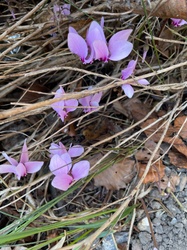
Cyclamen are tuberous perennials in the primrose family, instantly recognizable by their upswept petals that look like tiny shuttlecocks held above patterned foliage. The popular florist's cyclamen, Cyclamen persicum, is sold widely as a winter-flowering houseplant and gift plant.
Unlike most plants, cyclamen are dormant in summer and active in cool weather, flowering from autumn through spring. Hardy species such as C. hederifolium and C. coum are grown outdoors in mild climates for naturalizing under trees.
How to identify it
The reflexed flowers and marbled leaves are key.
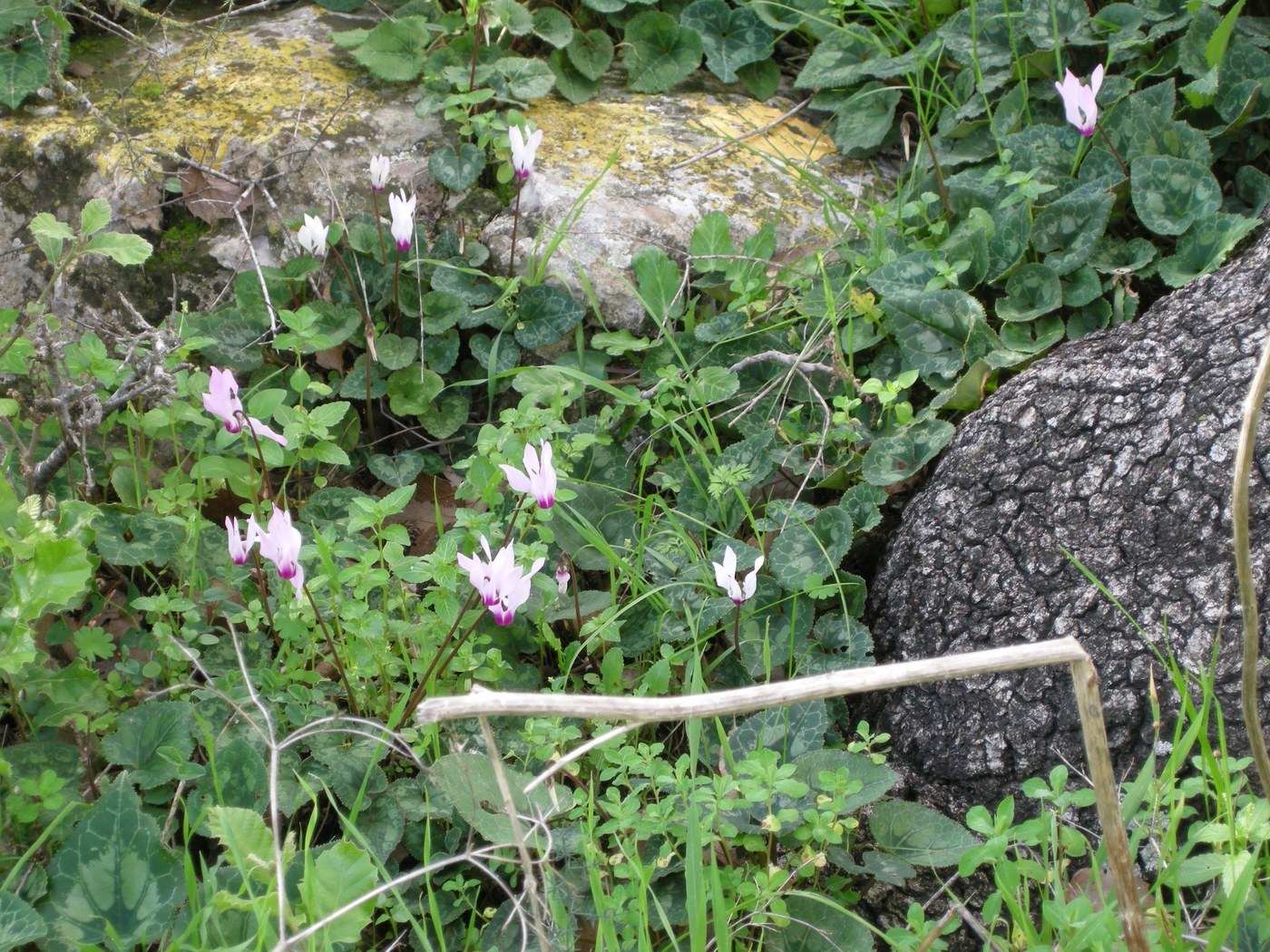
- Flowers: solitary, held above the leaves on slender stems; five petals sharply swept upward and back, in white, pink, red or purple
- Leaves: heart- or kidney-shaped, often beautifully patterned with silver or pewter marbling
- Tuber: flattened, rounded underground storage organ from which leaves and flowers arise
- Size: typically 6-9 inches tall as a houseplant
Care & growing
Cyclamen want cool temperatures and dislike soggy crowns.
- Light: bright, indirect light; avoid hot direct sun
- Water: keep evenly moist during growth, watering from below to keep the tuber crown dry; reduce sharply as leaves yellow
- Soil: light, well-drained, peaty mix; the top of the tuber should sit slightly above soil
- Temperature: thrives at 50-65 F; heat triggers dormancy
- Feeding: dilute low-nitrogen feed every few weeks while in growth
- Dormancy: let it dry off in summer, then resume watering in early fall
- Propagation: from seed; tubers do not divide well
Habitat & origin
Cyclamen persicum is native to rocky hillsides, scrub and woodland of the eastern Mediterranean, including Greece, Turkey, the Levant and parts of North Africa.
Other species range across the Mediterranean basin and into the Caucasus. Hardy types are naturalized in woodland gardens, while the florist's cyclamen is grown worldwide as a seasonal indoor plant.
Frequently asked questions
Why are my cyclamen leaves turning yellow?
Often it's simply entering summer dormancy, which is normal. Yellowing can also signal too much heat or overwatering. Keep it cool and water from below.
How do I water cyclamen without rotting it?
Water from the bottom by setting the pot in a tray, or pour around the rim, keeping the crown of the tuber dry. Let excess drain away.
Is my cyclamen dead after it loses all its leaves?
Usually not. It's going dormant. Keep the tuber barely moist and cool through summer, then resume watering in fall to restart growth.
Cyclamen guides
In-depth guides for identifying, growing, and caring for Cyclamen.
How to Care for Cyclamen
Master cool temperatures, bottom watering, and the summer dormancy of Cyclamen persicum for months of upswept blooms in this full care guide.
Cyclamen Identification Guide
Identify cyclamen by its swept-back, reflexed petals and heart-shaped, silver-marbled leaves rising from a tuber.
Cyclamen identified by the community
Real specimens identified with Plant Identifier.