
How to Care for Cypress Vine
Grow cypress vine (Ipomoea quamoclit), a delicate annual climber with ferny foliage and star-shaped scarlet flowers that thrive in full sun.
Read the full Cypress Vine encyclopedia entry →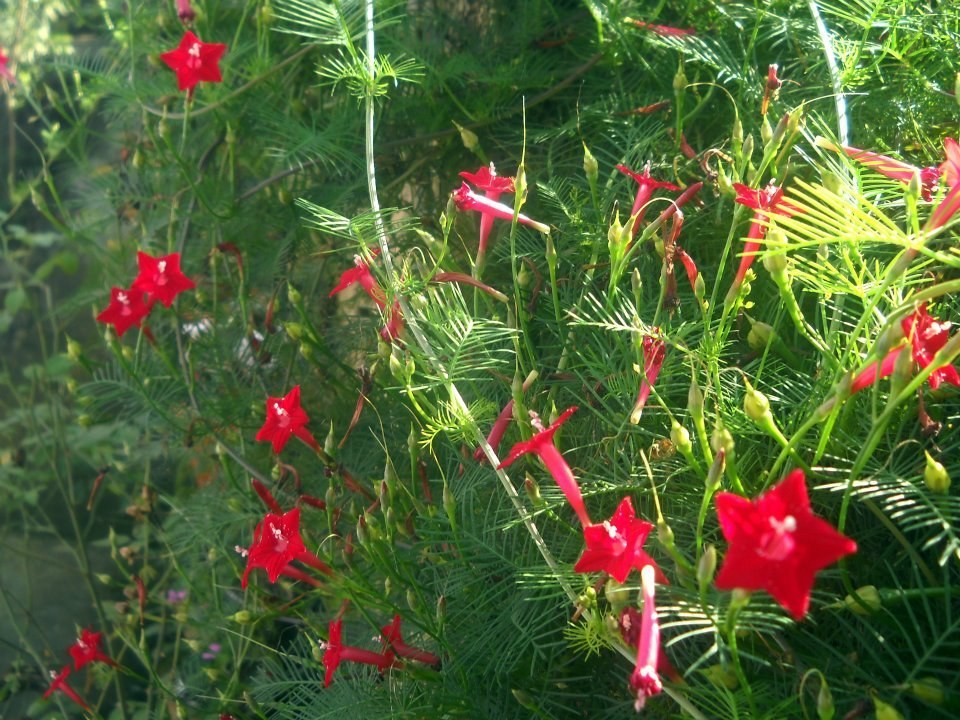
Cypress vine (Ipomoea quamoclit) is a fast, twining annual climber prized for its lacy, fern-like foliage and small, five-pointed star flowers in vivid scarlet (occasionally white or pink). Easy and quick from seed, it clothes trellises and fences in a season and is a magnet for hummingbirds.
Light
Grow in full sun. Cypress vine needs strong, direct light, ideally 6-8 hours a day, to climb vigorously and flower well. In shade it produces lush foliage but few blooms and grows thin and reluctant.
Water
Water moderately. Keep the soil evenly moist while young plants establish and climb, but the vine tolerates some dryness once rooted. Let the top inch or two of soil dry between waterings. Avoid waterlogged ground; consistent light moisture in summer heat keeps it flowering.
Soil & Potting
Not fussy. Average, well-drained garden soil suits it well, and lean soil actually encourages flowering over excessive leaf growth. Provide a support to twine on at planting time. In containers use a standard well-draining potting mix and a tall trellis, obelisk or strings to climb.
Humidity & Temperature
A warm-season, frost-tender tropical annual. It loves heat and humidity and races into growth once nights are warm. Do not plant out until all danger of frost is past and the soil has warmed; cold checks it badly and frost kills it outright at season's end.
Feeding
Feed sparingly. Rich or high-nitrogen feeding produces a jungle of foliage and few flowers. A lean soil or at most a light feeding of a bloom-oriented (higher phosphorus) fertilizer keeps it flowering. In most gardens no feeding is needed.
Propagation
Propagate by seed, which is quick and reliable. The seed coat is hard, so nick it lightly or soak it overnight before sowing to speed germination. Sow after frost where it is to grow, or start indoors a few weeks early in peat pots to protect the sensitive roots. It self-seeds readily and often returns on its own.
Repotting / Pruning
As an annual it needs no repotting. It resents root disturbance, so transplant seedlings carefully and early. Pruning is optional: pinch young tips to encourage branching, and trim or redirect stems to keep the vine within bounds, as it can scramble 10-20 feet in a warm season.
Common Problems & Pests
Easy and largely trouble-free. Watch for aphids and spider mites, especially on stressed or crowded plants in hot, dry conditions; a spray of water or insecticidal soap handles them. Few flowers usually means too little sun or too much nitrogen. Its main drawback is vigorous self-seeding, which can become weedy in mild climates.
Seasonal Care Tips
Sow after the last frost into warm soil. Provide support immediately. Keep it watered through summer for continuous bloom from midsummer to fall. Deadheading isn't essential but reducing spent seed pods limits self-sowing. Frost ends the plant; pull the spent vine and expect volunteers next spring.
Frequently asked questions
Why won't my cypress vine flower?
Almost always too much shade or too much nitrogen. Give it full sun and lean soil; rich feeding produces ferny foliage but few of the star-shaped blooms.
How do I get cypress vine seeds to germinate?
The seed coat is hard, so nick it with a file or soak the seeds overnight before sowing into warm soil after the last frost.
How big does cypress vine get?
In a warm season it commonly twines 10-20 feet, so give it a sturdy trellis, fence or strings to climb and trim to keep it in bounds.
Will cypress vine come back every year?
It's a frost-tender annual that dies each winter, but it self-seeds freely and often reappears from dropped seed the following spring.