Cypress Vine
Ipomoea quamoclit
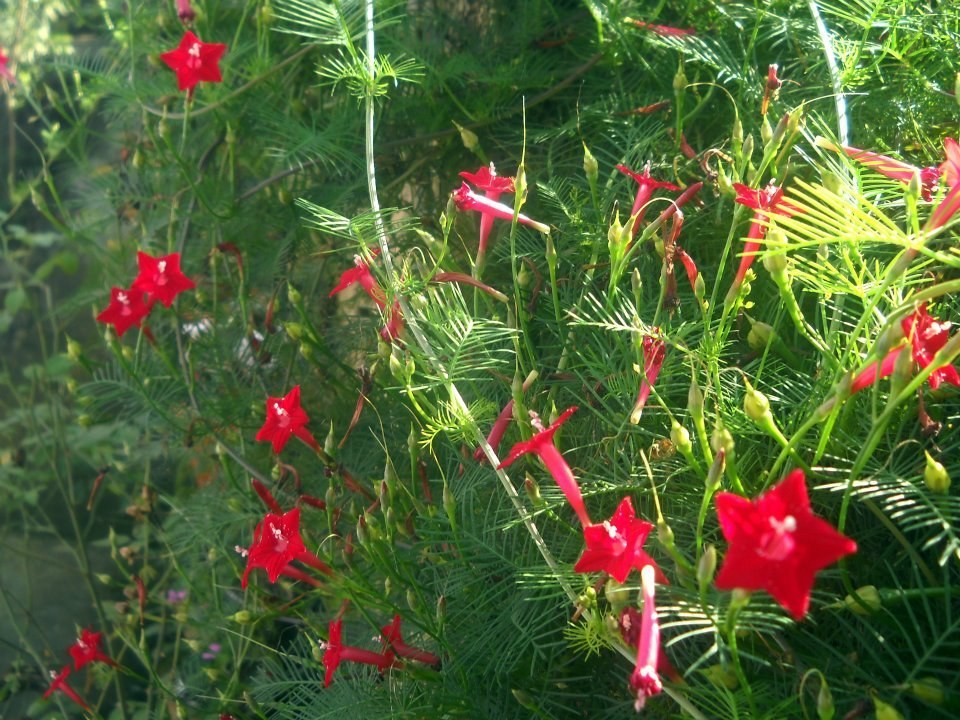
A delicate, fast-growing morning-glory relative with lacy, fern-like foliage and small star-shaped red, pink or white flowers that hummingbirds love. It quickly climbs trellises and fences with feathery, airy growth.
- Light
- Full sun
- Water
- Moderate; tolerates some dryness
- Difficulty
- Easy
Got a plant like this?
Identify any plant from a photo, free.
Overview
Cypress vine is a tender annual vine grown for its feathery, finely divided foliage and bright, star-shaped flowers. The delicate, fern-like leaves give it a soft, lacy appearance unusual among climbing vines.
The small scarlet (or pink and white) blooms are rich in nectar and especially attractive to hummingbirds and butterflies. It climbs rapidly and self-sows, making it a reliable, easy summer screen.
How to identify it
- Slender twining vine climbing 6-15 ft (2-4.5 m) in a season
- Leaves are deeply cut into very fine, thread-like segments, giving a fern- or feather-like look
- Flowers are small, five-pointed stars about 1-1.5 in across, usually scarlet-red, also pink and white
- Trumpet-throated blooms face outward along the stems
- The lacy foliage clearly distinguishes it from other morning glories
Care & growing
- Light: Full sun
- Water: Moderate; tolerates some dryness once established
- Soil: Average, well-drained soil; not fussy
- Temperature: Heat-loving and frost-tender
- Feeding: Minimal; rich soil promotes leaves over flowers
- Propagation: From seed, soaked or nicked to aid germination; self-sows readily and can spread
Provide a trellis, string or fence to climb. Where it self-sows freely, pull unwanted seedlings to keep it in bounds.
Habitat & origin
Native to the tropical Americas, cypress vine has naturalized across warm regions of the southern United States, Asia and elsewhere.
Grown as an ornamental annual vine on trellises, fences and arbors, and valued in wildlife and hummingbird gardens.
Frequently asked questions
What makes cypress vine different from other morning glories?
Its very finely divided, fern-like foliage and small star-shaped flowers set it apart from the broad-leaved, large-flowered morning glories.
Does cypress vine attract hummingbirds?
Yes, the nectar-rich red star flowers are a strong magnet for hummingbirds as well as butterflies.
Will cypress vine come back every year?
It is grown as an annual but self-sows so freely that it often reappears from dropped seed in warm climates.
Is cypress vine invasive?
It can self-seed aggressively and naturalize in warm regions, so remove unwanted seedlings to keep it under control.
Cypress Vine guides
In-depth guides for identifying, growing, and caring for Cypress Vine.
How to Care for Cypress Vine
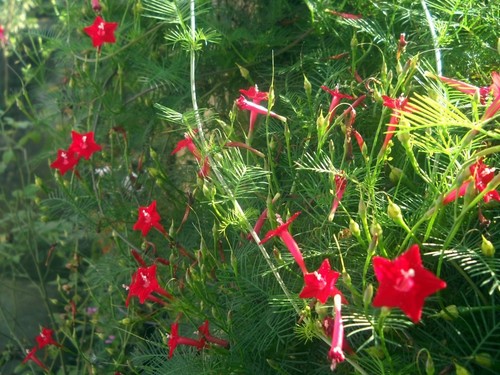
Grow cypress vine (Ipomoea quamoclit), a delicate annual climber with ferny foliage and star-shaped scarlet flowers that thrive in full sun.
Cypress Vine Identification Guide
Identify cypress vine (Ipomoea quamoclit) by its delicate, feathery, fern-like foliage and small star-shaped red trumpet flowers on a slender twining vine.