Dahlia Identification Guide
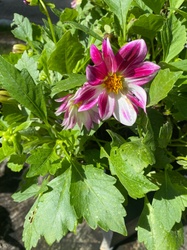
Identify dahlias by their large symmetrical flower heads in many forms, compound toothed leaves, hollow stems, and tuberous roots.
Read the full Dahlia encyclopedia entry →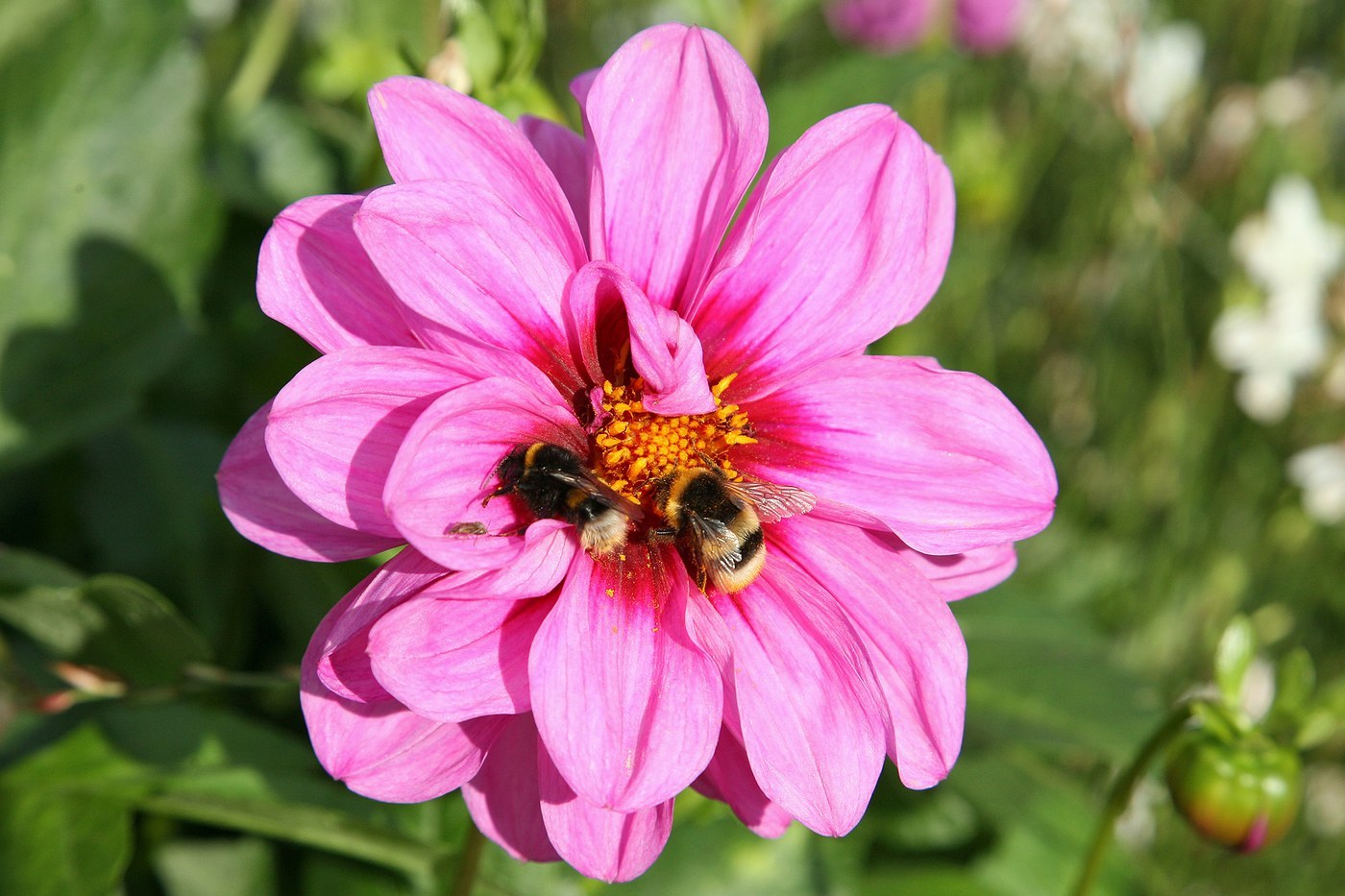
Key Identifying Features
Dahlias (Dahlia species and hybrids) are tuberous aster-family perennials grown for showy summer-to-fall blooms. Identify them by:
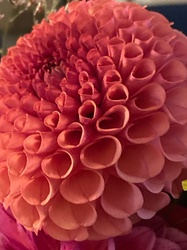
- Large, often perfectly symmetrical flower heads in a huge range of forms and sizes (from 5 cm pompons to 30 cm 'dinner plate' blooms)
- Compound (pinnately divided) leaves with broad, toothed, often glossy leaflets
- Smooth, often hollow stems that are stout and sometimes purplish
- Growth from clusters of fleshy underground tubers
- A central disk visible in single types but hidden by petals in fully double forms
Leaves & Stems
Dahlia leaves are opposite, pinnately compound (sometimes twice-divided), with ovate, pointed, coarsely toothed leaflets that are smooth and often deep green or bronze-tinged. The stems are stout, smooth, and hollow, branching to support multiple flower stalks, and can reach 0.5-2 m tall in tall bedding and exhibition types. Below ground, dahlias form swollen finger-like tubers clustered around the stem base, the structure used to overwinter and propagate them.
Flowers & Fruit
The composite flower head is the showpiece and the basis of dahlia classification. Forms include single (one row of ray florets around an open disk), decorative, ball, pompon, cactus, semi-cactus, waterlily, anemone, and collarette types, differing in how the ray florets are rolled, flattened, or arranged. Colors cover the spectrum except true blue, frequently bicolored or tipped. Each head sits within two rows of green bracts (a leafy outer set and a cup-like inner set), a helpful family detail. Bloom runs midsummer until frost. Fertile florets produce small dry achenes, but dahlias are usually grown from tubers or cuttings.
How to Tell It Apart from Look-Alikes
- Chrysanthemums have lobed, aromatic single leaves (not compound) and bloom in autumn; dahlias have compound smooth leaves and hollow stems.
- Zinnias have simple, opposite, sandpapery leaves on solid stems and lack tubers.
- Asters and cosmos have much finer or simpler foliage and smaller flowers.
- The dahlia signature is large symmetrical multiform flower heads above compound toothed leaves on hollow stems, arising from tubers.
Where You'll Find It
Dahlias are cultivated in gardens, cutting beds, and exhibition plots worldwide, with tubers lifted and stored over winter in cold climates. Native to Mexico and Central America, they thrive in full sun and rich, well-drained, moist soil.
Quick ID Checklist
- Large, symmetrical flower heads in many forms
- Compound, toothed, often glossy leaves
- Stout, smooth, hollow stems
- Two rows of green bracts beneath each head
- Fleshy underground tubers
- Blooms midsummer to frost
A tuberous plant with hollow stems, compound toothed leaves, and big symmetrical multiform flower heads is a dahlia.
Frequently asked questions
How do I tell a dahlia from a chrysanthemum?
Dahlias have smooth, compound (divided) leaves and hollow stems and grow from tubers, while chrysanthemums have lobed, aromatic single leaves and bloom in autumn. Dahlia foliage is not aromatic.
Why are there so many different dahlia flower shapes?
Dahlias are classified into forms such as single, decorative, ball, pompon, cactus, and collarette based on how the ray florets are arranged and rolled, all within the same genus.
Do dahlias grow from bulbs?
No, they grow from tuberous roots, which are fleshy finger-like storage structures clustered at the stem base. In cold climates these tubers are dug up and stored over winter.
What is the largest a dahlia flower can get?
Exhibition 'dinner plate' dahlias can produce flower heads 25-30 cm (10-12 inches) or more across, while pompon and ball types may be only a few centimeters wide.
Dahlia identified by the community
Recent Dahlia specimens identified with Plant Identifier.