
Daisy Identification Guide
Identify the classic daisy by its white ray petals around a yellow central disk, low rosette of toothed leaves, and single flower heads on slender stems.
Read the full Daisy encyclopedia entry →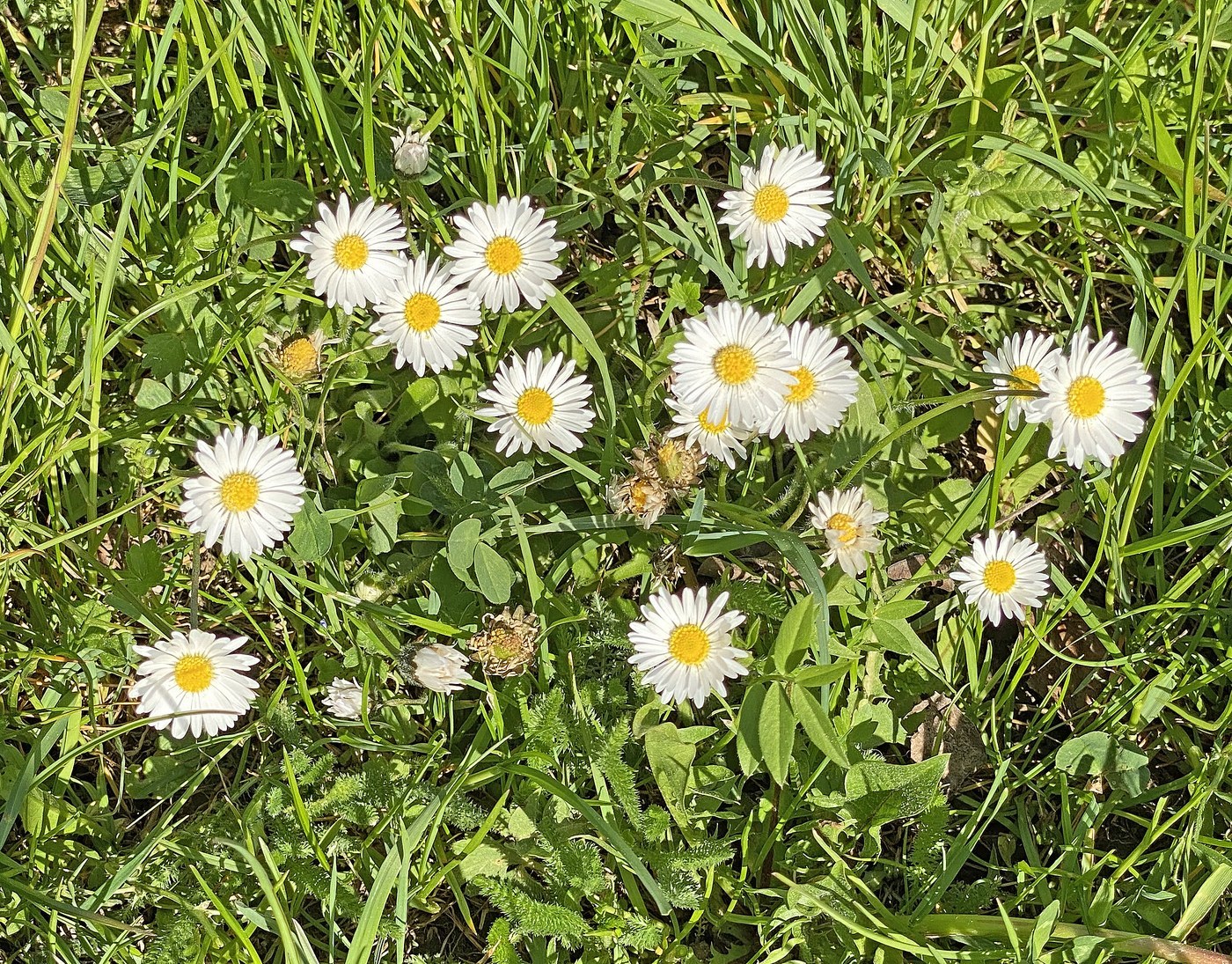
Key Identifying Features
The classic daisy (the common daisy Bellis perennis and the oxeye daisy Leucanthemum vulgare) belongs to the aster family. Identify a daisy by:
- A flower head with white ray florets ('petals') around a flat yellow central disk
- The 'flower' is actually a composite of many tiny florets, not a single bloom
- A basal rosette of leaves with the flower held on a leafless or near-leafless stalk
- Heads that often close at night and open in daylight (the name means 'day's eye')
- A low-growing, spreading habit in lawns and meadows
Leaves & Stems
The common lawn daisy has small spoon-shaped leaves in a tight ground rosette, with slightly toothed or scalloped edges. The taller oxeye daisy has lobed or coarsely toothed leaves that are larger at the base and become smaller and stalkless up the stem. Flower stems are slender, often unbranched and leafless (a scape) in the lawn daisy, while oxeye stems are wiry and 30-90 cm tall. Foliage is mostly smooth or sparsely hairy.
Flowers & Fruit
Each head sits within a ring of green bracts (involucre) and combines two florets types: the outer white strap-shaped ray florets and the inner tiny yellow tubular disk florets that form the button center. Ray tips are sometimes pink-flushed underneath in the common daisy. Bloom season is long, from spring through autumn. After flowering, the disk produces small dry one-seeded achenes, lacking the parachute pappus seen in dandelions. The day-opening, night-closing rhythm is characteristic.
How to Tell It Apart from Look-Alikes
- Asters and fleabanes have very numerous, thinner ray florets, often in blue, purple, or pink.
- Chamomile has feathery, finely dissected leaves and a more domed center, unlike the flat daisy disk.
- Dandelions are all yellow with no central disk, have toothed basal leaves and milky sap, and form fluffy seed heads.
- The daisy signature is the flat white-rays-around-yellow-disk head over a basal leaf rosette.
Where You'll Find It
Lawn daisies carpet mown grass, lawns, and short turf, while oxeye daisies fill meadows, roadsides, pastures, and disturbed ground. Both are native to Europe and widely naturalized across temperate regions, thriving in full sun to light shade.
Quick ID Checklist
- White ray 'petals' around a flat yellow disk
- Head is a composite of many tiny florets
- Basal rosette of toothed or lobed leaves
- Flower on a slender, mostly leafless stalk
- Heads open by day, close at night
- Seeds are small dry achenes without fluff
A simple flat flower of white rays circling a yellow button, rising from a leafy rosette, is the textbook daisy.
Frequently asked questions
Is a daisy one flower or many?
It is a composite head of many tiny flowers. The white 'petals' are individual ray florets and the yellow center is packed with tiny disk florets, all working together as one display.
How do I tell a daisy from chamomile?
Daisies have flat, simple to lobed leaves and a flat yellow disk, while chamomile has finely dissected, feathery leaves and a more raised, domed center. Chamomile also smells apple-like when crushed.
Why do daisies close at night?
Daisy heads track daily light, opening in sunlight and folding their rays closed in darkness or cold. This behavior gave the plant its name, from 'day's eye.'
What's the difference between a lawn daisy and an oxeye daisy?
The lawn daisy (Bellis perennis) is small with a ground-hugging rosette, while the oxeye daisy (Leucanthemum vulgare) is taller with larger heads and leafy wiry stems found in meadows.