Daisy
Bellis perennis
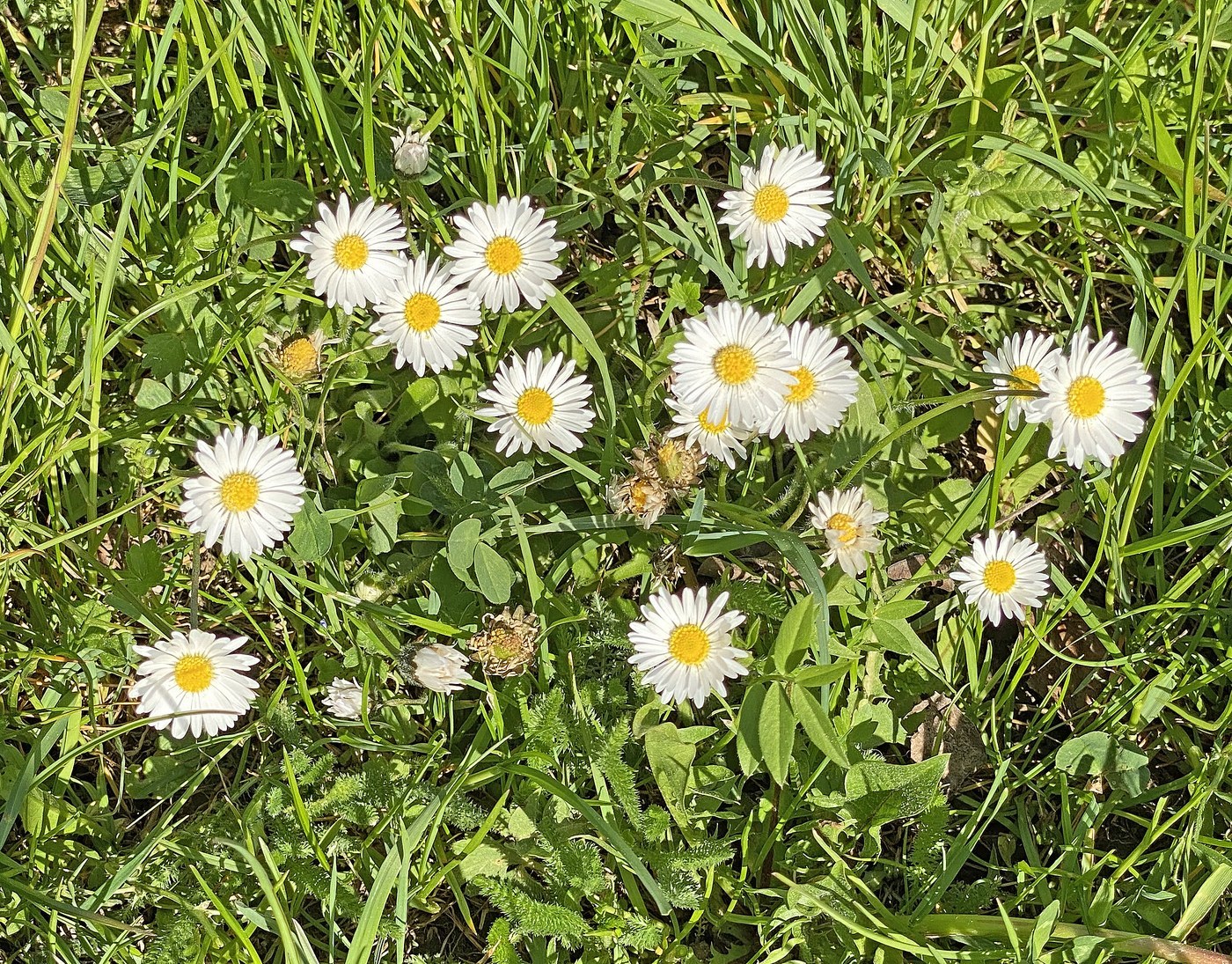
The classic low-growing daisy with white petals and a yellow center, often seen dotting lawns and meadows. Cheerful, hardy, and easy to grow.
- Light
- Full sun to part shade
- Water
- Regular; keep soil moist
- Difficulty
- Easy
Got a plant like this?
Identify any plant from a photo, free.
Overview
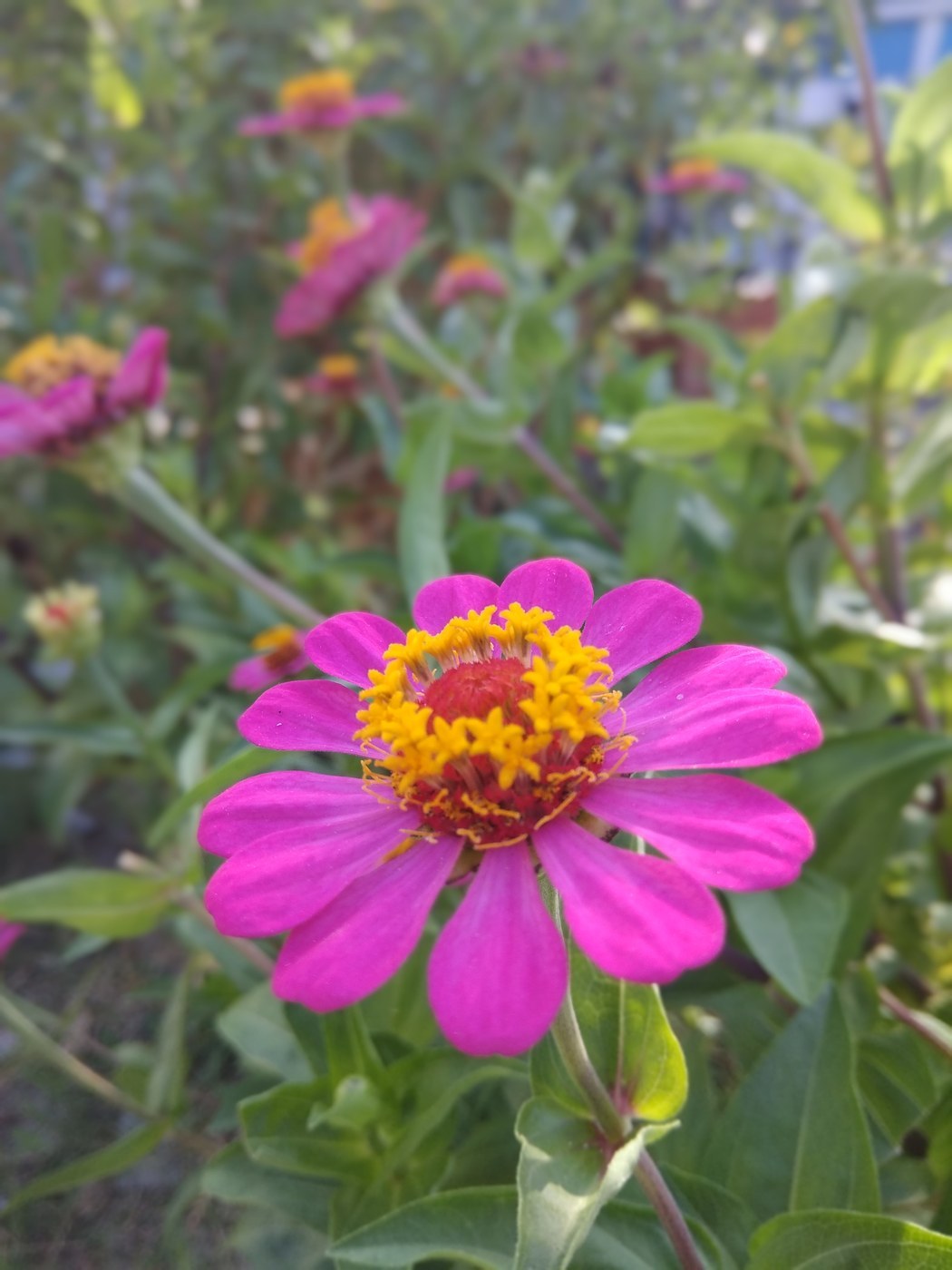
The common or English daisy is a small, cheerful perennial that forms low rosettes studded with the archetypal daisy flower: a ring of white (sometimes pink-tipped) petals around a sunny yellow disk.
Familiar as a lawn wildflower across Europe, it is also grown in cultivated forms with larger, fuller, more colorful blooms for bedding and edging.
The word "daisy" is sometimes used loosely for many daisy-family flowers, but Bellis perennis is the original "day's eye" that opens with the sun.
How to identify it
Recognize the common daisy by:
- Flowers: Small composite heads with white ray petals (often pink-tipped beneath) surrounding a yellow central disk.
- Leaves: Spoon-shaped leaves forming a flat basal rosette at ground level.
- Habit: Low-growing, usually under 6 inches, spreading to form patches.
- Stems: Leafless flower stalks rising single-headed from the rosette.
- Behavior: Flowers close at night and in dull weather, reopening with sunlight.
Care & growing
Common daisies are undemanding and tough.
- Light: Full sun to partial shade; more sun yields more flowers.
- Water: Keep soil reliably moist; they dislike prolonged drought.
- Soil: Adaptable to most soils as long as drainage is reasonable.
- Temperature: Cool-season favorite; flowers best in spring and fall and can struggle in extreme heat.
- Feeding: Light feeding supports continuous bloom.
- Propagation: Grows readily from seed and self-sows; clumps can be divided.
Habitat & origin
Bellis perennis is native to Europe and western Asia, where it grows abundantly in lawns, meadows, pastures, and grassy verges.
Hardy and adaptable, it has naturalized in many temperate parts of the world, including North America and Australia. Cultivated daisy varieties are popular as spring bedding and container plants.
Frequently asked questions
Are common daisies weeds?
In lawns they are often considered weeds, but they are harmless wildflowers and many gardeners welcome or even cultivate them for their cheer.
Do daisies close at night?
Yes. The common daisy closes its petals at night and on overcast days, then reopens in sunlight, which inspired its old name meaning day's eye.
Are daisies perennial?
The common daisy is a hardy perennial, though some cultivated bedding forms are grown as biennials or short-lived plants.
How do I tell the common daisy from similar flowers?
Look for the low basal rosette of spoon-shaped leaves and single-headed leafless stalks bearing white, often pink-backed, ray petals around a yellow disk.
Daisy guides
In-depth guides for identifying, growing, and caring for Daisy.
How to Care for Daisy
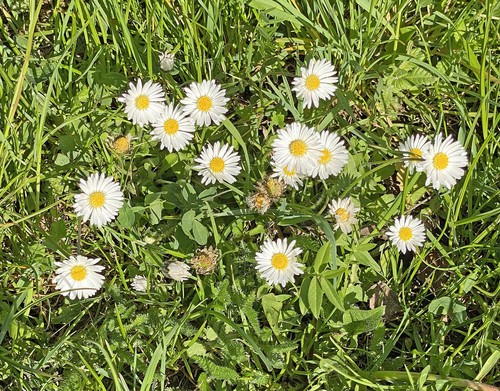
Grow classic Daisy (Bellis perennis) with sun to part shade, steady moisture, and regular deadheading for cheerful spring blooms.
Daisy Identification Guide
Identify the classic daisy by its white ray petals around a yellow central disk, low rosette of toothed leaves, and single flower heads on slender stems.