Dawn Redwood Identification Guide
Identify dawn redwood by its opposite, feather-like deciduous needles, fluted buttressed trunk, and shaggy reddish bark. Covers needles, cones, the bald cypress look-alike, and habitat.
Read the full Dawn Redwood encyclopedia entry →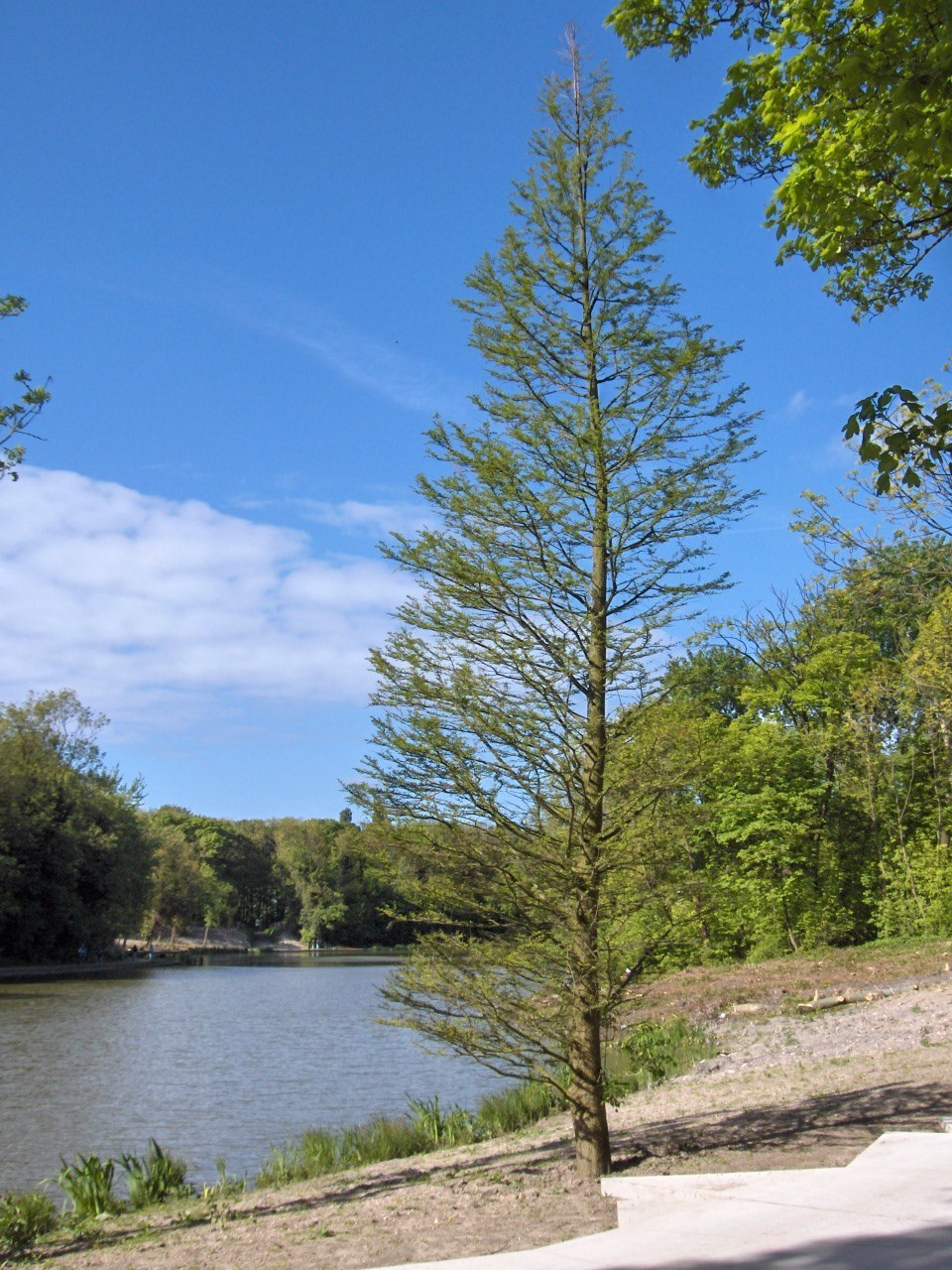
Key Identifying Features
Dawn redwood (Metasequoia glyptostroboides) is a 'living fossil' conifer, known only from fossils until living trees were discovered in China in the 1940s. Unusually for a conifer, it is deciduous, dropping its soft, feathery needles each fall. Recognize it by its opposite needle arrangement, conical form, fluted buttressed trunk, and shaggy orange-brown bark. It grows fast to 70-100 feet.
Needles & Branchlets
- Needles are soft, flat, linear, about a half to one inch long, bright green turning russet-bronze to coppery red in fall before dropping.
- They are arranged in opposite pairs along the twig and spread in two flat ranks, making feathery, fern-like sprays.
- Crucially, the small side branchlets are also opposite, and the entire deciduous branchlet is shed whole in autumn.
Trunk & Bark
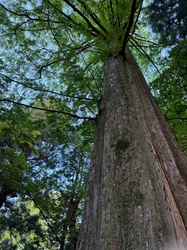
- The trunk is distinctively fluted and buttressed, often with deep vertical armpit-like hollows beneath the branches.
- Bark is reddish-brown, fibrous, and shreddy/shaggy, peeling in long strips.
- The crown is narrow and conical with a straight central leader.
Cones
- Seed cones are small, rounded to oblong, about a half to one inch, hanging on long stalks, with scales arranged in cross-wise pairs.
How to Tell It Apart from Look-Alikes
The key confusion is with two other deciduous conifers:
- Bald cypress (Taxodium distichum) looks very similar but its needles and branchlets are alternate (offset), not opposite, and it lacks the deep trunk hollows; bald cypress often grows in swamps with 'knees'.
- Common baldcypress vs dawn redwood test: check whether needles are paired directly across from each other (dawn redwood) or staggered (bald cypress).
- Larches (Larix) are also deciduous conifers but bear needles in tufts on short spur shoots, not in flat opposite sprays.
Where You'll Find It
Wild dawn redwood survives in a small region of central China, but it is now planted worldwide in parks, campuses, and large gardens as an ornamental shade tree. It tolerates wet soils and is often sited near water. Look for a fast-growing pyramidal conifer that mysteriously loses all its needles in winter.
Quick ID Checklist
- Soft, feathery deciduous needles turning coppery in fall
- Needles and side branchlets in opposite pairs (vs alternate bald cypress)
- Fluted, buttressed trunk with armpit hollows
- Shaggy reddish-brown peeling bark
- Narrow conical crown, fast growth, often near water
A pyramidal conifer that drops opposite, fern-like needles each autumn and has a deeply fluted red trunk is dawn redwood.
Frequently asked questions
How do I tell dawn redwood from bald cypress?
Check needle arrangement: dawn redwood needles and branchlets are in opposite pairs directly across from each other, while bald cypress needles are alternate and staggered; dawn redwood also has a deeply fluted, hollowed trunk.
Is dawn redwood evergreen?
No, it is one of the few deciduous conifers; its soft needles turn russet-bronze and drop every autumn, leaving bare branches in winter.
Why is dawn redwood called a living fossil?
It was known only from fossils and thought extinct until living trees were found in central China in the 1940s, making it a survivor of an ancient lineage.
Why does the trunk have deep grooves and hollows?
Mature dawn redwoods develop a strongly fluted, buttressed base with armpit-like cavities beneath the branch attachments, a distinctive and reliable ID feature.
Dawn Redwood identified by the community
Recent Dawn Redwood specimens identified with Plant Identifier.