
Desert Rose Identification Guide
How to identify the Desert Rose by its swollen bottle-shaped caudex, glossy leaves, and showy trumpet flowers.
Read the full Desert Rose encyclopedia entry →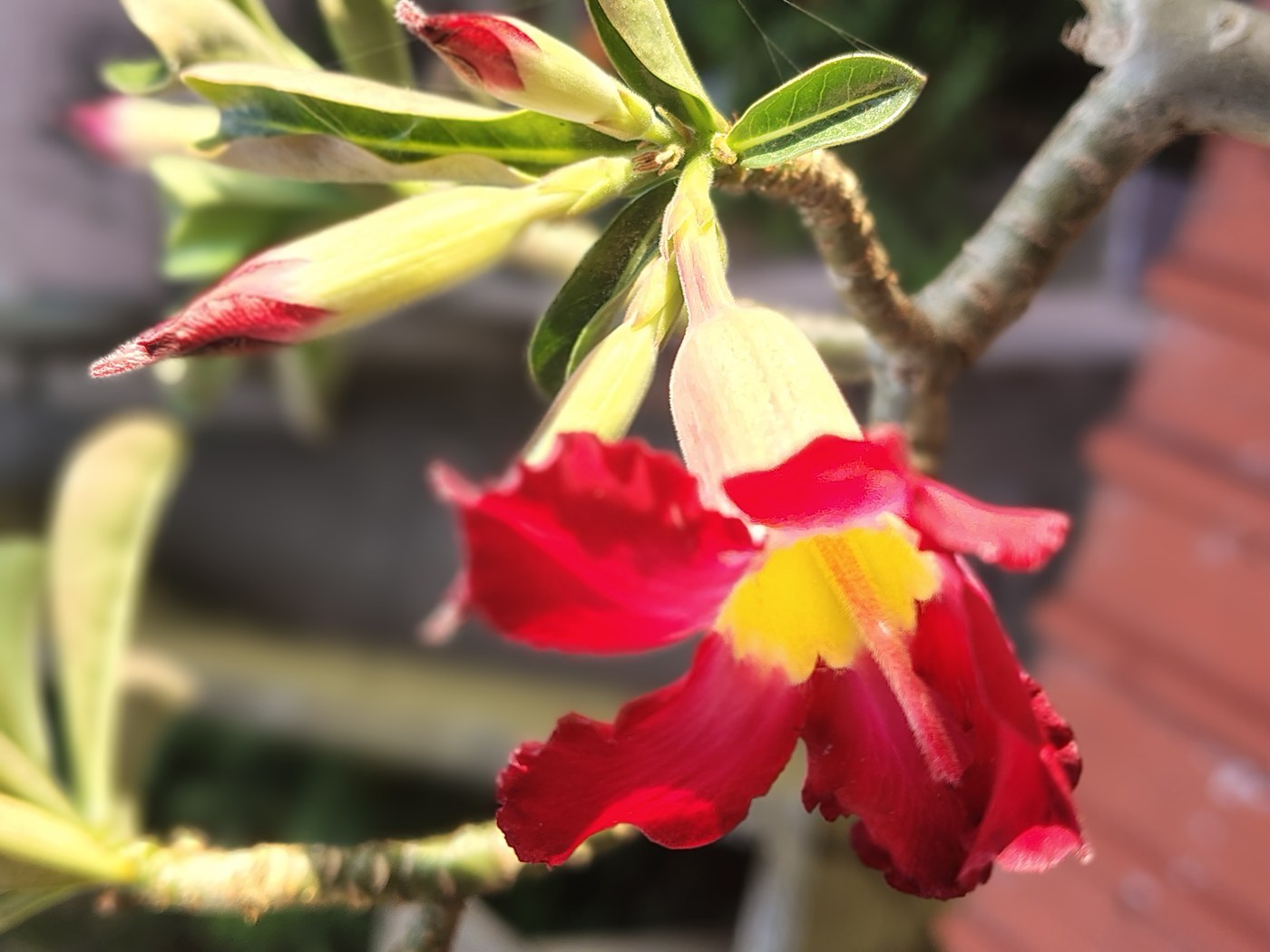
Key Identifying Features
The Desert Rose (Adenium obesum) is a caudiciform succulent shrub famous for its fat, sculptural base and bright tropical flowers.
- A swollen, bottle- or bulb-shaped base (caudex)
- Smooth gray, branching stems
- Glossy, paddle-shaped leaves clustered at branch tips
- Showy, trumpet-shaped pink/red flowers
Leaves & Stems
The hallmark is the caudex — a thick, water-storing, often bulbous swollen trunk that may flare out at soil level like a bonsai base. From it rise thick, smooth gray branches that taper toward the tips. Leaves are simple, leathery, and spoon- to lance-shaped, glossy deep green, often with a paler midrib, and clustered toward the ends of branches. The plant is deciduous in drought or cold, dropping leaves to survive dry spells. All parts exude a milky sap when cut — a useful identifying trait shared with its dogbane family relatives.
Flowers & Fruit
Flowers are the showpiece: funnel- or trumpet-shaped blooms 2–3 in (5–7 cm) across in pink, rose, red, white, or bicolor, often with a darker throat and frilled overlapping petals. They appear in flushes, mainly in warm seasons. Fruit, when formed, is a pair of slender horn-like pods that split to release seeds bearing tufts of silky hairs for wind dispersal.
How to Tell It Apart from Look-Alikes
- Plumeria (Frangipani): similar flowers but a true tree without a swollen caudex.
- Pachypodium: also caudex-forming but spiny-stemmed; Adenium stems are smooth and spineless.
- Bonsai figs/other caudex plants: lack the trumpet flowers and milky sap.
The combination of swollen base + smooth gray stems + trumpet flowers + milky sap confirms a Desert Rose.
Where You'll Find It
Native to the Sahel, East Africa, and Arabian Peninsula, it's grown worldwide as a flowering container and bonsai succulent. It demands full sun, fast-draining soil, warmth, and protection from frost. In tropical climates it's planted outdoors; elsewhere it's a sun-loving houseplant.
Quick ID Checklist
- Fat, swollen bottle-shaped caudex/base
- Smooth gray spineless branches
- Glossy spoon-shaped leaves clustered at tips
- Trumpet-shaped pink/red/white flowers
- Milky sap when cut
- Paired horn-like seed pods
Frequently asked questions
Why does my desert rose have such a fat swollen base?
That's the caudex, a water-storing trunk that lets the plant survive drought. It's the signature identifying feature of Adenium obesum.
How is it different from plumeria?
Both have showy trumpet flowers, but plumeria is a true tree without a swollen base, while desert rose has a distinctive bulbous caudex.
Why did my desert rose drop all its leaves?
It's deciduous and naturally sheds leaves during drought, cold, or dormancy. New leaves return when warmth and water resume.