Desert Rose
Adenium obesum
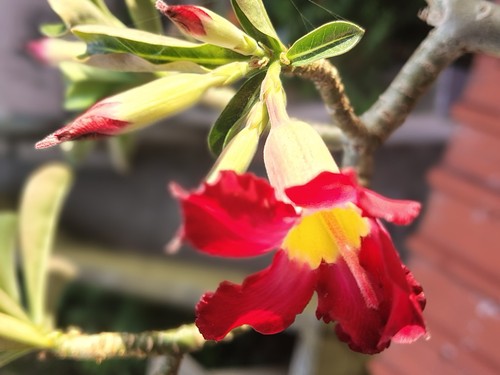
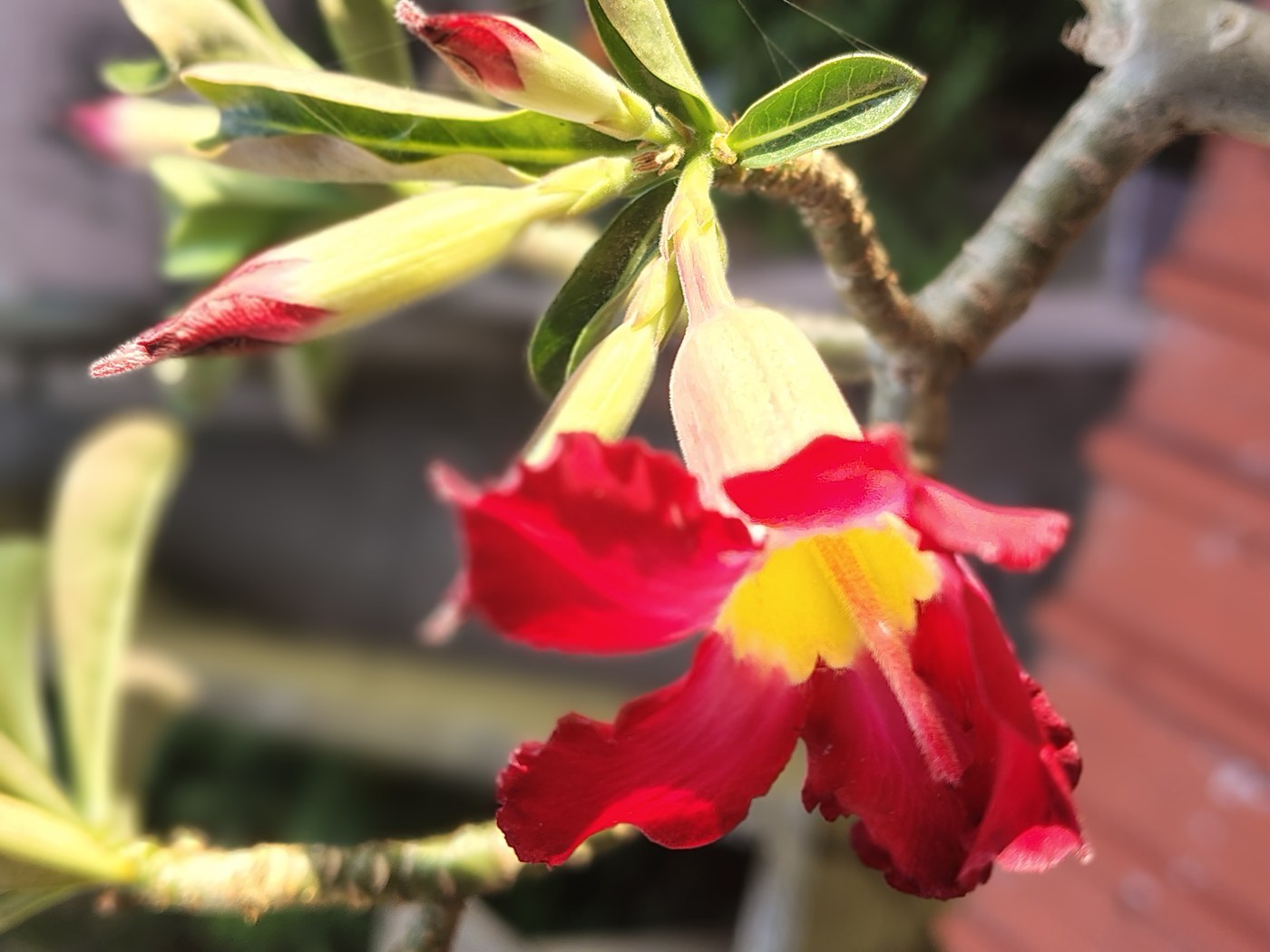
The desert rose is a striking caudex succulent with a swollen trunk and clusters of showy, trumpet-shaped pink to red flowers. It is widely grown as a bonsai-like ornamental.
- Light
- Full sun to bright light
- Water
- Moderate in growth; dry in dormancy
- Difficulty
- Moderate
Got a plant like this?
Identify any plant from a photo, free.
Overview
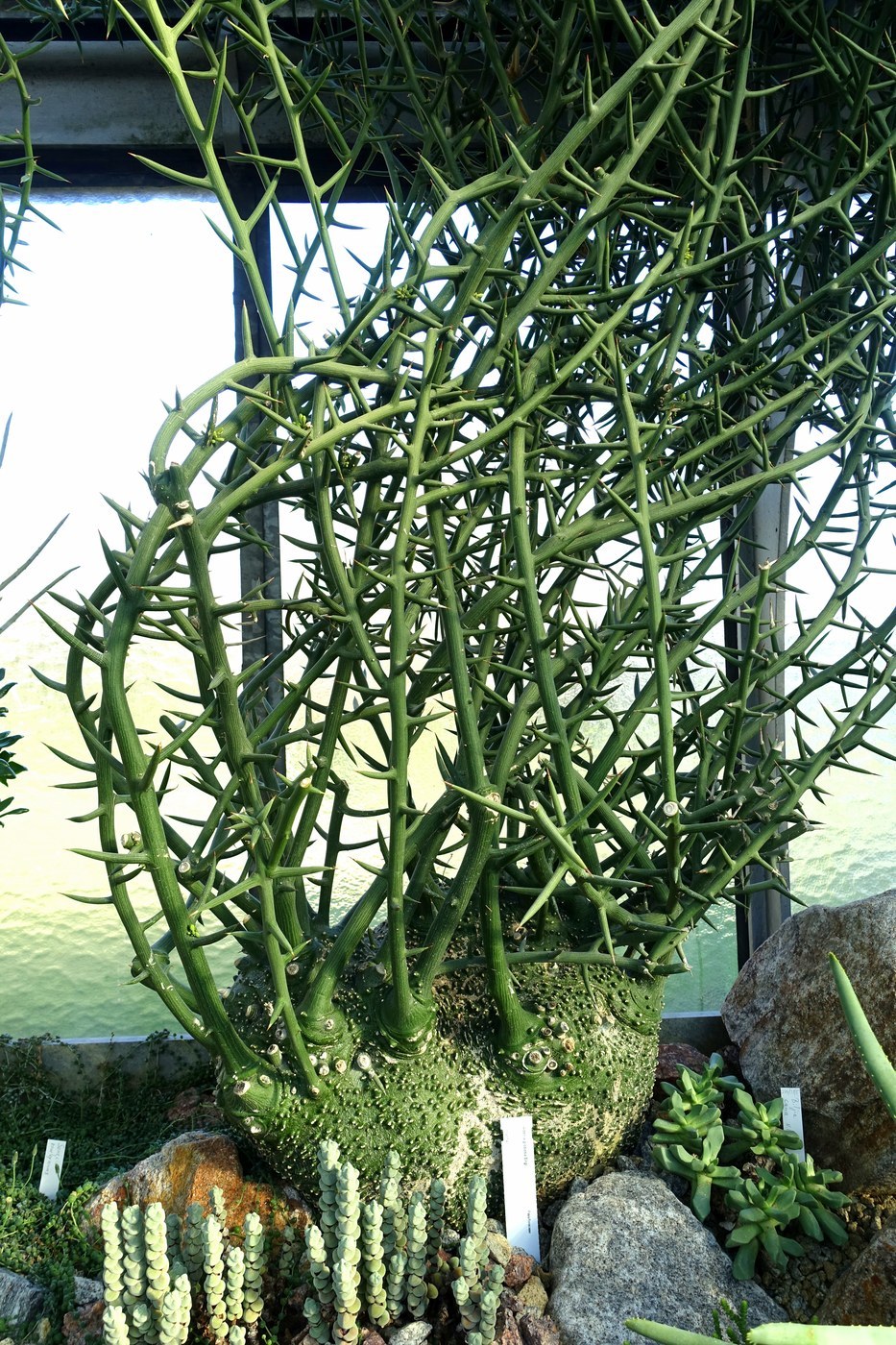
The desert rose (Adenium obesum) combines the drama of a fat, sculptural trunk (a caudex) with bursts of vivid, rose-like blooms. It is a member of the dogbane family and stores water in its bloated base and roots.
Its thick caudex and gnarled form make it a favorite subject for bonsai-style training. The trumpet flowers range from pink and red to white and bicolors, blooming heavily in warm, bright conditions.
How to identify it
- Swollen, bulbous caudex (trunk and root base) that stores water
- Smooth grey bark and thick, branching stems
- Glossy, oval leaves clustered at branch tips
- Showy, five-petaled, trumpet-shaped flowers in pink, red, white, or bicolor
- Milky sap exudes from cut surfaces
Care & growing
- Light: Full sun or the brightest possible light for best flowering
- Water: Water moderately during active growth, letting soil dry between; keep nearly dry during cool dormancy
- Soil: Extremely well-draining, gritty mix; rot-prone if soggy
- Temperature: Warmth-loving; protect from temperatures below about 50 F
- Feeding: Feed regularly with a bloom fertilizer in the growing season
- Propagation: From seed (produces a fat caudex) or cuttings (which root but form less swollen bases)
Habitat & origin
Native to the arid regions of sub-Saharan Africa and the Arabian Peninsula, including the Sahel, East Africa, and Yemen. It grows in dry savanna and rocky desert scrub.
It is cultivated worldwide as an ornamental, especially in tropical and subtropical gardens and as a potted bonsai-style plant elsewhere. Thailand and other countries breed many colorful hybrids.
Frequently asked questions
Why isn't my desert rose blooming?
It needs lots of direct sunlight and warmth to flower well. Too little light, cold, or overwatering can prevent blooms.
Why is the trunk getting soft?
A soft, mushy caudex usually means rot from overwatering or poor drainage. Use gritty soil and water only when dry.
How do I get the fat swollen trunk?
Plants grown from seed develop the prized bulbous caudex, while those from cuttings tend to have thinner bases.
How do I recognize a desert rose?
Look for the swollen, bottle-like caudex at the base, thick grey branching stems, glossy oval leaves clustered at the tips, and showy five-petaled trumpet flowers.
Desert Rose guides
In-depth guides for identifying, growing, and caring for Desert Rose.