Devil's Backbone Identification Guide
How to recognize Devil's Backbone (Euphorbia tithymaloides) by its distinctive zigzag stems, two-ranked leaves, and milky sap. Covers look-alikes and key identifying notes.
Read the full Devil's Backbone encyclopedia entry →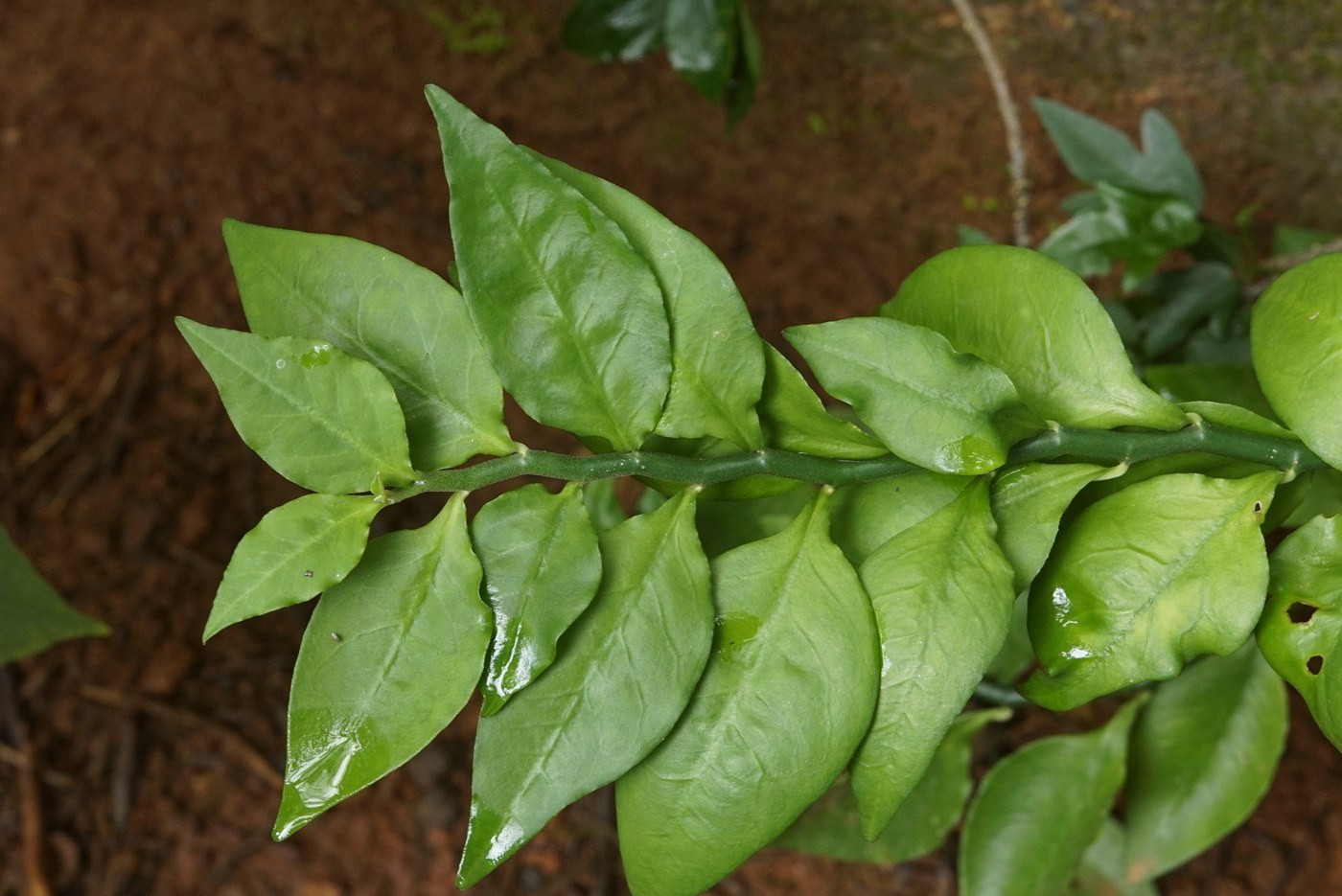
Key Identifying Features
Devil's Backbone (Euphorbia tithymaloides, formerly Pedilanthus tithymaloides) is instantly recognizable by its zigzag, jointed green stems that change direction sharply at each node, giving the plant its common names "zigzag plant" and "redbird flower." It is a succulent shrub in the spurge family, typically reaching 2-8 feet tall in the ground but often kept much smaller as a houseplant.
- Upright, fleshy, green stems that zigzag at every leaf node
- Milky white latex sap that oozes from any cut or break (a hallmark of Euphorbia)
- Leaves arranged in two neat ranks (one row up each side of the stem)
- Bird-shaped, slipper-like red or pink flower bracts
Leaves & Stems
The leaves are smooth, oval to lance-shaped, 1.5-3 inches long, and arranged alternately in two flat rows along the zigzagging stem. In the popular variegated cultivar 'Variegata', leaves are green with creamy-white margins that flush pink in bright light or cool weather. Leaves often drop during drought or dormancy, leaving the bare zigzag stems, which remain photosynthetic and green.
The stems are cylindrical, fleshy, and bright green when young. The signature zigzag (geniculate) growth pattern is the single most reliable field mark. Snapping a stem releases the milky sap typical of euphorbias.
Flowers & Fruit
What looks like a flower is actually a cluster of modified bracts (a cyathium typical of euphorbias). The bracts are bright red, pink, or coral and shaped like a tiny bird's head or a lady's slipper, which is why it's also called "redbird cactus" or "slipper flower." Blooming occurs mainly in spring and early summer. True fruit is a small three-lobed capsule, rarely seen on potted plants.
How to Tell It Apart from Look-Alikes
- Other Euphorbias also have milky sap, but lack the sharp zigzag stem; the geniculate stem is diagnostic.
- Crested or 'green' forms can be confused with leafless succulents, but the milky sap plus jointed zigzag stem confirms Devil's Backbone.
- Note: "Devil's Backbone" is also a common name for Kalanchoe daigremontiana (mother-of-thousands). That plant has triangular leaves lined with tiny plantlets and clear, not milky, sap. If the plant makes baby plantlets along leaf edges, it's the Kalanchoe, not the Euphorbia.
Where You'll Find It
Native to Central America and the tropical Americas, Devil's Backbone is widely grown as a houseplant and warm-climate landscape shrub (USDA zones 9-11). Indoors it favors bright light; outdoors it naturalizes in frost-free regions and is common in xeriscapes and rock gardens.
Quick ID Checklist
- Stems zigzag sharply at each node
- Milky white sap when cut
- Leaves in two rows, often green with white/pink margins
- Red/pink bird- or slipper-shaped flower bracts
- Succulent, upright shrub habit
- No plantlets on leaf edges (distinguishes from Kalanchoe namesake)
Frequently asked questions
Why is it called Devil's Backbone?
The name refers to the stiff, zigzagging stems that resemble a knobby, segmented spine. Confusingly, the name is also applied to Kalanchoe daigremontiana, so check for milky sap and zigzag stems to confirm the Euphorbia.
How do I tell it from the mother-of-thousands also called Devil's Backbone?
Mother-of-thousands (Kalanchoe daigremontiana) has triangular leaves with rows of tiny plantlets along the edges and clear sap. The Euphorbia has zigzag stems, two-ranked leaves, and milky sap.
Why did my plant's leaves fall off, leaving bare stems?
Leaf drop is normal during drought, cold, or dormancy. The green zigzag stems stay alive and photosynthesize, and leaves usually return with warmth and water.
Devil's Backbone identified by the community
Recent Devil's Backbone specimens identified with Plant Identifier.