Devil's Backbone
Euphorbia tithymaloides
A shrubby succulent euphorbia famous for its distinctive zigzagging stems and small red-bracted flowers shaped like tiny birds. Often grown indoors for its sculptural, jointed form.
- Light
- Bright light, some direct sun
- Water
- When soil is dry; drought tolerant
- Difficulty
- Easy
Got a plant like this?
Identify any plant from a photo, free.
Overview
Devil's Backbone is a succulent member of the spurge family (Euphorbiaceae), named for its sharply angled, zigzagging stems that resemble a knobbly spine. It is one of several unrelated plants sometimes called by this name, but Euphorbia tithymoides is the classic upright, fleshy-stemmed species.
The plant produces small flowers surrounded by bright red, slipper- or bird-shaped bracts, giving rise to alternate names like redbird flower. A popular variegated cultivar adds cream and pink margins to the leaves.
Like all true euphorbias, it exudes a milky latex when cut.
How to identify it
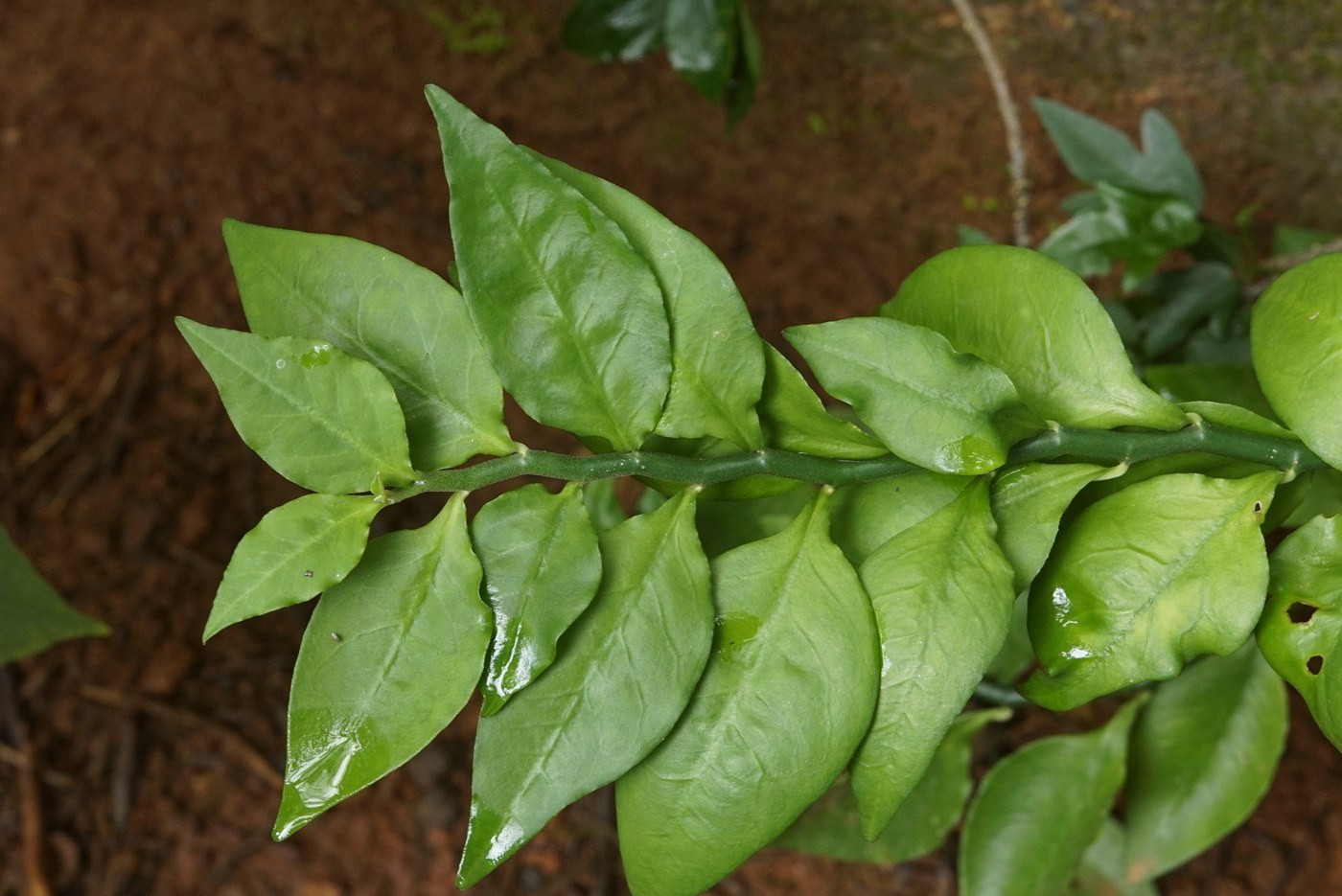
- Stems: Green, fleshy, growing in a pronounced zigzag pattern with abrupt directional changes at each node
- Leaves: Small, ovate, often folded along the midrib; many forms are variegated with white, cream, or pink
- Flowers: Tiny true flowers cupped by showy red or pink bird-shaped bracts at stem tips
- Size: Indoors typically 1.5-3 ft tall; can reach 6-8 ft in ideal outdoor conditions
- Sap: Milky white latex bleeds from any wound
Care & growing
Light: Bright light with a few hours of direct sun keeps growth compact and color strong; low light causes leggy, sparse stems.
Water: Allow soil to dry between waterings. It tolerates drought well; overwatering causes root rot.
Soil: Fast-draining cactus or succulent mix.
Temperature: Prefers warmth (65-80F); protect from frost.
Feeding: Light feeding with a balanced fertilizer once or twice in the growing season.
Propagation: From stem cuttings; let the cut latex dry and callus for a day or two before planting in dry mix.
Habitat & origin
Native to tropical and subtropical regions of the Americas, ranging from the southern United States and Mexico through Central America to northern South America and the Caribbean.
It grows in warm, dry to seasonally dry scrub and is widely cultivated as a hedge and ornamental in frost-free climates. Elsewhere it is a popular container and houseplant.
Frequently asked questions
Why are the stems zigzag?
The naturally angled growth at each node is a genetic trait of the species, giving it the 'backbone' look that inspired its common name.
Why is my plant losing its pink and white color?
Variegation fades in low light. Move it to a brighter spot with some direct sun to restore color.
How do I make it bushier?
Pinch or prune stem tips to encourage branching, and give it ample light to prevent stretching.
How can I identify Devil's Backbone?
Look for the sharply zigzagging green fleshy stems, small folded leaves often edged in cream or pink, and red bird-shaped bracts at the stem tips.
Devil's Backbone guides
In-depth guides for identifying, growing, and caring for Devil's Backbone.
How to Care for Devil's Backbone
Grow the easy, sculptural Devil's Backbone with its zigzag stems in bright light, water only when dry, and enjoy a drought-tolerant houseplant.
Devil's Backbone Identification Guide
How to recognize Devil's Backbone (Euphorbia tithymaloides) by its distinctive zigzag stems, two-ranked leaves, and milky sap. Covers look-alikes and key identifying notes.
Devil's Backbone identified by the community
Real specimens identified with Plant Identifier.