
Dewberry Identification Guide
Recognizing dewberries, the low trailing relatives of blackberries, by their ground-hugging prickly stems, white flowers, and few-drupelet black fruit.
Read the full Dewberry encyclopedia entry →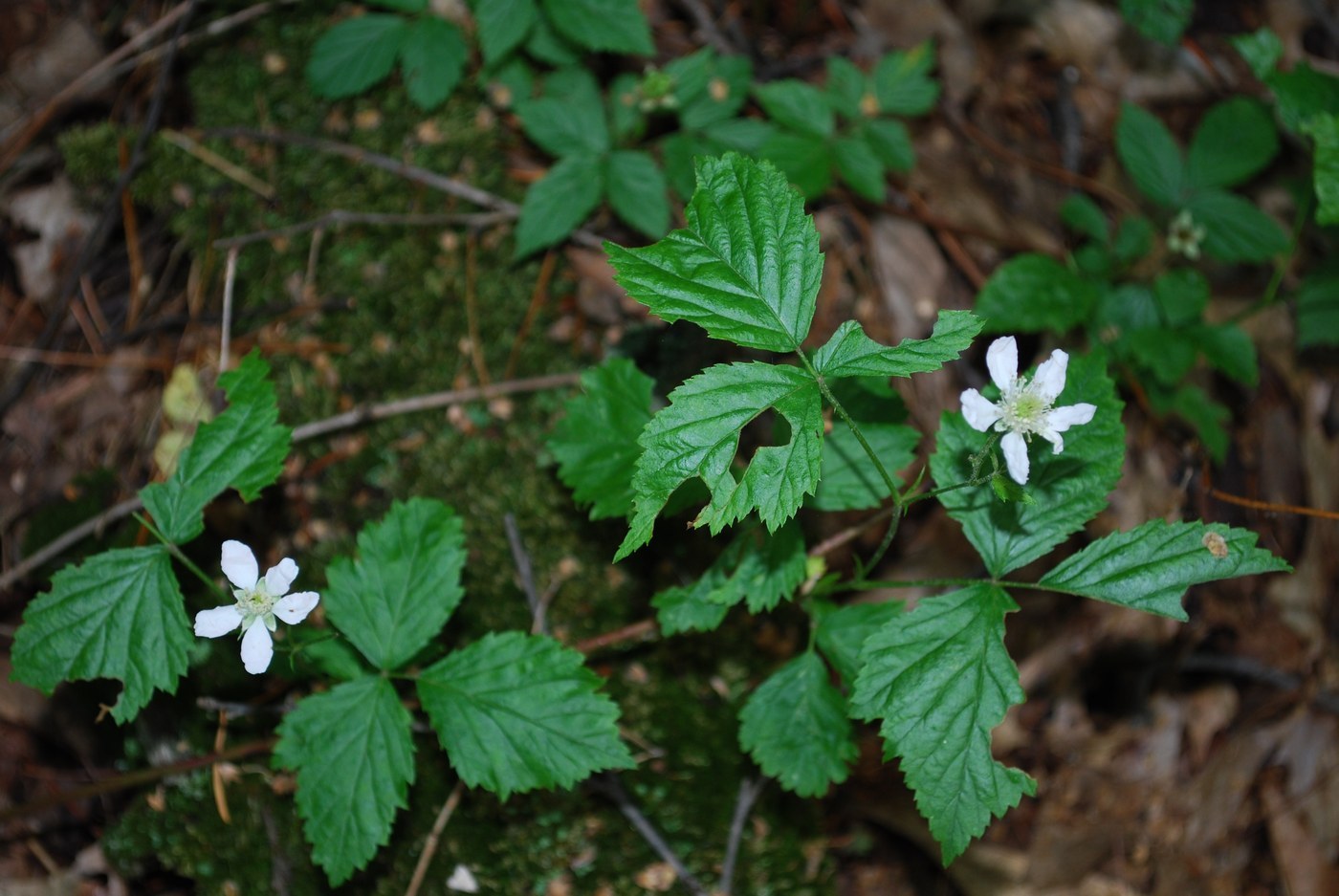
Key Identifying Features
Dewberries are low, trailing brambles in the genus Rubus (e.g., Rubus flagellaris in North America, Rubus caesius in Europe), closely related to blackberries but growing as sprawling vines along the ground rather than arching upright. Identify them by their prostrate, prickly stems, three-to-five-leaflet leaves, white flowers, and black aggregate fruit with relatively few, large drupelets.
- Trailing/creeping prickly stems hugging the ground, rarely upright
- Compound leaves of 3 (sometimes 5) toothed leaflets
- Fruit black, with fewer drupelets than a blackberry, often with a waxy bloom
Leaves & Stems
Leaves are alternate, palmately or pinnately compound with 3–5 leaflets, each leaflet ovate and sharply toothed, medium green. The stems (canes) trail along the ground, taking root at the tips, and bear scattered slender prickles or fine bristles. This ground-running habit is the single most useful trait distinguishing dewberries from upright blackberries. European dewberry (R. caesius) stems have a whitish waxy bloom.
Flowers & Fruit
Flowers are white (sometimes pink-tinged), five-petaled, about 2–3 cm across, borne singly or in few-flowered clusters in spring — usually earlier than blackberries. The fruit is an aggregate of drupelets that ripens red then black (or blue-black with a bloom in R. caesius). Compared to a blackberry, dewberry fruit has fewer, larger drupelets and is often borne closer to the ground. Like blackberries, the fruit keeps its core when picked (it does not leave a hollow cap).
How to Tell It Apart from Look-Alikes
- Blackberry (upright Rubus): arching, cane-forming, upright shrubs; dewberry trails along the ground.
- Raspberry: fruit pulls off leaving a hollow cap; dewberry/blackberry fruit retains its core.
- European dewberry (R. caesius): distinguished by a strong blue-white waxy bloom on stems and fruit and weaker prickles.
- The ground-trailing prickly stem + 3–5 leaflet leaves + black core-retaining fruit borne low identifies a dewberry.
Where You'll Find It
Dewberries are widespread in fields, open woods, roadsides, pastures, sandy clearings, and waste ground across temperate North America and Europe. They favor open, sunny, disturbed sites and dry to moderately moist soils, often carpeting the ground in low tangled mats.
Quick ID Checklist
- Trailing, ground-hugging prickly stems (not upright)
- Leaves with 3–5 toothed leaflets
- White five-petaled flowers, blooming early
- Black aggregate fruit with few large drupelets
- Fruit retains its core when picked (not a hollow cap)
- Open sunny fields, roadsides, sandy ground
Frequently asked questions
What's the difference between a dewberry and a blackberry?
Both have black aggregate fruit, but dewberries grow as low trailing vines along the ground while blackberries form tall arching canes. Dewberry fruit also tends to have fewer, larger drupelets and ripens earlier.
How do I separate dewberry from raspberry?
Pick a ripe fruit: dewberries keep their solid core (like a blackberry), while raspberries pull off the receptacle leaving a hollow cap.
Why do some dewberry stems look bluish-white?
The European dewberry (Rubus caesius) has a waxy, powdery blue-white bloom on its stems and fruit, which helps distinguish it from other trailing brambles.
Where do dewberries grow best?
They thrive in open, sunny, disturbed habitats such as fields, pastures, roadsides, and sandy clearings, often forming low tangled mats across the ground.