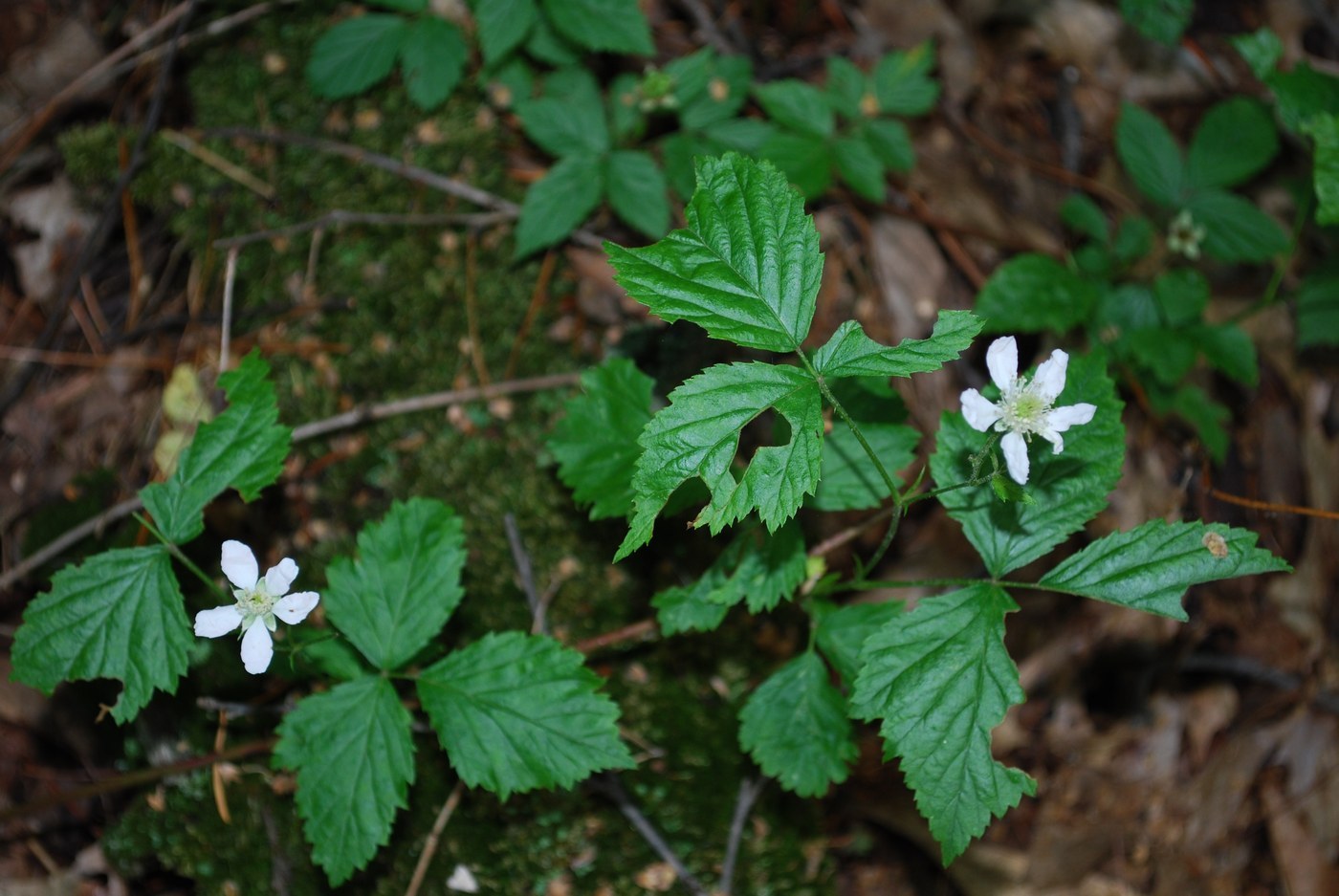
Dewberry
Rubus flagellaris
Dewberry is a low, trailing relative of the blackberry that produces dark berries earlier in the season. Its sprawling thorny canes form ground-hugging mats.
- Light
- Full sun to partial shade
- Water
- Moderate; tolerates dry spells once established
- Difficulty
- Easy
Got a plant like this?
Identify any plant from a photo, free.
Overview
Dewberries are trailing members of the genus Rubus, closely related to blackberries but growing as low, sprawling vines rather than upright canes. Rubus flagellaris, the northern dewberry, and related species are common across North America.
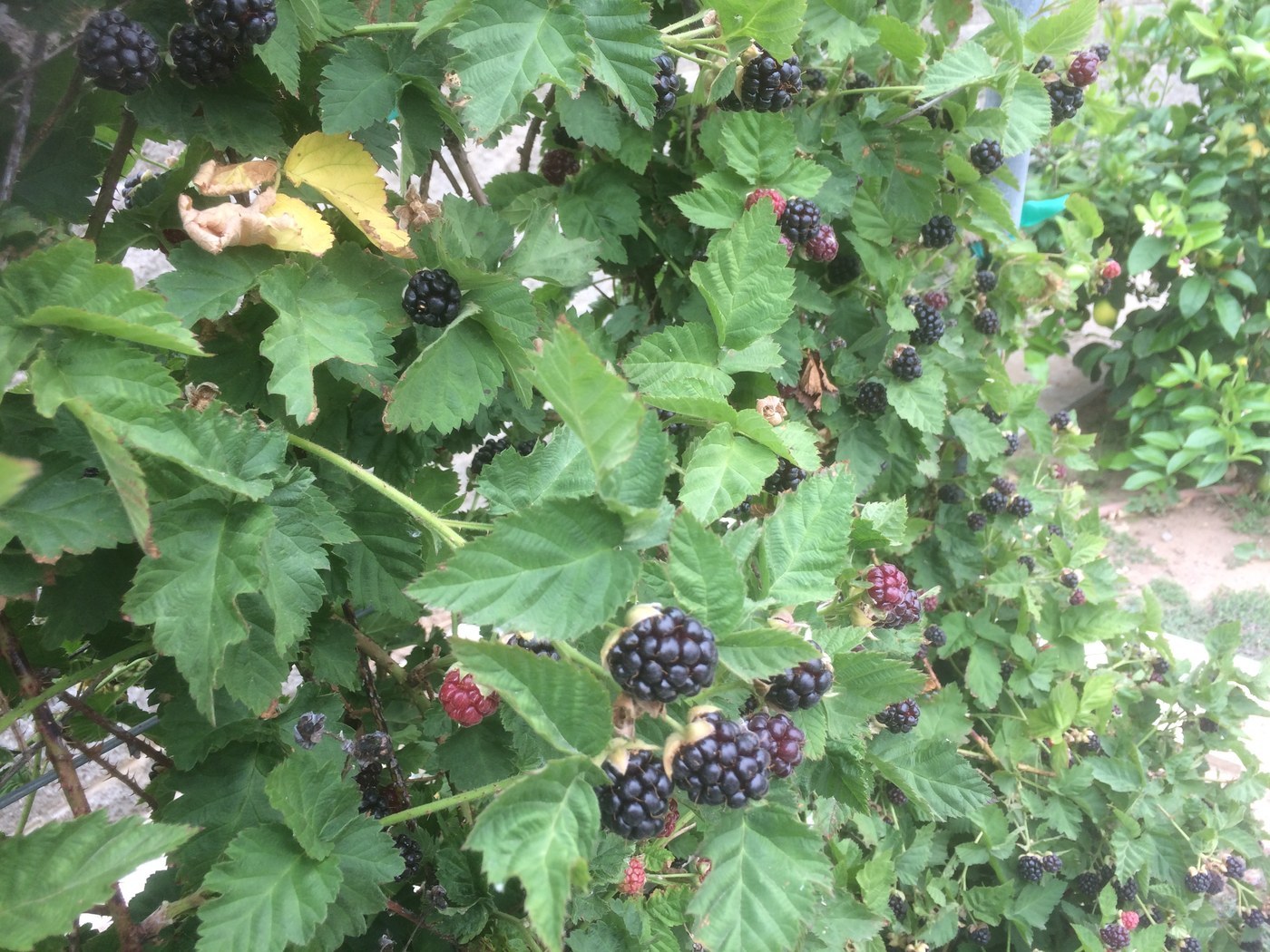
The fruit looks like a blackberry but typically ripens earlier in the season, is borne in smaller clusters, and grows close to the ground.
Dewberries thrive in poor, disturbed soils and are often found along roadsides, fields, and woodland edges. Their trailing, thorny stems root where they touch the ground, helping them spread.
How to identify it
- Fruit: Blackberry-like aggregate of drupelets, ripening red to black, in small clusters near the ground
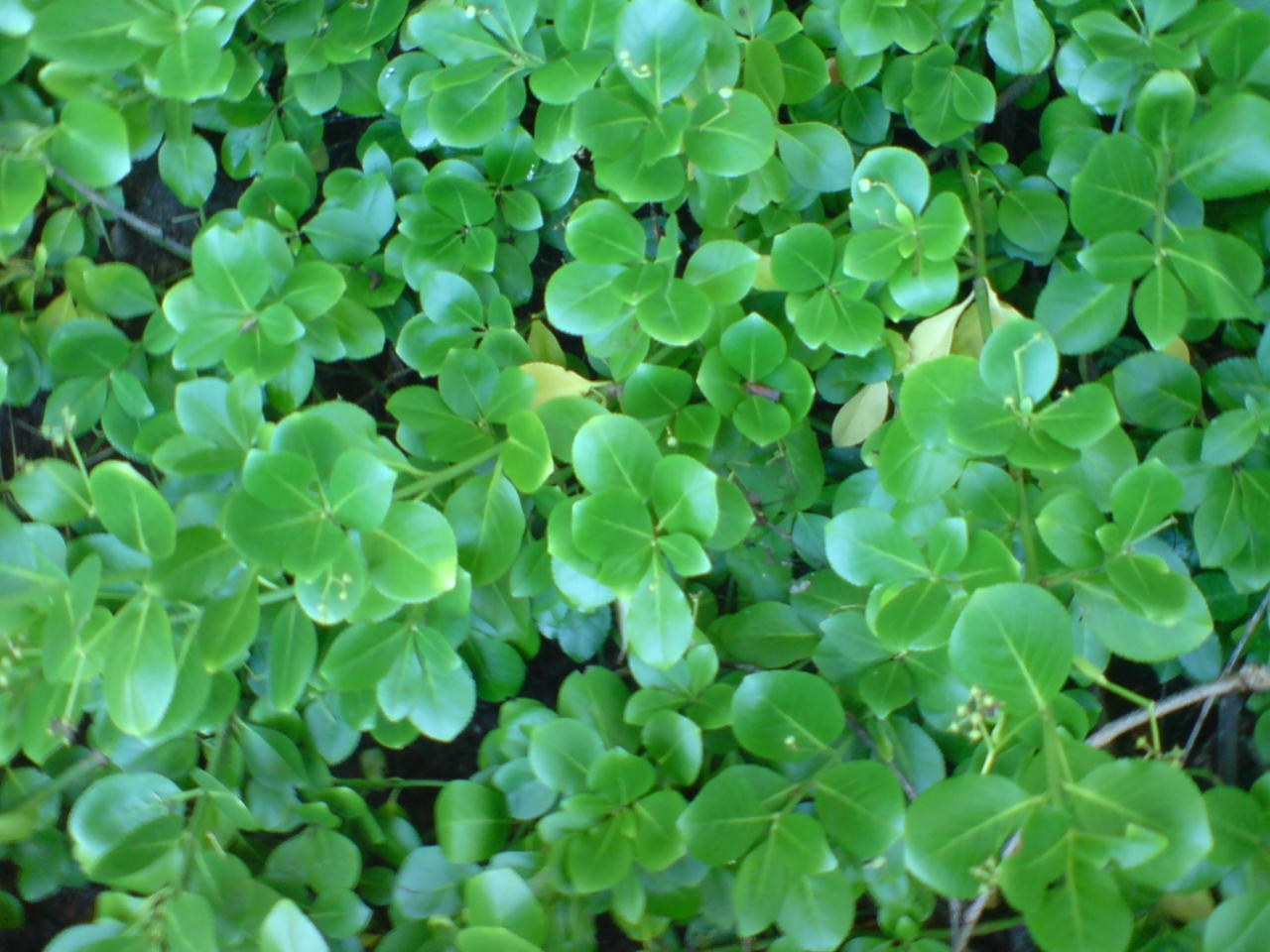
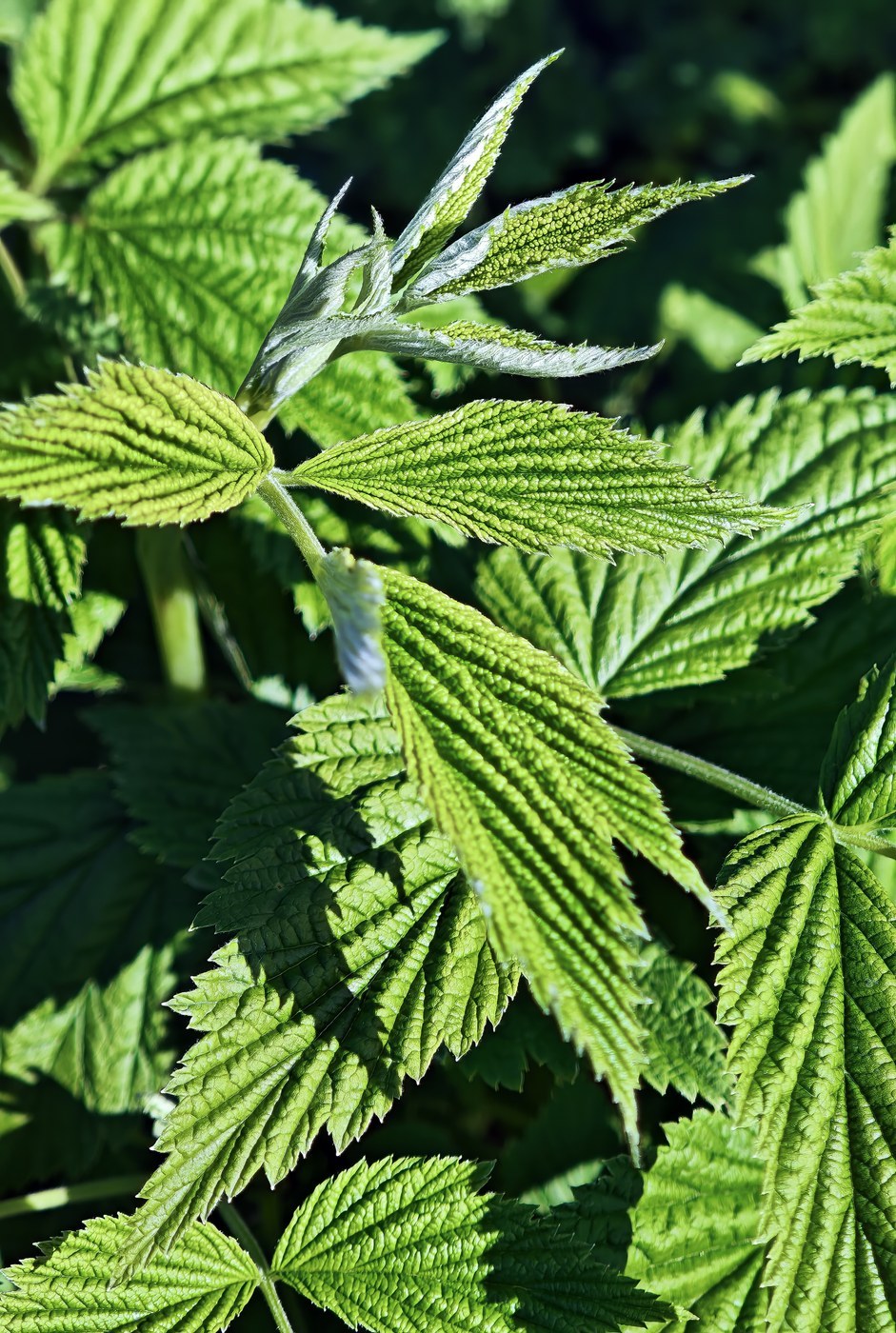
- Leaves: Compound with 3–5 toothed leaflets, green and slightly hairy
- Stems: Slender, trailing, vine-like canes with curved prickles; root at the tips
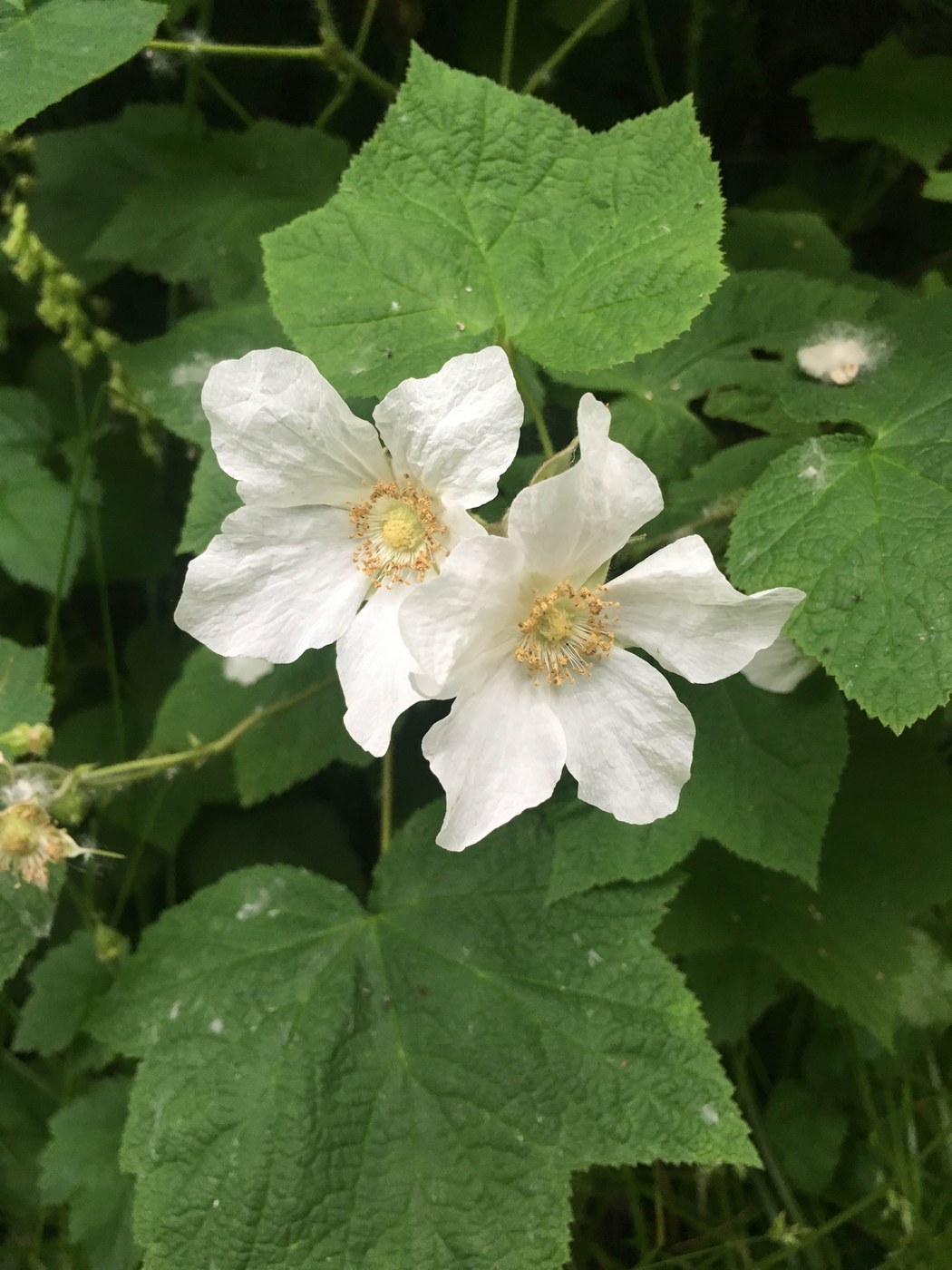
- Flowers: White to pale pink, five-petaled, in small clusters in spring
- Size: Trailing, usually under 2 ft tall but sprawling several feet wide
Care & growing
Light: Full sun gives the best fruiting; tolerates partial shade with reduced yields.
Water: Moderate; established plants tolerate dry spells, though regular moisture improves fruit.
Soil: Highly adaptable, thriving even in poor, sandy, or disturbed soils with good drainage.
Temperature: Hardy across a wide range depending on species, roughly USDA zones 4–9.
Feeding: Minimal; usually needs no fertilizer in average soil.
Propagation: Spreads naturally by tip-rooting trailing canes and by seed; easily propagated by layering. Can become weedy in favorable sites.
Habitat & origin
Dewberries are native to North America, with various species spread across the eastern, central, and southern United States and into Canada. They grow in fields, pastures, roadsides, clearings, and open woods.
As hardy pioneers of disturbed ground, they are widespread in the wild and are rarely cultivated, though they can be grown in informal wildlife plantings.
Frequently asked questions
What is the difference between a dewberry and a blackberry?
Dewberries trail along the ground on vine-like canes and ripen earlier in smaller clusters, while blackberries grow on tall, upright canes. The fruits look similar.
When do dewberries ripen?
Dewberries ripen earlier than most blackberries, often in late spring to early summer depending on region and species.
Do dewberries spread?
Yes. Their trailing canes root where the tips touch soil, and they self-seed readily, so they can form spreading patches in favorable conditions.
How can I identify a dewberry plant?
Look for low, trailing thorny canes with compound leaves of 3–5 toothed leaflets, white to pale pink spring flowers, and small blackberry-like fruits held close to the ground.
Dewberry guides
In-depth guides for identifying, growing, and caring for Dewberry.
How to Care for Dewberry
Grow dewberry, a low, trailing bramble, with full sun, moderate water, and simple trellising for a tidy, productive vine.
Dewberry Identification Guide
Recognizing dewberries, the low trailing relatives of blackberries, by their ground-hugging prickly stems, white flowers, and few-drupelet black fruit.