How to Care for Dill
Dill is a fast, easy annual with airy, feathery foliage and lacy yellow flower umbels — give it full sun and evenly moist soil.
Read the full Dill encyclopedia entry →
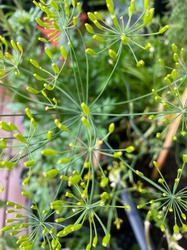
Dill (Anethum graveolens) is a fast-growing annual grown for its delicate, feathery blue-green foliage and airy umbels of tiny yellow flowers that attract pollinators. It is easy to grow, thriving in full sun with steady moisture, and adds a soft, ferny texture to beds and containers.
Light
Dill needs full sun — at least 6 to 8 hours of direct light daily for sturdy, upright, well-branched plants. In too little light it grows spindly and flops. Give it an open, sunny position; in very hot climates a little afternoon shade can slow it from bolting to flower too quickly.
Water
Keep the soil evenly moist with moderate, regular watering, especially in warm weather and for container plants, which dry out fast. Water when the top inch of soil begins to dry. Avoid both drought stress, which triggers premature bolting, and waterlogged soil, which rots the roots. Consistent moisture keeps foliage lush and tender.
Soil & Potting
Grow dill in loose, well-draining soil enriched with a little compost. It has a taproot and resents being transplanted, so sow seed directly where it will grow, or start in deep individual pots to minimize root disturbance. For containers choose a deep pot to accommodate the taproot and a free-draining potting mix.
Humidity & Temperature
Dill is a cool-to-warm season annual that grows best in mild conditions and tends to bolt quickly in intense heat. Average outdoor humidity suits it; crowded, damp conditions invite mildew, so allow airflow. Successive sowings every few weeks extend the supply of fresh feathery foliage through the season.
Feeding
Dill is a light feeder and generally needs little fertilizer in decent soil. A modest dose of balanced fertilizer or compost at planting is usually enough. Avoid heavy nitrogen, which produces weak, floppy growth. Container plants benefit from occasional diluted feeding during active growth.
Propagation
Grow dill from seed, sown directly into warm soil in the sunny spot where it will mature. Scatter or sow shallowly, keep evenly moist, and thin seedlings to give each room. Dill readily self-sows — letting a few flower umbels mature and drop seed often yields volunteer plants the following season.
Repotting / Pruning
Because of its taproot, dill dislikes repotting; sow it in its final position instead. Pinch out the growing tips of young plants to encourage bushier branching and delay flowering. Once it sends up flower stalks it stops producing new foliage, so removing early flower buds prolongs leafy growth.
Common Problems & Pests
The most common frustration is bolting — rapid flowering triggered by heat, drought, or stress, which ends leaf production. Sow successively and keep moisture steady to counter it. Aphids can cluster on tender growth; hose them off. Powdery mildew and damping-off appear in crowded, damp conditions, so give plants space and airflow. Swallowtail caterpillars may feed on the foliage.
Seasonal Care Tips
Spring: sow seed directly once soil warms, and start successive sowings. Summer: keep evenly watered to delay bolting, and continue sowing every few weeks for fresh growth. Late summer: let some plants flower to attract pollinators and self-sow. Fall: collect dropped seed or allow volunteers; in mild areas a late sowing extends the season.
Frequently asked questions
Why does my dill flower and stop making leaves so quickly?
That's bolting, triggered by heat, drought, or stress. Keep the soil evenly moist, give a little afternoon shade in hot climates, pinch early flower buds, and sow fresh batches every few weeks.
Can I transplant dill seedlings?
Dill has a taproot and resents transplanting, so it's best sown directly where it will grow. If you must start it in pots, use deep individual containers to minimize root disturbance.
How much sun does dill need?
Full sun — at least 6 to 8 hours daily. Plenty of light keeps it sturdy and upright, while too little makes it spindly and prone to flopping over.
Does dill come back every year?
Dill is an annual, but it self-sows readily. If you let a few flower umbels mature and drop their seed, you'll often get volunteer plants the following season.
Dill identified by the community
Recent Dill specimens identified with Plant Identifier.