
How to Care for Douglas Fir
Grow the stately Douglas Fir in full sun with moist, well-drained soil — a fast, hardy evergreen conifer for spacious landscapes.
Read the full Douglas Fir encyclopedia entry →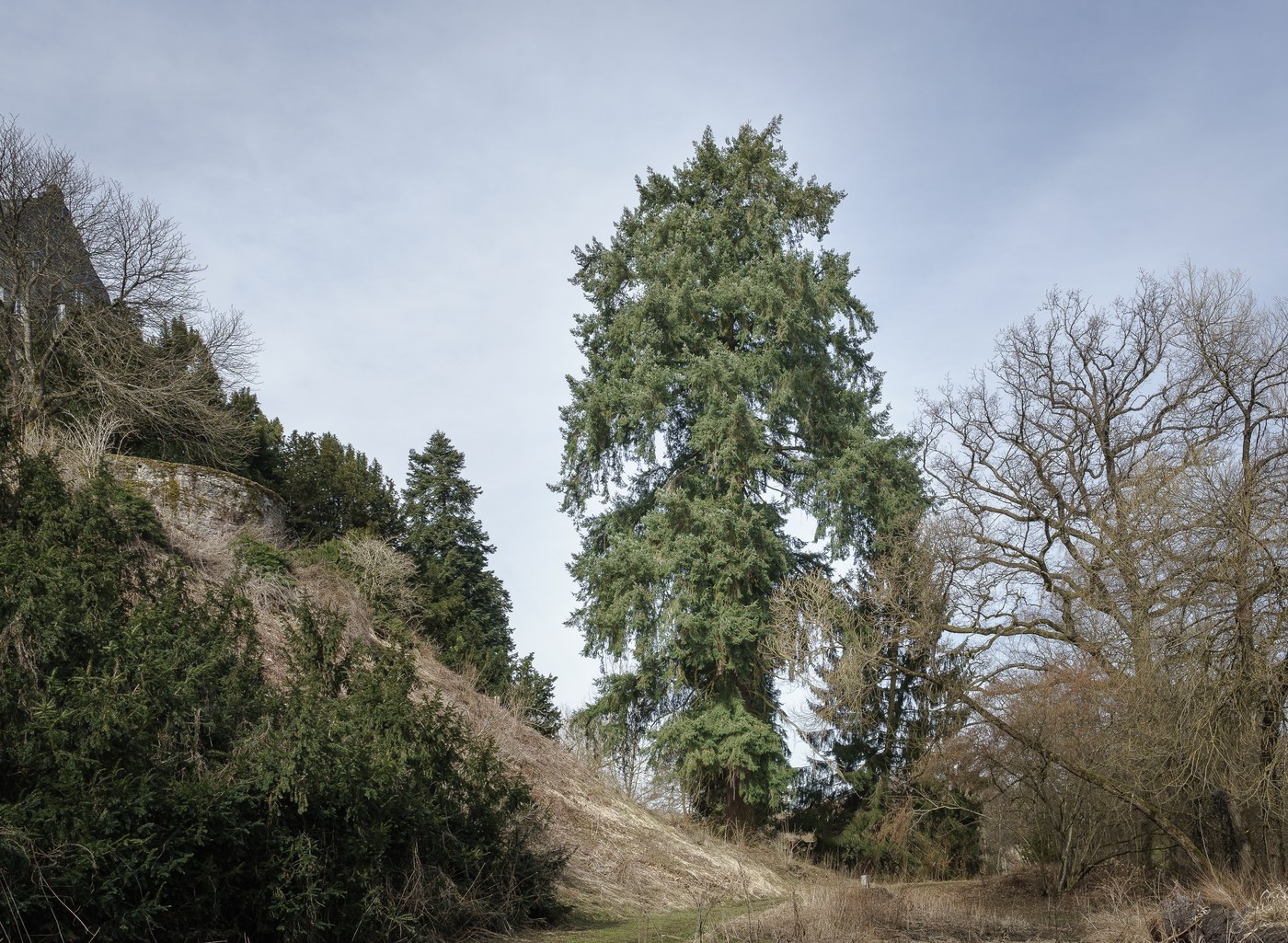
The Douglas Fir (Pseudotsuga menziesii) is a large, fast-growing evergreen conifer with soft, flat needles, a conical form, and distinctive cones bearing three-pointed bracts. A signature tree of the Pacific Northwest, it makes a stately landscape and screening specimen where there is room for its eventual size.
Light
Douglas Fir performs best in full sun, needing at least 6 hours of direct light for dense, symmetrical growth. Young trees tolerate a little partial shade, but too much shade produces thin, lopsided canopies. Give it an open position where it can develop its full conical shape.
Water
Provide moderate, consistent moisture in well-drained soil. Water young and newly planted trees deeply and regularly through their first few seasons to establish a strong root system, especially during dry spells. Established trees are more resilient but still appreciate a deep soak during prolonged drought. Avoid waterlogged ground, which invites root disease.
Soil & Potting
Douglas Fir favors deep, moist, well-drained soil and is happiest in slightly acidic conditions. It adapts to loam and sandy loam but struggles in heavy, poorly drained clay or chronically wet sites. Mulching over the root zone conserves moisture, moderates soil temperature, and suppresses weeds — keep mulch a few inches back from the trunk.
Humidity & Temperature
This is a cold-hardy, temperate conifer well suited to cool, moist climates. It withstands hard winters and prefers regions without extreme, prolonged heat. It naturally tolerates the humidity of coastal and mountain climates. In hot, dry inland areas, siting it where it gets afternoon relief and steady soil moisture helps.
Feeding
Douglas Fir is not a heavy feeder. In good soil it often needs no supplemental fertilizer. If growth is weak, apply a balanced or slow-release conifer/evergreen fertilizer in early spring. A yearly top-dressing of compost or organic mulch supplies gentle nutrition and improves soil structure over time. Avoid heavy nitrogen, which can force soft, weak growth.
Propagation
Douglas Fir is propagated mainly from seed. Cones are collected when mature, seeds extracted and dried, and many require a period of cold, moist stratification to break dormancy before sowing. Sow in a well-drained seed mix and grow seedlings on in a protected nursery bed for a season or two before transplanting. Cuttings are notoriously difficult to root, so seed is the standard method.
Repotting / Pruning
Douglas Fir generally needs little pruning; it develops its handsome form naturally. Remove dead, damaged, or crossing branches, and prune to raise the canopy or maintain a hedge if desired. Prune in late winter to early spring. Avoid cutting back into old, needleless wood, as conifers rarely resprout from it. Give the tree ample space at planting so it never needs drastic size reduction.
Common Problems & Pests
Watch for adelgids, aphids, spruce budworm, and bark beetles, along with needle-cast fungal diseases that cause needle yellowing and drop, particularly in crowded, damp, poorly ventilated conditions. Good spacing, air circulation, and removal of infected debris reduce disease pressure. Root rot can occur in soggy soils, so ensure sharp drainage. Keep trees well-watered and unstressed, since vigorous trees resist pests far better.
Seasonal Care Tips
Plant in fall or early spring while the soil is cool and moist. Water attentively through the first summers to establish roots. Refresh mulch in spring, and prune away any winter-damaged wood as growth resumes. In autumn, ease back on watering as the tree hardens off for winter. Established trees are largely self-sufficient, needing only occasional deep watering during extended drought.
Frequently asked questions
How fast does a Douglas Fir grow?
Douglas Fir is a fast-growing conifer, often adding a foot or more of height per year when young in good conditions. Give it plenty of room, as it becomes a very large tree over time.
Does Douglas Fir need full sun?
Yes, it grows best in full sun with at least 6 hours of direct light for dense, symmetrical form. Young trees tolerate light partial shade, but heavy shade produces thin, uneven canopies.
What soil is best for Douglas Fir?
It prefers deep, moist, well-drained, slightly acidic soil. Avoid heavy clay and chronically wet sites, which encourage root disease. A layer of organic mulch helps retain moisture and improve the soil.
How much should I water a young Douglas Fir?
Water newly planted trees deeply and regularly for the first few seasons, especially in dry weather, to build strong roots. Once established, they need only occasional deep watering during prolonged drought.