
How to Care for Dragon Blood Tree
Grow the sculptural Dragon Blood Tree in full sun with gritty, fast-draining soil and very sparing watering for a slow, dramatic form.
Read the full Dragon Blood Tree encyclopedia entry →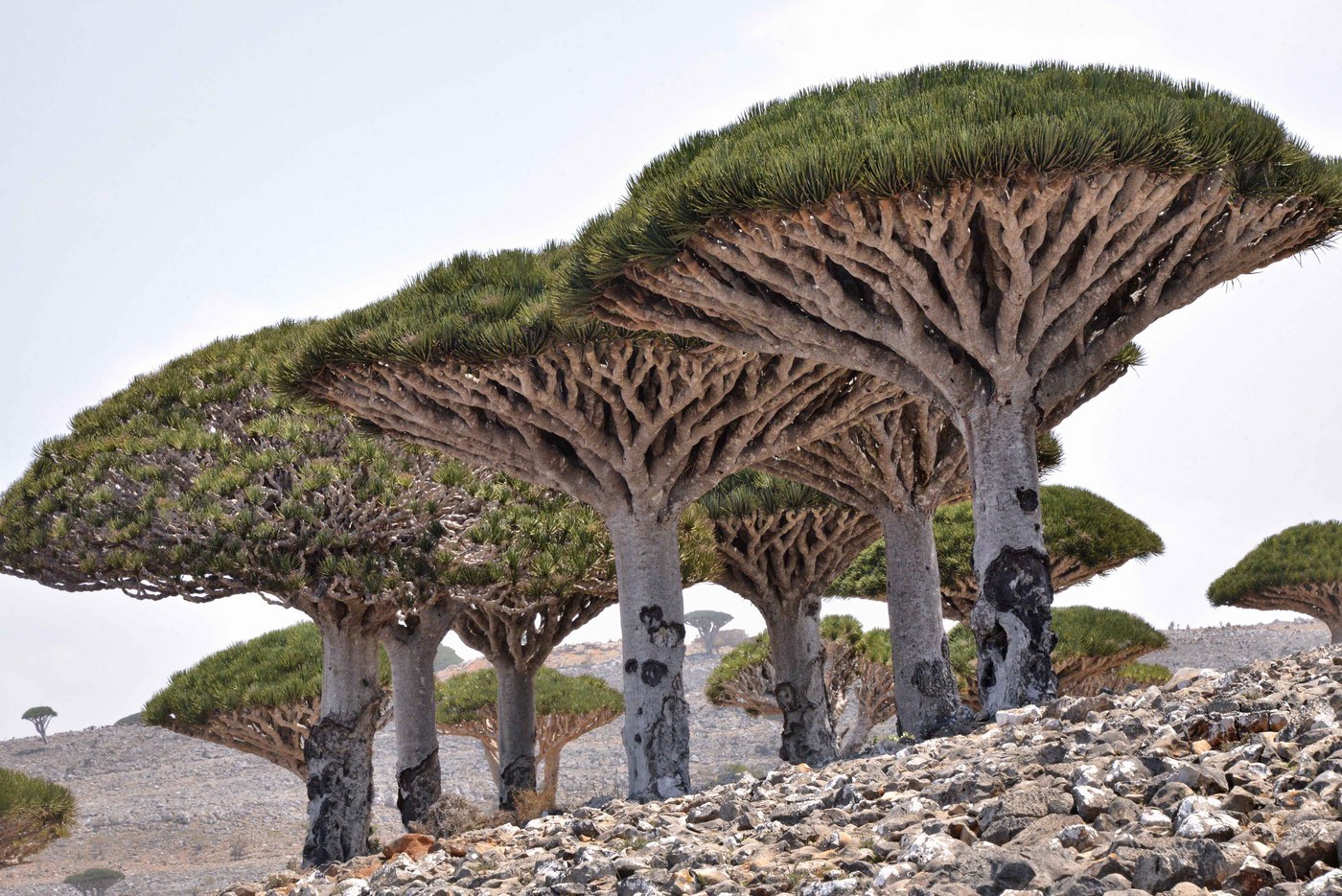
The Dragon Blood Tree (Dracaena cinnabari) is an iconic, slow-growing succulent tree famous for its umbrella-shaped, upward-branching crown and dense rosettes of stiff, sword-like leaves. Native to arid island uplands, it is extremely drought-tolerant and rewards patient, dry-side growing.
Light
Give the Dragon Blood Tree full sun to very bright light. Outdoors in suitable climates it wants an open, sunny position; indoors it needs the brightest spot possible, such as a large south-facing window, and benefits from supplemental grow lighting in dim rooms. Insufficient light causes weak, stretched growth and a loose, floppy rosette.
Water
Water low and infrequently; this species is very drought-tolerant and stores water in its trunk and leaves. Let the soil dry out almost completely between waterings, watering deeply but rarely during the warmer growing months and only sparingly in winter. Overwatering is the single greatest danger, quickly causing root and trunk rot. When in doubt, wait.
Soil & Potting
Use a gritty, extremely free-draining mix such as a cactus and succulent soil amended with extra pumice, perlite, or coarse sand. The roots must never sit in water. Choose a container with generous drainage holes; unglazed terracotta helps wick away excess moisture. Slightly alkaline to neutral soil suits its native limestone habitat.
Humidity & Temperature
This is a warm, dry-climate tree that prefers moderate to low humidity and warm temperatures. It is not frost-hardy and should be protected from cold; move container specimens indoors before temperatures drop. It tolerates heat well and appreciates good air circulation, which mimics the breezy, misty uplands of its origin.
Feeding
Feed lightly. During the active growing season, a diluted, balanced fertilizer applied once every month or two is ample. As a slow grower it needs little, and excess fertilizer can cause weak growth. Do not feed during the cool dormant period when the plant is barely growing.
Propagation
Dragon Blood Tree is usually grown from seed, which germinates slowly and demands patience over many years. Cuttings of branch tips can sometimes be rooted in a very free-draining medium kept barely moist, though success is variable. Whatever the method, expect this species to develop its characteristic form over a long span of time.
Repotting / Pruning
Repot infrequently, only every few years when clearly rootbound, always into fresh gritty mix and a pot just one size larger. Handle the shallow root system carefully. Pruning is rarely needed; you may remove dead lower leaves as they naturally shed. Cutting the growing tip can encourage the branching that gives the mature tree its umbrella crown.
Common Problems & Pests
Root and trunk rot from overwatering or poor drainage is the chief problem; keep the mix dry and airy. Etiolated, stretched growth signals too little light. Watch for scale insects and mealybugs on the leaf rosettes, and spider mites in hot, dry indoor air; treat promptly. Leaf tips may brown from cold exposure or erratic watering.
Seasonal Care Tips
In spring and summer, provide maximum light, warmth, and occasional deep but infrequent watering, plus light feeding. In autumn, reduce watering as growth slows. Through winter, keep the plant warm, bright, and nearly dry, protecting it from any chill. Consistency and restraint with water are the keys to long-term success.
Frequently asked questions
How often should I water a Dragon Blood Tree?
Rarely. Let the soil dry almost completely between waterings, watering deeply but infrequently in the growing season and only sparingly in winter. Overwatering causes fatal rot.
Why is my Dragon Blood Tree growing tall and floppy?
This is etiolation from too little light. Move it to the brightest possible position, ideally full sun or a large south-facing window with supplemental lighting.
Can I grow it indoors?
Yes, in a very bright spot with fast-draining soil and minimal watering. It is slow-growing and frost-tender, so indoor culture suits cold climates well.
Why is it growing so slowly?
That is completely normal. Dracaena cinnabari is naturally very slow-growing and develops its umbrella crown over many years. Patience is part of caring for it.
What soil is best?
A gritty, extremely free-draining cactus and succulent mix amended with pumice, perlite, or coarse sand, in a pot with ample drainage holes.