How to Care for Dumb Cane
Grow lush Dumb Cane (Dieffenbachia) indoors with tips on light, watering, humidity, feeding and propagation for big variegated leaves.
Read the full Dumb Cane encyclopedia entry →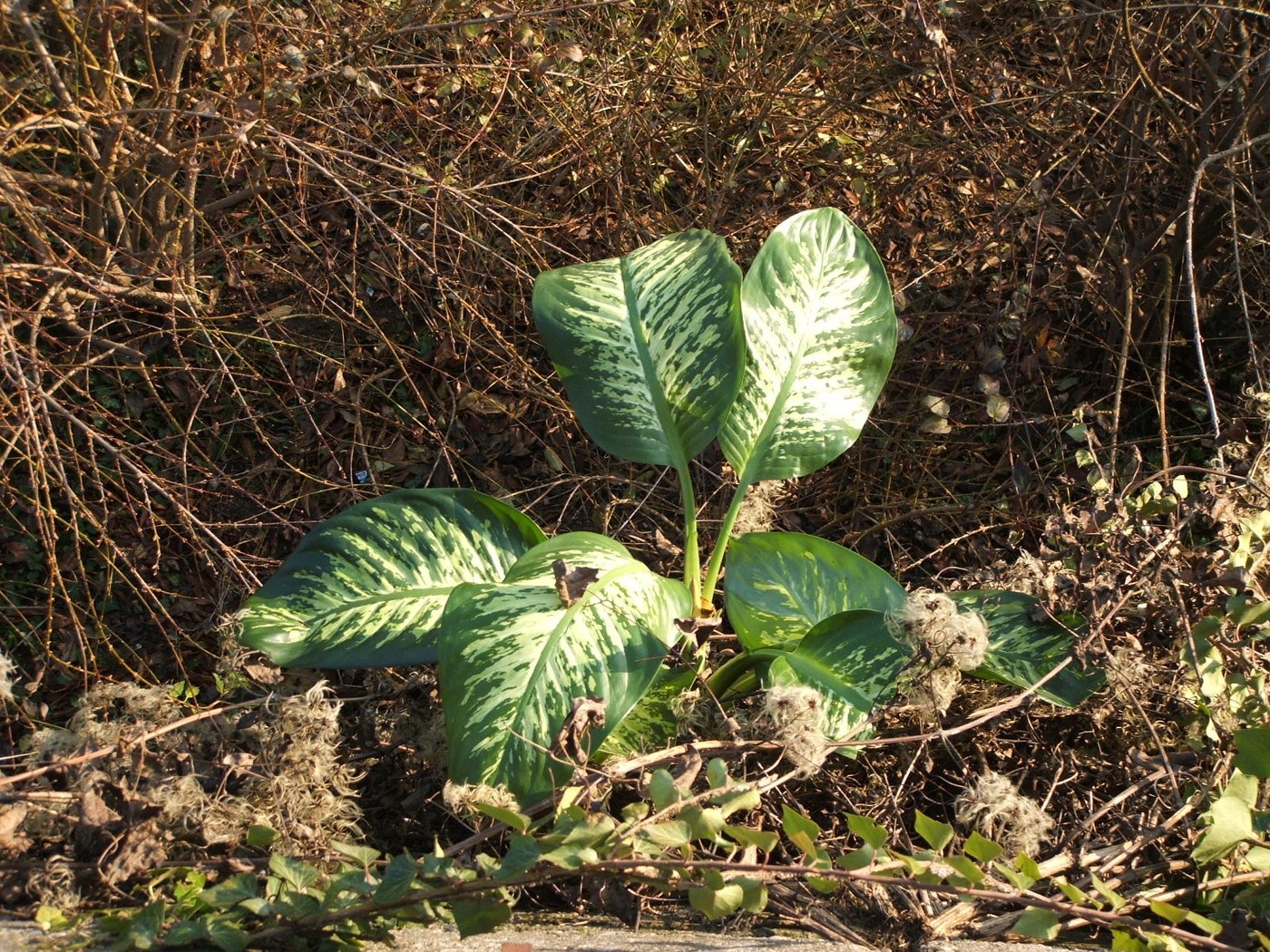
Dumb Cane (Dieffenbachia seguine) is a bold tropical houseplant grown for its large, dramatically variegated leaves splashed in cream, yellow, and green. It grows quickly and stays easy-going as long as it gets warmth, steady moisture, and protection from cold drafts.
Light
Dieffenbachia thrives in medium to bright indirect light. Bright, filtered light keeps the variegation vivid and growth compact; too little light makes the plant leggy with smaller, plainer leaves. Keep it out of direct sun, which bleaches and scorches the foliage. An east-facing window or a few feet back from a brighter window is ideal. Rotate the pot regularly so it does not lean toward the light.
Water
Water when the top inch of soil feels dry, then water thoroughly until it drains from the bottom. Dieffenbachia likes consistent moisture during the growing season but dislikes sitting in water; soggy soil quickly causes root rot and mushy stems. Let the top inch dry out between waterings and reduce frequency in winter. Empty the saucer after each watering so the roots never stand in runoff.
Soil & Potting
Use a light, well-draining, peat- or coir-based potting mix amended with perlite for aeration. A standard aroid or houseplant mix works well; adding orchid bark improves drainage further. Always use a container with drainage holes to prevent water from pooling around the roots.
Humidity & Temperature
As a tropical plant, Dumb Cane enjoys warmth and moderate to high humidity. Keep temperatures between 65-80F (18-27C) and avoid anything below 55F (13C), which can cause leaf drop and chilling damage. It tolerates average household humidity but grows lusher above 50%; boost humidity with a pebble tray, grouping, or humidifier, and keep it away from cold drafts and heating vents.
Feeding
Feed every 4-6 weeks during spring and summer with a balanced liquid houseplant fertilizer at half strength. Dieffenbachia is a moderately hungry, fast grower, so steady feeding supports large leaves, but avoid overdoing it, as salt buildup causes brown leaf edges. Stop feeding in late fall and winter when growth slows.
Propagation
Dumb Cane is easy to propagate from stem cuttings. Cut a section of cane with at least one node, let the cut end callus for a day, then root it in water or moist soil kept warm and humid. Older, leggy plants can be air-layered or the bare cane can be cut into pieces and laid horizontally on moist mix to sprout new shoots. Wear gloves and wash your hands after handling cut stems, as the sap can irritate skin.
Repotting / Pruning
Repot every 1-2 years in spring, moving up one pot size when roots fill the container. To manage height on a leggy plant, cut the main cane back; new growth will sprout below the cut, and you can root the removed top. Remove lower yellowing leaves and any damaged foliage with clean scissors. Use gloves when pruning to avoid contact with the sap.
Common Problems & Pests
Yellowing lower leaves often indicate overwatering or cold stress, while brown leaf edges point to low humidity, dry soil, or fertilizer salt buildup. Fading variegation means the plant needs more light. Leggy, stretched growth also signals insufficient light. Watch for spider mites, mealybugs, aphids, and scale; inspect leaf undersides regularly and treat with insecticidal soap. Persistently soggy soil leads to soft, rotting stems.
Seasonal Care Tips
During spring and summer, expect fast growth: water regularly, feed, and rotate for even shape. In fall and winter, cut back on watering, stop feeding, and protect the plant from cold windows and drafts. Wipe the large leaves occasionally to remove dust and keep them glossy, and step up humidity when indoor heating dries the air.
Frequently asked questions
Why are the lower leaves of my Dumb Cane turning yellow?
Yellowing lower leaves are most often caused by overwatering or exposure to cold. Let the top inch of soil dry between waterings, make sure the pot drains well, and keep the plant away from drafts and temperatures below 55F (13C).
Why is my Dieffenbachia getting tall and leggy?
Legginess usually means the plant needs more light. Move it to a brighter spot with indirect light. You can also cut the tall cane back to encourage bushier growth from lower on the stem, and root the cutting.
How do I propagate Dumb Cane?
Take a stem cutting with at least one node, let the cut end callus for a day, then root it in water or moist soil kept warm and humid. Bare cane sections laid on moist mix will also sprout new shoots. Wear gloves and wash your hands afterward, as the sap can irritate skin.
Why are the leaf edges turning brown?
Brown edges typically result from low humidity, letting the soil dry out too much, or fertilizer salt buildup. Raise humidity, keep watering consistent, and flush the soil occasionally with plain water to clear excess salts.
Dumb Cane identified by the community
Recent Dumb Cane specimens identified with Plant Identifier.