Dumb Cane
Dieffenbachia seguine
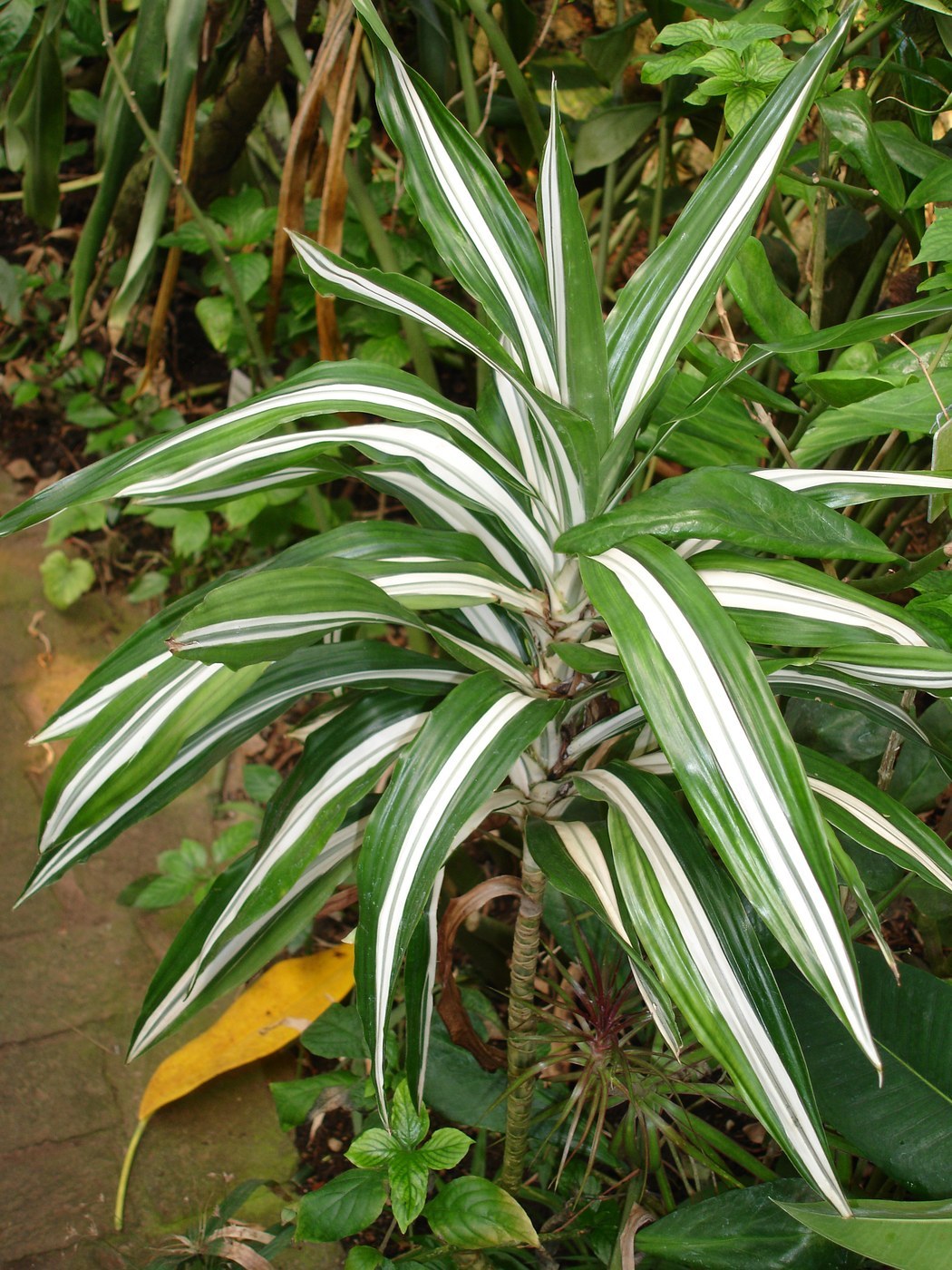
Dumb cane is a popular tropical houseplant with large, variegated cream-and-green leaves. It grows easily into a bushy, upright specimen and tolerates typical indoor conditions.
- Light
- Medium to bright indirect light
- Water
- When top inch is dry
- Difficulty
- Easy
Got a plant like this?
Identify any plant from a photo, free.
Overview
Dumb cane (Dieffenbachia) is an evergreen tropical perennial in the arum family, native to the Caribbean and Central and South America. It is grown for its large, showy leaves splashed with cream, white, and shades of green.
It is an easy and rewarding houseplant, growing into a bushy, upright specimen and tolerating typical indoor conditions with modest care.
How to identify it
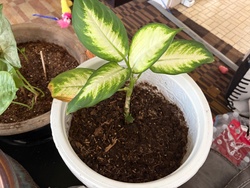
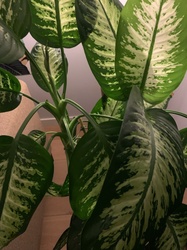
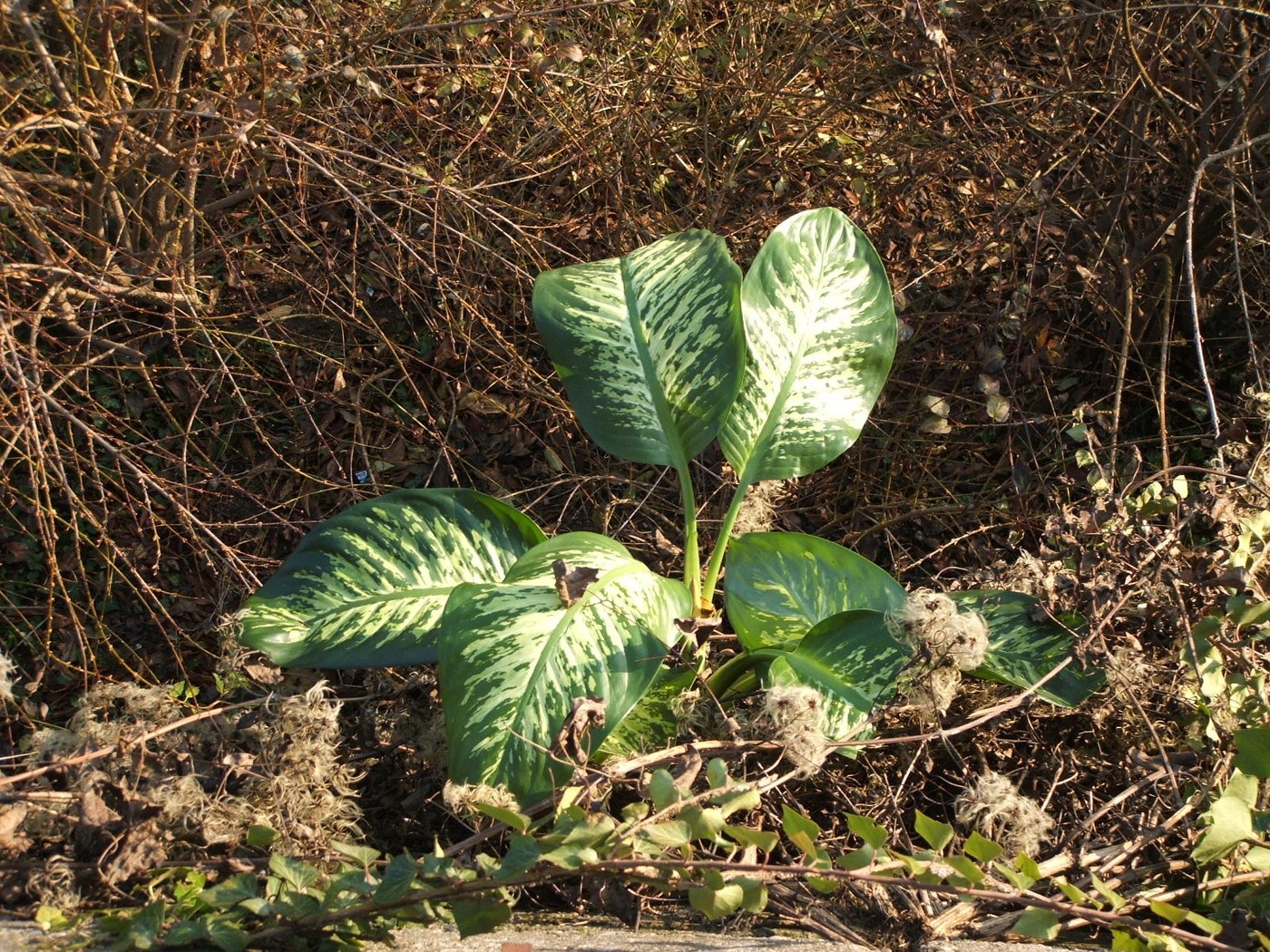
- Leaves: Large, broad, oval leaves heavily variegated in cream, white, yellow, and green, on stout petioles
- Stems: Thick, cane-like, upright stems marked with leaf scars
- Habit: Upright, bushy clump that can become leggy with age
- Size: Commonly 2-5 feet tall indoors
Care & growing
Light: Medium to bright, indirect light. Variegation fades in low light; direct sun scorches leaves.
Water: Water when the top inch of soil dries; keep lightly moist but not soggy.
Soil: Rich, well-draining potting mix.
Temperature: Prefers warm conditions, 65-80°F (18-27°C); avoid cold drafts below 60°F.
Humidity: Appreciates moderate to high humidity.
Feeding: Balanced fertilizer monthly during the growing season.
Propagation: From stem cuttings or by rooting cane sections.
Habitat & origin
Dieffenbachia is native to the tropical rainforests of the Caribbean, Mexico, and Central and South America, where it grows on the shaded, humid forest floor.
It is grown outdoors only in frost-free tropical climates (USDA zones 10-12) and is cultivated worldwide as a popular indoor foliage plant.
Frequently asked questions
Why is my dieffenbachia losing variegation?
Too little light causes the leaves to revert toward solid green. Move it to brighter, indirect light.
How do I keep it from getting leggy?
Provide bright indirect light and cut back tall stems to encourage bushier regrowth; the cuttings can be propagated.
How big does dumb cane grow indoors?
Indoors it commonly reaches 2 to 5 feet tall, forming an upright, bushy clump of broad, variegated leaves on thick, cane-like stems.
Where is dumb cane originally from?
It is native to the tropical rainforests of the Caribbean, Mexico, and Central and South America, where it grows on the shaded, humid forest floor.
Dumb Cane guides
In-depth guides for identifying, growing, and caring for Dumb Cane.
Dumb Cane identified by the community
Real specimens identified with Plant Identifier.