Dumb Cane Identification Guide
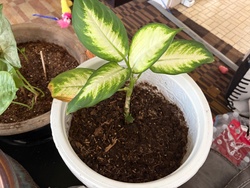
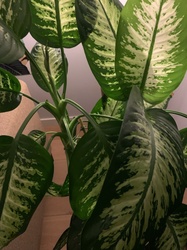
Identify dumb cane (Dieffenbachia) by its large, variegated, cream-splashed leaves on thick cane-like stems.
Read the full Dumb Cane encyclopedia entry →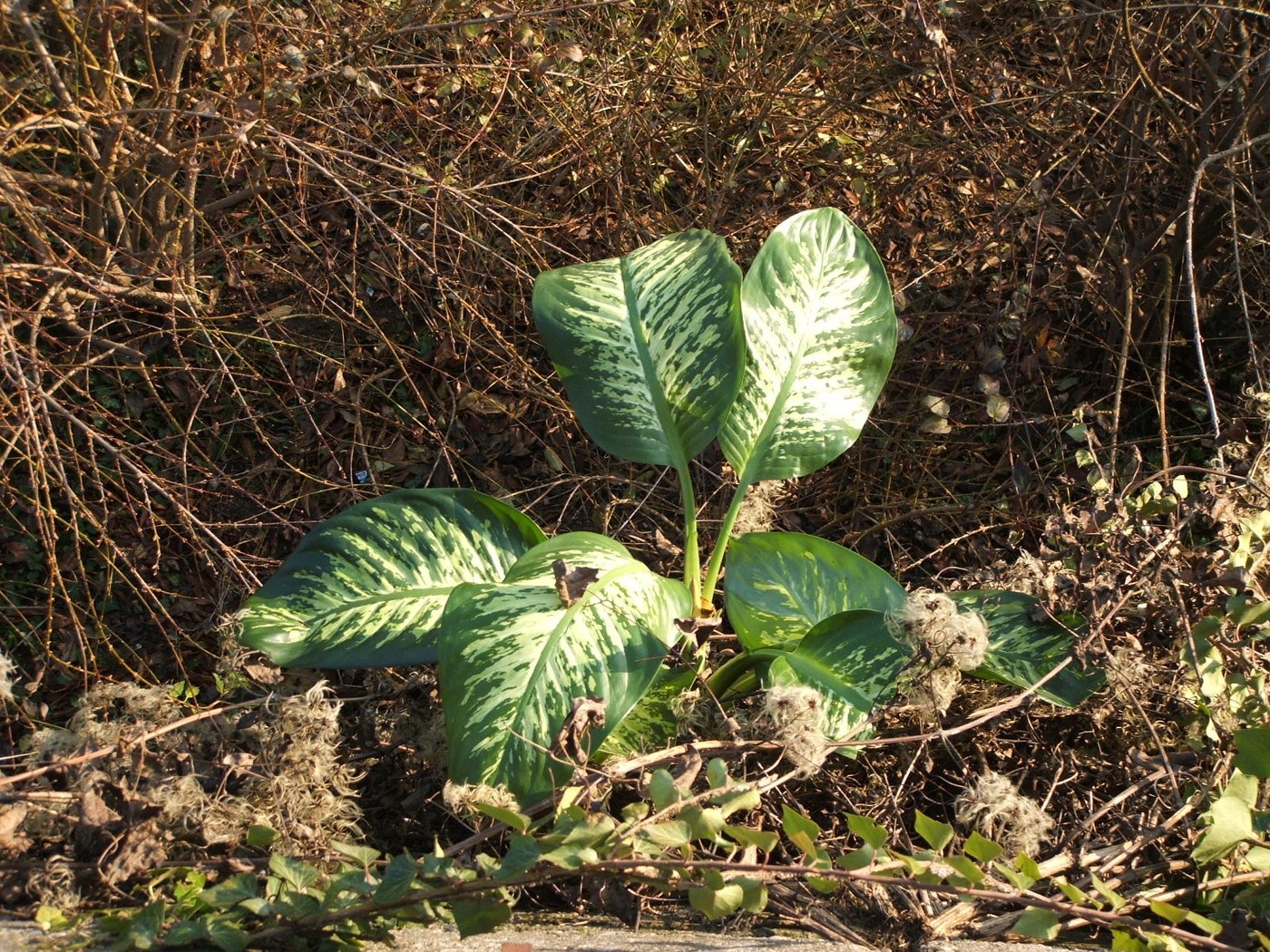
Key Identifying Features
Dumb cane (Dieffenbachia species and hybrids) is identified by:
- Large, oblong, pointed leaves boldly variegated with cream, white, or yellow blotches on green.
- Thick, fleshy, cane-like stems that show ringed leaf scars.
- An upright, somewhat shrubby habit reaching 0.6–1.8 m (2–6 ft).
Leaves & Stems
Leaves are broadly lance-shaped to oblong, often 20–35 cm (8–14 in) long, with a soft, slightly glossy surface and pointed tip. The hallmark is the irregular variegation — patterns vary by cultivar from heavy cream centers ('Tropic Snow', 'Camille') to fine green speckling. The midrib is prominent and pale.
Stems are stout, green, succulent canes marked with distinct horizontal rings (leaf scars) where lower leaves have dropped — older plants reveal a bare lower cane topped by a crown of leaves. New leaves emerge rolled from the stem tip. Cut stems exude a watery sap.
Flowers & Fruit
Dumb cane is an aroid, so when it flowers (uncommon indoors) it produces a typical greenish spathe surrounding a spadix, tucked among the leaf bases. The spathe is modest and easily missed. Identification relies on the variegated foliage and canes, not the flower.
How to Tell It Apart from Look-Alikes
- Aglaonema (Chinese evergreen): similar variegated leaves but generally smaller, narrower, with thinner stems and often silvery/pink patterning; dumb cane leaves are broader with thicker canes.
- Caladium: heart-shaped leaves on long petioles from a tuber, dying back seasonally; dumb cane has oblong leaves on a persistent cane.
- Philodendron/Monstera: lobed or holed leaves and climbing/aerial roots, unlike dumb cane's solid oblong leaves on upright canes.
The clincher: broad cream-variegated oblong leaves on thick ringed canes = dumb cane.
Where You'll Find It
Native to tropical rainforest understory of the Americas (Mexico to South America and the Caribbean). Worldwide it's a popular foliage houseplant for bright, indirect light. Outdoors it grows only in warm, frost-free, shaded gardens (USDA zones 10–12).
Quick ID Checklist
- Large, oblong, pointed leaves
- Bold cream/white/yellow variegation on green
- Thick, fleshy cane stems with ring scars
- New leaves emerge rolled from the cane tip
- Watery sap in cut stems
A leafy, upright plant with broad cream-splashed leaves atop thick, ringed canes is dumb cane.
Frequently asked questions
How do I tell dumb cane from a Chinese evergreen?
Dumb cane (Dieffenbachia) has broader, larger oblong leaves on thick, fleshy canes with ring scars. Chinese evergreen (Aglaonema) tends to have narrower leaves, thinner stems, and often silvery or pink variegation.
Why does my dumb cane have a bare lower stem?
As the plant ages it naturally sheds its lowest leaves, leaving a bare cane marked with horizontal ring scars and a crown of leaves on top. This caning habit is normal and a key identifying feature.
How big does dumb cane get?
Dumb cane is an upright, somewhat shrubby plant that typically reaches 0.6–1.8 m (2–6 ft) tall, with a crown of large oblong leaves atop thick, ringed canes.
Why are dumb cane leaves so heavily patterned?
The bold cream, white, or yellow variegation on a green leaf is a defining feature. The exact pattern varies by cultivar, from heavy cream centers in 'Tropic Snow' and 'Camille' to fine green speckling.
Dumb Cane identified by the community
Recent Dumb Cane specimens identified with Plant Identifier.