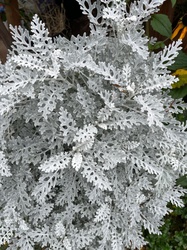
How to Care for Dusty Miller
Grow silvery, felted Dusty Miller foliage with full sun, lean soil, and minimal watering for season-long color and contrast.
Read the full Dusty Miller encyclopedia entry →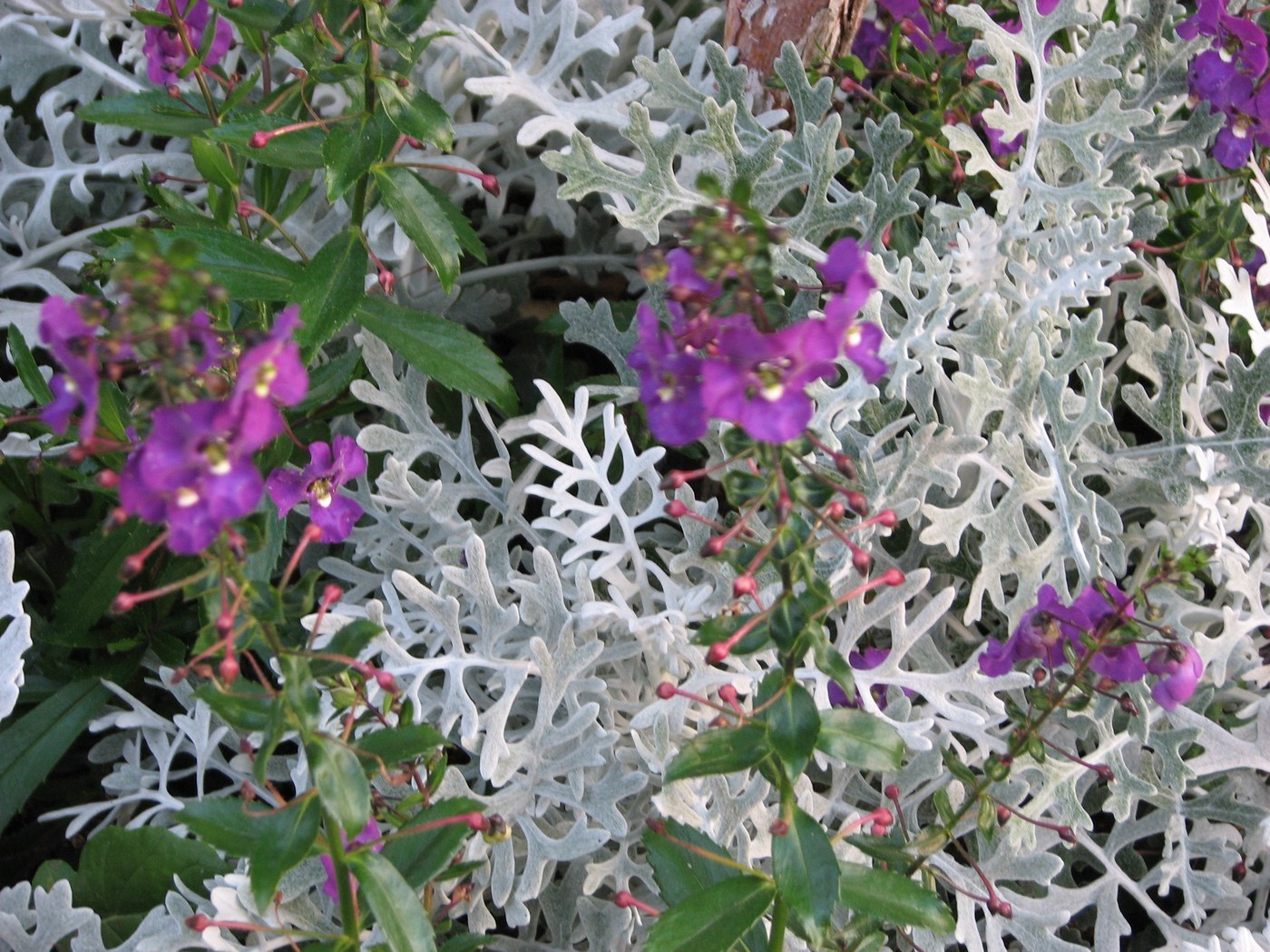
Dusty Miller (Jacobaea maritima) is a Mediterranean-native subshrub grown for its striking silver-gray, deeply lobed, felted foliage that adds cool contrast to beds, borders, and containers. It is an easy, tough plant that thrives on neglect once established.
Light
Give Dusty Miller full sun for the best silver coloring and dense, compact growth. In too much shade the foliage greens up, stems stretch, and the plant loses its signature frosted look. Six or more hours of direct sun daily is ideal.
Water
Water is low; Dusty Miller is notably drought-tolerant once established. Water new plantings regularly for the first few weeks to settle roots, then only during extended dry spells. The felted leaves reduce moisture loss, so let the soil dry between waterings and avoid keeping the crown wet.
Soil & Potting
Plant in light, well-drained soil of average to poor fertility. It tolerates sandy and gritty soils and even coastal conditions. In containers, use a free-draining potting mix, and add perlite or coarse sand if drainage is slow. Rich, heavy soils encourage floppy growth and root problems.
Humidity & Temperature
Dusty Miller prefers warm, dry conditions and dislikes prolonged humidity, which can mat and rot the fuzzy foliage. It is a tender perennial usually grown as an annual and handles light frost; in mild-winter regions it may overwinter and return.
Feeding
Feed sparingly. A single light application of balanced fertilizer at planting is usually enough for the season. Over-feeding produces lush green growth at the expense of the compact silver form.
Propagation
Propagate by seed started indoors 8 to 10 weeks before the last frost, pressing seed onto the surface as light aids germination. You can also take softwood stem cuttings in summer and root them in a gritty, well-drained medium.
Repotting / Pruning
Pinch young plants to encourage bushiness. If flower stalks appear, many growers shear them off to keep the focus on foliage and prevent legginess. Cut back leggy or winter-worn plants hard in spring to force fresh silver growth.
Common Problems & Pests
Root and stem rot from soggy soil is the main issue; ensure sharp drainage. In humid weather, rust and leaf spots can appear. Aphids may cluster on new growth. Good air circulation and restrained watering prevent most problems.
Seasonal Care Tips
Start or plant out after frost danger passes. Through summer it needs little care beyond occasional deadheading of flower stems. In fall, reduce watering; where it overwinters, tidy and prune back in early spring to rejuvenate.
Frequently asked questions
Why is my Dusty Miller turning green instead of silver?
Insufficient light is the usual cause. The felted silver look develops best in full sun; in shade the foliage greens and stretches. Move it to a brighter spot for stronger silver coloring.
How often should I water Dusty Miller?
Rarely once established. Water new plants regularly to root them, then only during long dry spells. Let the soil dry between waterings, as it is drought-tolerant and dislikes soggy roots.
Should I remove the flowers?
Many growers do. Dusty Miller is grown for foliage, and its small yellow flower clusters can make plants leggy. Shearing off flower stalks keeps growth compact and focused on the silver leaves.
Can Dusty Miller survive winter?
It is a tender perennial often grown as an annual. In mild-winter regions it may overwinter and regrow from the base; cut it back hard in early spring to encourage fresh growth.
Dusty Miller identified by the community
Recent Dusty Miller specimens identified with Plant Identifier.