Dusty Miller
Jacobaea maritima
Grown for its felted, silvery-white foliage rather than flowers, dusty miller is a versatile foil plant that tolerates heat, drought, and salt.
- Light
- Full sun
- Water
- Low; drought-tolerant
- Difficulty
- Easy
Got a plant like this?
Identify any plant from a photo, free.
Overview
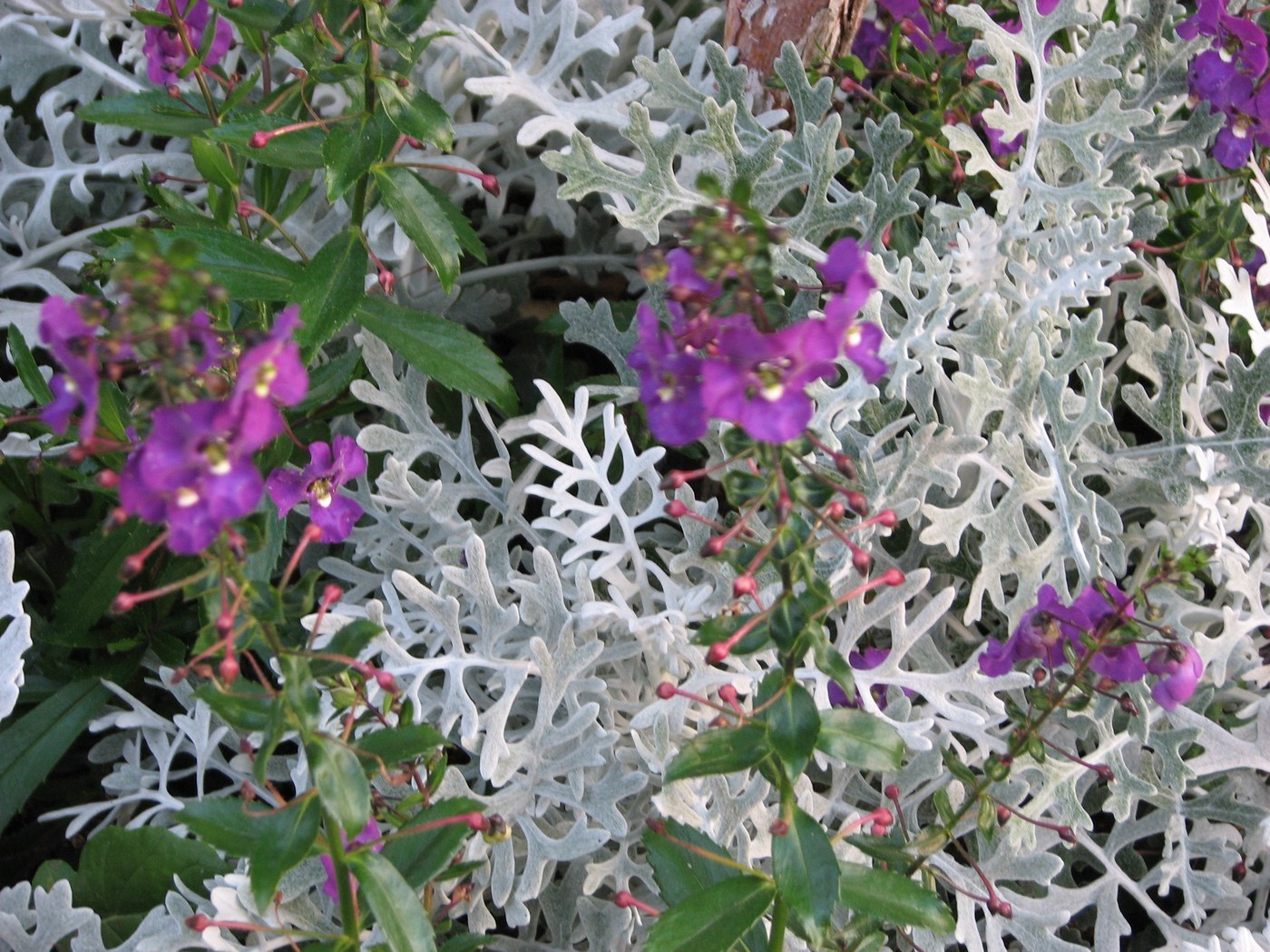
Dusty miller is prized not for its bloom but for its strikingly silver, deeply lobed foliage covered in fine white hairs that give it a frosted, almost woolly look. That pale color makes it a superb contrast plant, brightening beds and cooling hot color combinations.
Though a tender perennial, it is most often grown as an annual. It is exceptionally tough, shrugging off drought, heat, poor soil, and coastal salt spray, and the small yellow summer flowers are usually removed to keep the focus on the foliage.
How to identify it
- Habit: Mounding, 6-15 in tall
- Foliage: Deeply lobed, fern-like leaves coated in dense white-silver hairs
- Color: Silvery white to gray-green
- Flowers: Small, mustard-yellow daisies in summer (often pinched off)
- Texture: Soft, felted, woolly to the touch
Care & growing
Light: Full sun keeps the silver color brightest; shade makes it green and leggy.
Water: Drought-tolerant once established; water sparingly and avoid wetting the foliage.
Soil: Well-drained, even poor or sandy soil.
Temperature: Heat- and cold-tolerant; often overwinters in mild climates.
Feeding: Minimal; it thrives on lean soil.
Propagation: From seed or stem cuttings. Pinch back to keep compact and remove flowers to maintain dense foliage.
Habitat & origin
Native to the Mediterranean region, particularly rocky and coastal areas of southern Europe and North Africa.
Its salt and drought tolerance make it a favorite for seaside and xeriscape plantings, and it is grown worldwide as an ornamental foliage annual in beds, borders, and containers.
Frequently asked questions
Should I let dusty miller flower?
Most gardeners pinch off the yellow flowers to keep the plant compact and focus attention on its silver foliage.
Why is my dusty miller turning green and floppy?
Too little sun. It needs full sun to keep its bright silver color and dense, upright form.
Is dusty miller a perennial?
It is a tender perennial usually grown as an annual; in mild, frost-light climates it often survives winter and returns.
Dusty Miller guides
In-depth guides for identifying, growing, and caring for Dusty Miller.
How to Care for Dusty Miller
Grow silvery, felted Dusty Miller foliage with full sun, lean soil, and minimal watering for season-long color and contrast.
Dusty Miller Identification Guide
Identify Dusty Miller by its striking silver-white, felted, deeply lobed leaves grown for foliage rather than its small yellow flowers.