
How to Care for Dutchman's Breeches
A delicate spring woodland ephemeral with pantaloon-shaped white flowers and lacy foliage that needs shade and rich, moist soil.
Read the full Dutchman's Breeches encyclopedia entry →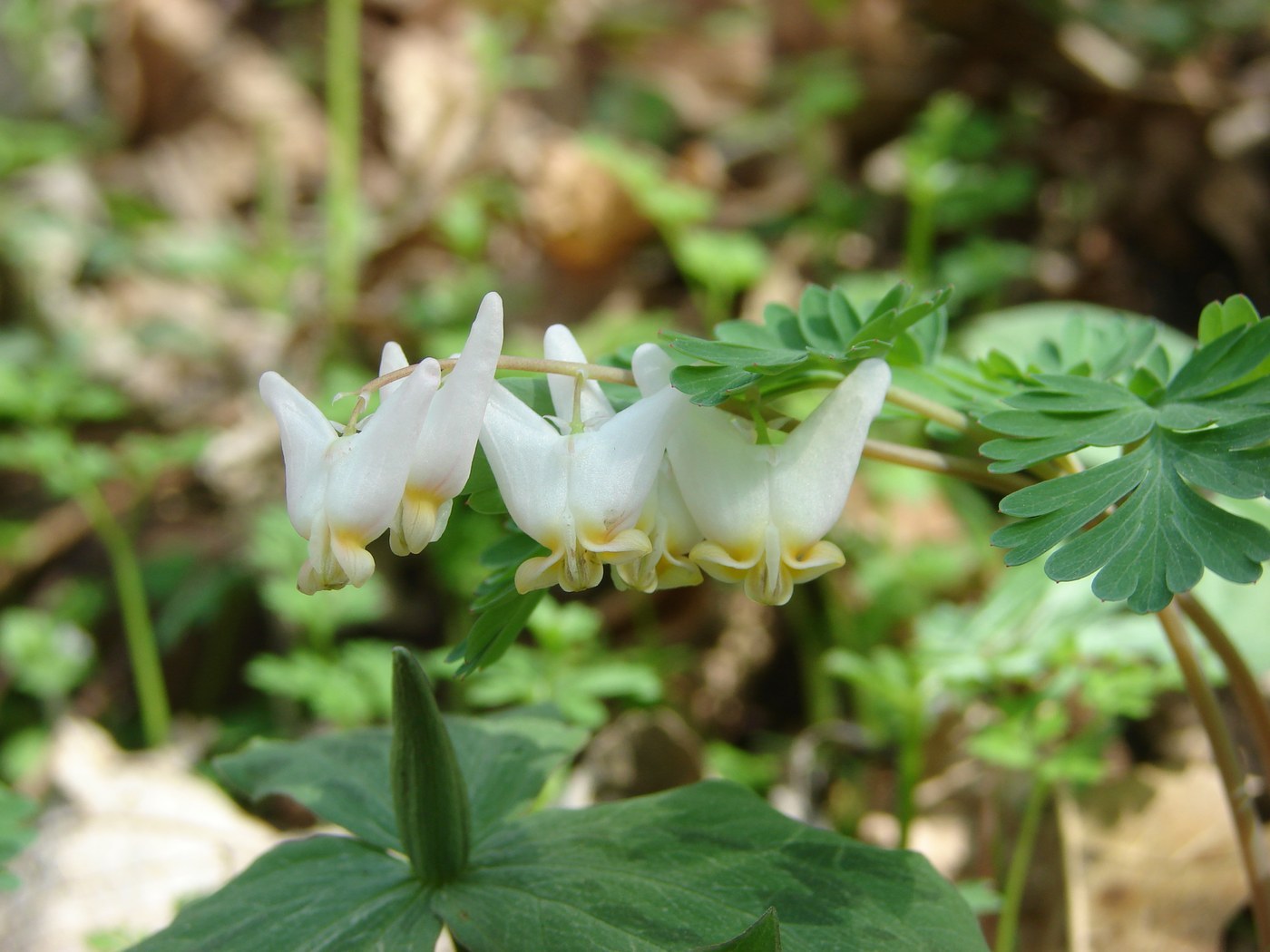
Dutchman's breeches (Dicentra cucullaria) is a charming spring woodland ephemeral, named for its dangling white flowers shaped like tiny upside-down pantaloons above finely divided, fern-like blue-green foliage. It emerges, blooms, and goes dormant early, making it a delicate treasure for the shade garden.
Light
Grow it in partial to full shade, echoing the spring woodland floor where it thrives under trees that leaf out after it blooms. It welcomes the bright, dappled light of early spring before the canopy closes, then tolerates deeper shade as it fades. Avoid hot, exposed, sunny sites, which are far too harsh for this fragile plant.
Water
Keep the soil moderately moist, especially in spring during active growth and flowering, when steady moisture is essential. As the plant naturally dies back in early summer it enters dormancy and needs far less water — the resting tubers actually prefer drier, undisturbed conditions through summer. Never let it sit in soggy, waterlogged soil at any time.
Soil & Potting
Provide a rich, humusy, loose woodland soil with excellent drainage and abundant organic matter, ideally slightly acidic to neutral. Leaf mold and compost mimic its natural forest-floor habitat and support the small underground tubers. Because it is a fleeting ephemeral, it is best planted in the ground among other shade plants rather than fussed over in a pot.
Humidity & Temperature
This is a cool-climate temperate plant that enjoys the moist, humid air of a shaded woodland in spring. It is very cold-hardy and relies on winter chill to reset its dormant tubers. It dislikes heat, so cool spring conditions bring out its best; by the time summer warmth arrives it has usually retreated underground until the following year.
Feeding
Dutchman's breeches needs very little feeding. A light annual top-dressing of leaf mold or compost in autumn or early spring supplies ample nutrients and steadily improves the soil. Heavy fertilizer is unnecessary and can do more harm than good; building rich organic soil is the natural, gentle way to keep this ephemeral healthy and blooming.
Propagation
Propagate by carefully dividing the small pink tuber clusters just as the plant goes dormant in late spring or early summer, replanting them immediately at the same depth. It also grows from seed, which is naturally dispersed and requires a cool, moist period to germinate; seed-grown plants take a few years to reach flowering size, so patience is needed.
Repotting / Pruning
No pruning is required for this self-tidying ephemeral — simply let the foliage yellow and die back naturally after flowering, as this feeds the tubers for next year. Mark its spot so you do not dig into the dormant tubers by accident. Disturb established colonies as little as possible; divide only when you want to spread it to a new area.
Common Problems & Pests
This is a naturally trouble-free native with few pests. Its biggest vulnerabilities are cultural: too much sun or dried-out soil in spring causes early collapse, while soggy soil can rot the tubers. Slugs may nibble the tender foliage in damp conditions. Remember that its summer disappearance is normal dormancy, not death — do not overwater the empty spot.
Seasonal Care Tips
In early spring, it emerges and blooms — enjoy the show and keep the soil evenly moist. In late spring, let the foliage die back undisturbed to nourish the tubers. Through summer and autumn it rests dormant underground, needing dry, undisturbed soil and a top-dressing of leaf mold. Winter chill prepares it to return the following spring.
Frequently asked questions
Why did my Dutchman's breeches disappear in summer?
That is normal. It is a spring ephemeral that blooms early, then dies back and goes dormant underground for summer, returning the following spring. Do not overwater the empty spot.
How much light does it need?
Partial to full shade. It loves the bright dappled light of early spring under deciduous trees, then tolerates deeper shade. Avoid hot, sunny, exposed sites.
How do I propagate Dutchman's breeches?
Divide the small pink tuber clusters as the plant goes dormant in late spring, replanting them right away at the same depth. Seed also works but is slow.
What soil is best for it?
A rich, loose, humusy woodland soil with excellent drainage and lots of organic matter like leaf mold, kept moist in spring but never waterlogged.