Dutchman's Breeches
Dicentra cucullaria
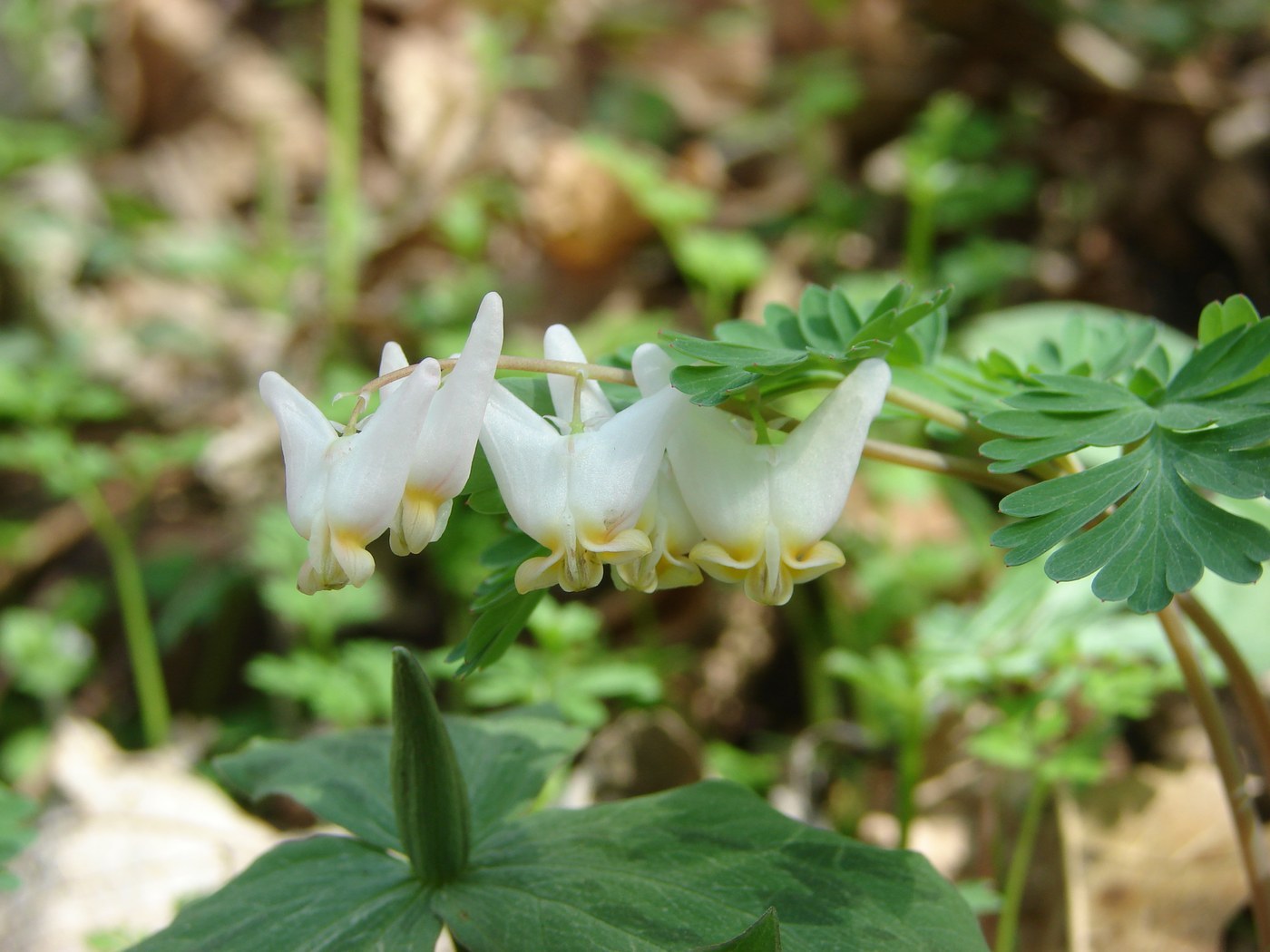
A delicate spring ephemeral whose white, pantaloon-shaped flowers hang in a row like tiny upside-down breeches. It blooms early in woodlands then vanishes by summer.
- Light
- Partial to full shade
- Water
- Moderate; moist in spring
- Difficulty
- Moderate
Got a plant like this?
Identify any plant from a photo, free.
Overview
Dutchman's breeches is a beloved spring ephemeral of eastern North American forests, named for its unmistakable white flowers shaped like a pair of baggy old-fashioned pantaloons hung upside down to dry. A close relative of bleeding hearts, it emerges, blooms, and sets seed in early spring before the trees leaf out.
The plant relies on bumblebee queens for pollination and on ants for seed dispersal, as its seeds bear fleshy appendages that ants carry back to their nests. By early summer it retreats entirely into dormancy.
How to identify it
- Flowers: White with yellow tips, double-spurred and shaped like upside-down pantaloons, dangling in a row along an arching stalk
- Leaves: Finely divided, fern-like, gray-green, all from the base
- Habit: Low, clump-forming spring ephemeral 6-12 inches tall, growing from a cluster of small pink bulblets
- Bloom time: Early to mid-spring
- Dormancy: Foliage withers and disappears by early summer
Care & growing
Dutchman's breeches needs woodland conditions and patience.
- Light: Partial to full shade; benefits from spring sun before canopy fills in
- Water: Moist, well-drained soil in spring; tolerant of summer dryness when dormant
- Soil: Rich, humusy, neutral to slightly acidic woodland soil
- Temperature: Hardy in USDA zones 3-7
- Feeding: Leaf mold mulch
- Propagation: By separating the small bulblets when dormant, or from seed (slow); avoid disturbing established clumps
Habitat & origin
Dicentra cucullaria is native to eastern North America, with a separate population in the Pacific Northwest.
It grows in rich, moist deciduous woodlands, on wooded slopes, ravines, and rocky ledges, usually in dappled spring light. It thrives in the leaf-litter-rich soils of mature hardwood forests.
Frequently asked questions
Why is it called Dutchman's breeches?
The white flowers look like tiny pairs of baggy pantaloons or breeches hung upside down, resembling the traditional trousers once worn by the Dutch.
Where does the plant go in summer?
It is a spring ephemeral that naturally dies back to underground bulblets by early summer and reappears the following spring.
Is Dutchman's breeches related to bleeding heart?
Yes, it is in the same genus (Dicentra) as bleeding hearts and shares their finely cut foliage and distinctive heart- or pantaloon-shaped flowers.
How are its seeds spread?
Each seed has a fatty appendage called an elaiosome that attracts ants, which carry the seeds to their nests, helping the plant disperse.
Dutchman's Breeches guides
In-depth guides for identifying, growing, and caring for Dutchman's Breeches.
How to Care for Dutchman's Breeches
A delicate spring woodland ephemeral with pantaloon-shaped white flowers and lacy foliage that needs shade and rich, moist soil.
Dutchman's Breeches Identification Guide
Recognize Dutchman's Breeches by its dangling white pantaloon-shaped flowers, finely divided fern-like leaves, and early-spring woodland habit, and tell it from its sister Squirrel Corn.