Dwarf Alberta Spruce Identification Guide
Identify Dwarf Alberta Spruce by its dense, perfect cone shape, tiny soft needles, and extremely slow growth.
Read the full Dwarf Alberta Spruce encyclopedia entry →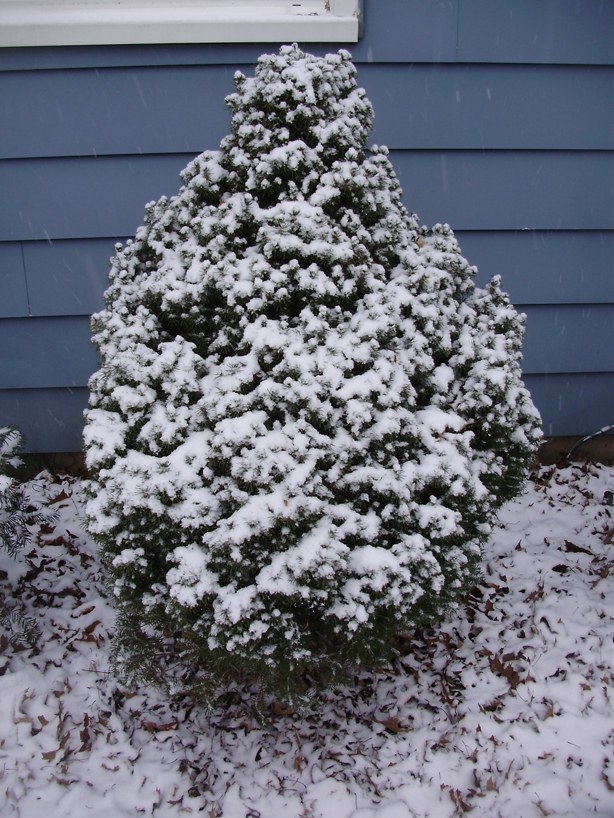
Key Identifying Features
Dwarf Alberta Spruce (Picea glauca 'Conica') is a miniature cultivar of white spruce, prized as a living miniature evergreen. Its signature is a naturally tight, symmetrical cone (pyramid) shape that needs no pruning — a feature so distinctive that most people identify it on silhouette alone.
- Dense, perfectly conical form, broad at the base tapering to a point
- Extremely slow-growing, 2–4 in per year, reaching only 6–8 ft after decades
- Soft, fine, bright green to grayish-green needles packed tightly together
- Usually seen as a tidy 1–4 ft specimen in pots, borders, and by entryways
Leaves & Stems
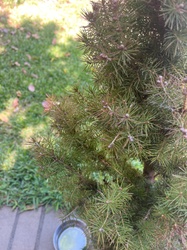
Needles are very short (about ¼–½ in), thin, soft, and four-sided, radiating all around the twig. Unlike many spruces, they are soft to the touch rather than sharp, and densely crowded so the foliage looks plush and fuzzy. New spring growth emerges a bright lime-green against the older bluish-green. Crushed needles release a sharp, resinous, slightly skunky or camphor scent typical of white spruce. Branches are short, stiff, and packed so tightly you can barely see the interior stems.
Flowers & Fruit
As a conifer, it has no flowers. It very rarely produces the small cylindrical cones typical of white spruce; most landscape specimens never cone at all. If present, cones are small (1–2 in), light brown, and pendant.
How to Tell It Apart from Look-Alikes
- Dwarf Globe Blue Spruce / Dwarf mugo pine: mugo pine has long needles in bundles of 2 — Dwarf Alberta has single, tiny needles attached individually.
- Boxwood or arborvitae topiary: those are sheared into cones; Dwarf Alberta forms its cone naturally and has needle (not scale or flat) foliage.
- Standard white spruce: the parent species grows tall and open; the dwarf stays dense and miniature.
- Reverted shoots: watch for a sudden burst of longer, faster, coarser growth from one spot — this is the plant reverting to normal white spruce and should be cut out.
The soft, tiny needles + naturally perfect dense cone + glacially slow growth combination is unique among common landscape plants.
Where You'll Find It
A staple of temperate-climate foundation plantings, container gardens, and formal entryways across North America and Europe. It's commonly sold as matched pairs flanking doorways, and as living Christmas tabletop trees. It prefers full sun, cool summers, and moist, well-drained soil, and is prone to spider-mite browning in hot, dry, stagnant air.
Quick ID Checklist
- Dense, naturally cone-shaped evergreen
- Very slow growth; small stature (often 1–4 ft)
- Tiny (¼–½ in), soft, four-sided single needles
- Bright lime new growth over bluish-green old foliage
- Resinous white-spruce scent when crushed
- No flowers; cones extremely rare
- Often planted in pairs by doors or in pots
If you see a knee-high, flawlessly cone-shaped little evergreen with soft fuzzy needles that someone clearly never trimmed into shape, it's a Dwarf Alberta Spruce.
Frequently asked questions
How fast does Dwarf Alberta Spruce grow?
Very slowly — typically only 2–4 inches per year. A specimen takes 25–30 years to reach 6–8 feet, which is why it stays a manageable small accent plant for so long.
Why is part of my spruce growing much faster and coarser?
That's a reversion. Because it's a sport of white spruce, an occasional branch reverts to the vigorous wild form with longer needles and rapid growth. Prune the reverted shoot back to its origin to keep the dwarf shape, or it will eventually dominate.
Are the needles sharp like other spruces?
No. Although it's a true spruce, the dwarf cultivar's needles are unusually short and soft to the touch, giving the plant a plush, pettable texture rather than a prickly one.
Why does my Dwarf Alberta Spruce turn brown in summer?
The most common cause is spruce spider mites, which thrive in hot, dry, dusty conditions and cause interior needles to brown and drop. Hosing down the foliage and improving air circulation helps; persistent browning warrants a miticide.
Dwarf Alberta Spruce identified by the community
Recent Dwarf Alberta Spruce specimens identified with Plant Identifier.