
Eastern Redbud Identification Guide
How to identify eastern redbud (Cercis canadensis) by its heart-shaped leaves and pink-purple flowers that bloom directly on the branches.
Read the full Eastern Redbud encyclopedia entry →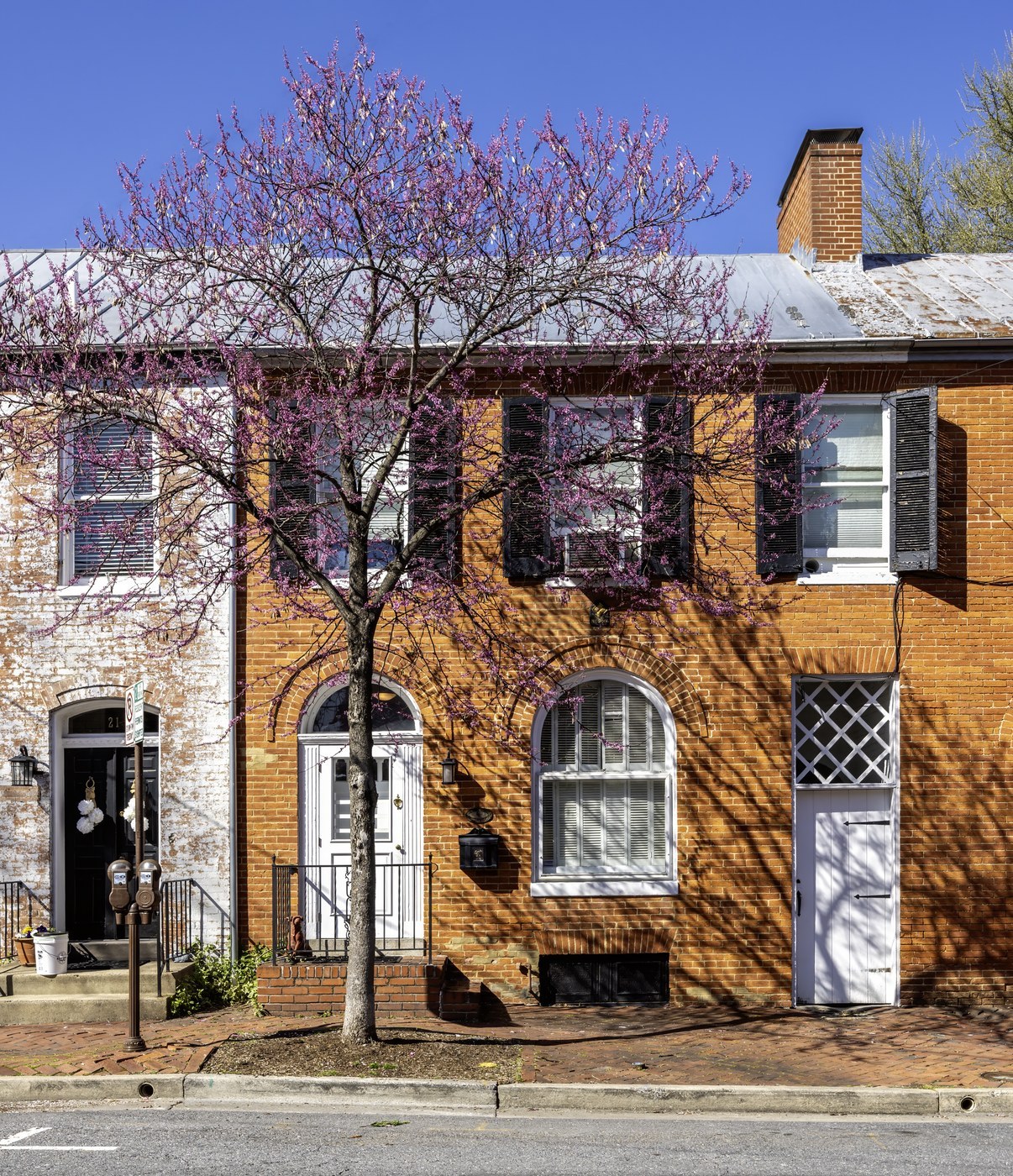
Key Identifying Features
Eastern redbud (Cercis canadensis) is a small, understory deciduous tree famous for the pink-magenta flowers that burst directly from its bare branches and trunk in early spring, before the leaves appear. It typically grows 20–30 feet tall with a broad, often multi-trunked, vase- or umbrella-shaped crown.
- Heart-shaped (cordate) leaves with smooth margins and a clean point
- Rosy-pink to magenta pea-like flowers clustered along twigs, branches, and even the trunk (cauliflory)
- Flat, papery brown seed pods like miniature snow-pea pods
- Small stature; an understory tree at woodland edges
Leaves & Stems
The leaves are the second giveaway: 2–6 inches long, distinctly heart-shaped, with a rounded base and smooth (untoothed) edges, arranged alternately. They emerge reddish, mature to deep green, and turn yellow in fall. Leaf veins radiate palmately from the base. Twigs are slender and zigzag slightly; the bark on older trunks becomes dark, scaly, and somewhat ridged, sometimes with orange inner bark showing in the cracks.
Flowers & Fruit
In March–April, before leaf-out, clusters of small pea-shaped flowers (about ½ inch) coat the branches in rosy pink to lavender-magenta. A notable trait is cauliflory — flowers emerge straight from old wood, including the trunk. As a member of the legume family, redbud forms flat, dry pods 2–4 inches long that ripen brown and often hang on through winter, holding several hard seeds.
How to Tell It Apart from Look-Alikes
The combination of heart-shaped leaves, flowers on bare wood, and bean pods is nearly unique. Katsura tree (Cercidiphyllum) has similar heart-shaped leaves but they are opposite and finely toothed, and it lacks the showy stem flowers. Lilac has heart-shaped leaves too but bears flowers in terminal cones, not along the bare branches. Once pods or spring branch-flowers are present, redbud is unmistakable.
Where You'll Find It
Native across the eastern and central United States, from southern Ontario to Florida and west to Texas, eastern redbud grows as an understory tree along woodland edges, fencerows, stream banks, and roadsides. It is also one of the most popular ornamental landscape trees, with many cultivars including white-flowered and purple-leaved forms.
Quick ID Checklist
- Flowers: rosy-pink, pea-shaped, in spring on bare branches and trunk
- Leaves: heart-shaped, smooth-edged, alternate, 2–6 inches
- Fruit: flat papery brown pods, 2–4 inches
- Size: small understory tree, often multi-trunked, 20–30 feet
- Habitat: woodland edges and landscapes of eastern/central North America
A small tree glowing pink along its bare limbs in early spring is almost always eastern redbud.
Frequently asked questions
Why does redbud flower on its trunk and branches?
This trait is called cauliflory, where flowers emerge directly from old woody stems rather than new shoots. In redbud it produces the striking effect of pink blooms coating the bare limbs and even the main trunk.
How can I tell redbud from a katsura tree?
Both have heart-shaped leaves, but redbud leaves are alternate with smooth edges, while katsura leaves are opposite and finely toothed. Only redbud bears pea flowers and flat bean pods.
When does eastern redbud bloom?
It blooms in early spring, typically March to April depending on region, before the leaves emerge, making the flower display especially conspicuous.