
Eastern White Pine Identification Guide
How to identify eastern white pine (Pinus strobus) by its soft needles bundled in fives, long slender cones, and tiered branches.
Read the full Eastern White Pine encyclopedia entry →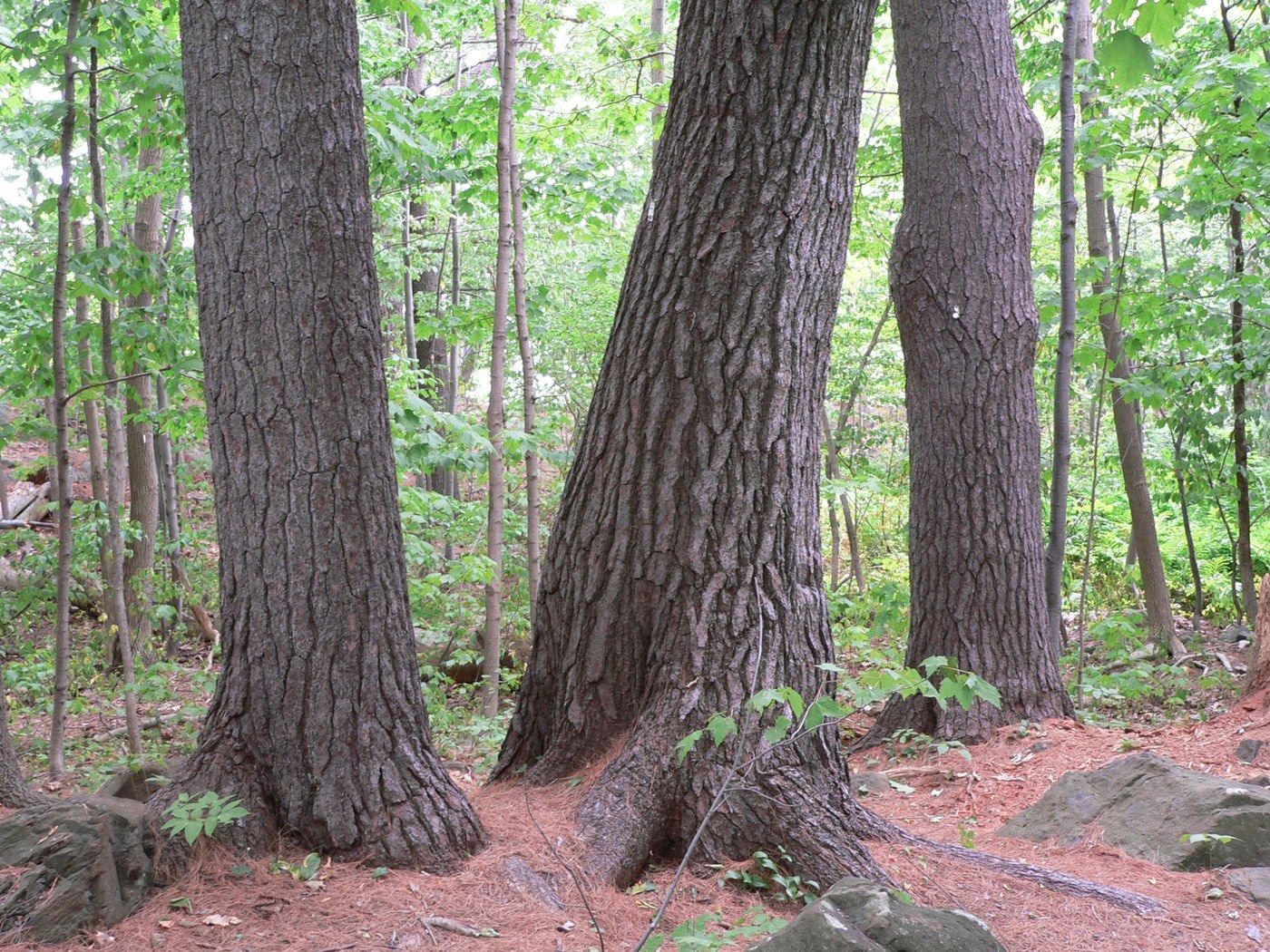
Key Identifying Features
Eastern white pine (Pinus strobus) is a tall, graceful evergreen conifer recognized above all by its soft, slender needles bundled in groups of five — the only native eastern pine with five-needle clusters. It grows 80–150 feet tall with distinctive horizontal tiers (whorls) of branches and a feathery, blue-green appearance.
- Needles in bundles of 5, soft, flexible, blue-green, 3–5 inches long
- Long, slender, slightly curved cones 4–8 inches, often resin-tipped
- Whorled, tiered branching giving a layered silhouette
- Smooth gray-green bark on young trees, furrowed on old trunks
Leaves & Stems
The needles are the definitive clue: bundled five to a fascicle, thin, soft, and flexible, 3–5 inches long, blue-green to silvery, with a fine white line. They feel soft to the touch — not stiff or sharp — and give the whole tree a delicate, feathery texture. A handy memory aid: "WHITE" has five letters, matching the five needles. Twigs are slender; young bark is smooth and greenish-gray, becoming dark gray with broad, flat-topped furrowed ridges on old trunks. Branches grow in distinct annual whorls, so you can sometimes estimate age by counting tiers.
Flowers & Fruit
White pine is monoecious. In spring, small yellowish male cones cluster at the base of new shoots, releasing pollen, while pinkish female cones form near the tips. Over two seasons these mature into the characteristic long, narrow, gently curved cones, 4–8 inches, with thin, flexible scales often tipped with white resin and lacking sharp prickles.
How to Tell It Apart from Look-Alikes
Needle count is decisive. Red pine has 2 needles per bundle, pitch pine has 3 stiff needles, and Scots and jack pines have 2 short needles — none have five. Among five-needle pines, eastern white pine differs from western species like sugar pine (much longer cones) and limber pine by range and cone shape. The soft five-needle bundles plus long slender cones and tiered branching confirm eastern white pine in the East.
Where You'll Find It
Native to northeastern North America, from Newfoundland and the Great Lakes south through the Appalachians, eastern white pine grows in a wide range of well-drained soils — old fields, sandy uplands, mixed forests, and rocky slopes. Once the dominant timber tree of the Northeast, it is a fast-growing pioneer and a common landscape and reforestation species.
Quick ID Checklist
- Needles: soft, slender, 5 per bundle, blue-green, 3–5 inches
- Cones: long, narrow, curved, 4–8 inches, resin-tipped, no sharp prickles
- Branches: in horizontal whorls/tiers
- Bark: smooth gray-green when young, furrowed with age
- Habitat: well-drained soils of the northeastern U.S. and Canada
A soft-needled pine with five needles per bundle and long slender cones is eastern white pine.
Frequently asked questions
What is the single best way to identify eastern white pine?
Count the needles in a bundle. Eastern white pine is the only native eastern pine with five soft needles per cluster. A memory aid is that WHITE has five letters, matching the five needles.
How do its needles feel compared to other pines?
White pine needles are notably soft, thin, and flexible with a blue-green color, unlike the stiffer, often sharper needles of red, pitch, or Scots pine.
What do the cones look like?
They are long, narrow, and slightly curved, about 4 to 8 inches, with thin flexible scales often tipped with sticky white resin and without sharp prickles.
Can I estimate the tree's age from its branches?
Roughly, yes. Eastern white pine adds branches in distinct annual whorls, so counting the tiers of branches up the trunk gives an approximate age for younger trees.