Elderberry Identification Guide
Identify common elder by its pinnate compound leaves, pithy stems, flat-topped creamy-white flower clusters, and drooping bunches of small dark purple-black berries.
Read the full Elderberry encyclopedia entry →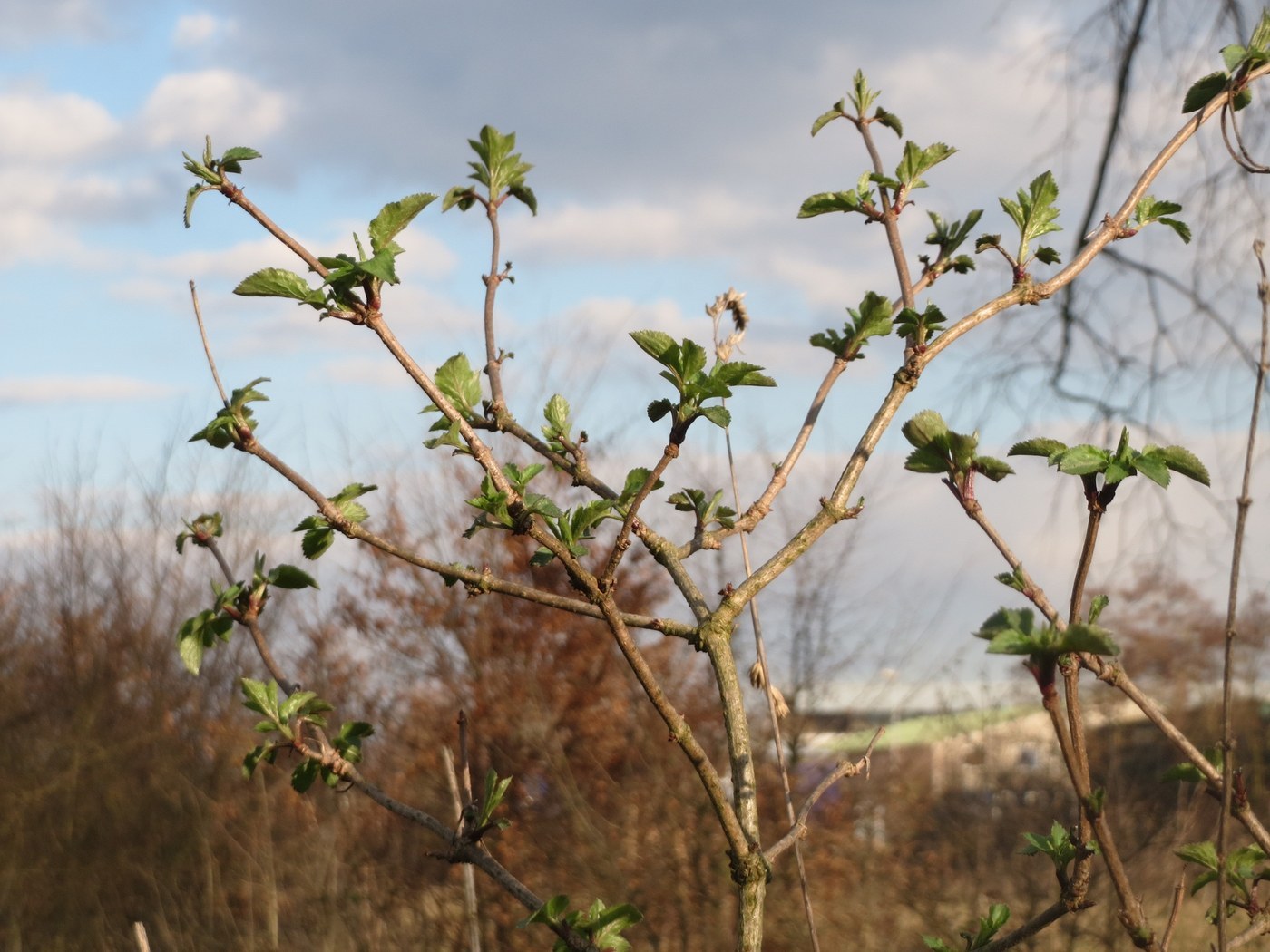
Key Identifying Features
Elderberry (Sambucus nigra and related species) is a large deciduous shrub or small tree in the moschatel family (Adoxaceae). Key identifiers are its pinnate (feather-divided) leaves, flat-topped creamy-white flower clusters in early summer, and drooping clusters of small dark purple-black berries in late summer. Stems are soft and pithy inside rather than solid wood.
- Shrub or small tree 2–6 m (6–20 ft) tall
- Pinnate leaves with 5–7 toothed leaflets
- Flat-topped (umbrella-like) creamy-white flower clusters
- Drooping bunches of small black/purple berries
- Stems with soft white pith
Leaves & Stems
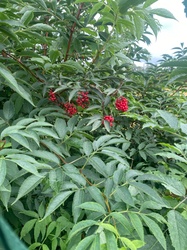
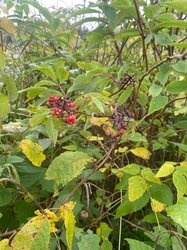
Leaves are opposite and pinnately compound, with usually 5 to 7 (sometimes 9) leaflets, each ovate, pointed, and finely toothed (serrated), 5–12 cm long. The foliage has a slightly rank or 'mousey' smell when crushed. Young stems are green and soft with a thick white spongy pith inside; older bark is gray-brown, corky, and furrowed with raised lenticels (bumps).
Flowers & Fruit
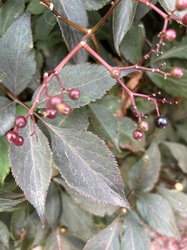
In early summer, elder produces large flat-topped to slightly domed clusters (corymbs/cymes), 10–25 cm across, of tiny, fragrant, creamy-white five-petaled flowers. By late summer to autumn, these become hanging clusters of small (5–6 mm) glossy purple-black berries on reddish stalks — the drooping habit of the ripe fruit is a key clue (red elderberries droop less / hold heads more erect in some species).
How to Tell It Apart from Look-Alikes
- Pokeweed (Phytolacca): has single (simple) leaves, not compound, and berries on an upright stalk — a common confusion. Confirm elder's compound leaves and woody growth.
- Devil's walking stick / sumac: different leaf and fruit arrangement; staghorn sumac has upright red fuzzy fruit cones.
- Cow parsley / carrot-family herbs: flat white flower clusters can resemble elder flowers, but those are non-woody herbs with very different ferny leaves.
Where You'll Find It
Native to Europe, North Africa, and western Asia (with related species across North America), elder grows in hedgerows, woodland edges, riverbanks, scrub, and waste ground, favoring moist, nitrogen-rich soils in sun or part shade.
Quick ID Checklist
- Pinnate leaves, 5–7 toothed leaflets, opposite
- Soft white pith inside young stems
- Flat-topped creamy-white flower clusters (early summer)
- Drooping clusters of small purple-black berries
- Shrub/small tree of hedges and damp edges
A pithy-stemmed shrub with feather-divided toothed leaves, flat white flower heads, and drooping black berry clusters is common elder.
Frequently asked questions
How do I tell elderberry from pokeweed?
Elderberry has compound (pinnate) leaves with 5–7 leaflets and grows as a woody shrub with pithy stems, while pokeweed has simple undivided leaves and a non-woody stem with berries on an upright stalk. Always confirm the compound leaves and woody growth.
What do elder flowers look like?
They form large, flat-topped to slightly domed clusters of tiny, fragrant, creamy-white five-petaled flowers in early summer, often called elderflowers.
How can I recognize an elder shrub in winter?
Look for gray-brown corky, furrowed bark with raised lenticels and young stems containing a thick, soft white pith, along with opposite branching.
Elderberry identified by the community
Recent Elderberry specimens identified with Plant Identifier.