
Elephant Ear Plant Identification Guide
Identify Elephant Ear plants (Colocasia, Alocasia, Xanthosoma) by their huge arrowhead or heart-shaped leaves on tall stalks. Covers leaf orientation, veining, and how to tell the genera apart.
Read the full Elephant Ear Plant encyclopedia entry →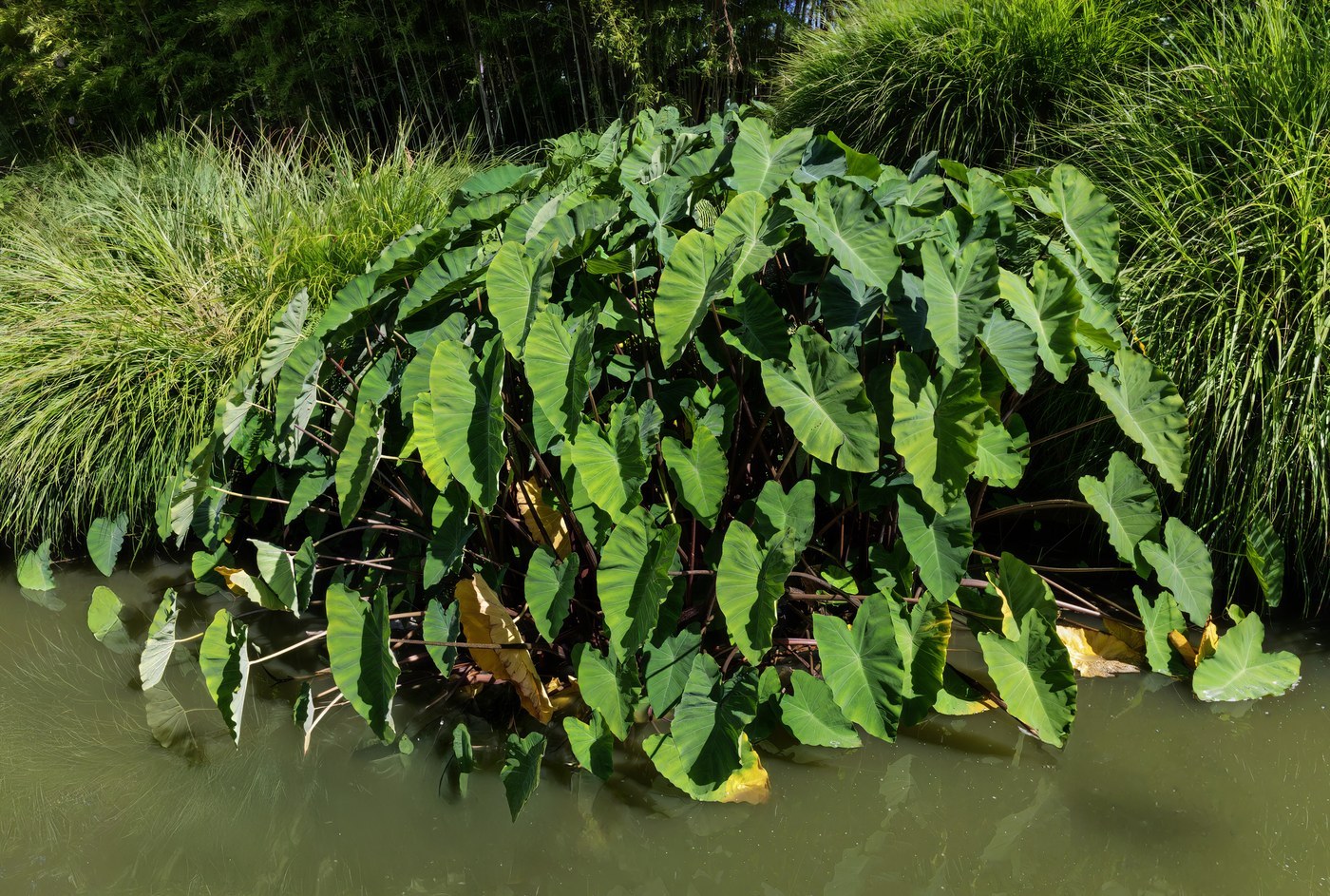
Key Identifying Features
'Elephant Ear' is a common name for several tropical aroids (family Araceae) with enormous leaves chiefly Colocasia, Alocasia, and Xanthosoma. They are grown for dramatic foliage. Identify the group by:
- Very large, heart- or arrowhead-shaped leaves, often 1-3 feet long
- Leaves held on long, fleshy, upright stalks (petioles)
- Prominent, often contrasting veins radiating across the blade
- A clumping habit arising from tubers or corms
Leaves & Stems
Leaves are the defining feature: huge, broadly heart-shaped to arrow-shaped (sagittate), with a soft, sometimes velvety or glossy surface and conspicuous veining. Leaf orientation helps separate the genera:
- Colocasia (taro): leaves point downward, with the petiole attaching to the middle of the leaf (peltate); often matte, water-repellent surfaces.
- Alocasia: leaves point upward/outward, are stiffer and more arrow-shaped, often glossy with bold white or pale veins.
- Xanthosoma: leaves are arrowhead-shaped with the petiole at the leaf notch (not peltate) and a distinct rim vein.
Stalks are thick, succulent, and sometimes dark-spotted or purple, rising directly from the base. Plants grow from corms or tubers.
Flowers & Fruit
When they bloom, all produce the typical aroid spathe-and-spadix: a finger-like spike (spadix) wrapped in a pale yellow-green to white hood (spathe). Flowering is occasional, and the foliage, not the flower, is the everyday ID feature. Berries may follow but are uncommon in cultivation.
How to Tell It Apart from Look-Alikes
- Caladium: smaller, thinner, often brightly variegated (pink/red/white) heart-shaped leaves on slender stalks and a dormant period elephant ears are larger and usually greener.
- Philodendron / Monstera: climbing aroids with lobed or split leaves elephant ears have solid, undivided giant blades on a non-climbing clump.
- Banana: has a single large paddle leaf and a pseudostem trunk, not arrowhead leaves on separate stalks.
Within elephant ears, leaf-pointing direction and petiole attachment distinguish Colocasia, Alocasia, and Xanthosoma.
Where You'll Find It
Native to tropical Asia and the Americas, elephant ears are grown as bold landscape plants in warm, moist gardens (often beside ponds) and as container/houseplants elsewhere, lifted as tubers in cold winters. They love heat, humidity, and rich, wet soil, and many are frost-tender (hardy roughly zones 8-11 depending on type).
Quick ID Checklist
- Giant heart- or arrowhead-shaped leaves (often 1-3 ft)
- Leaves on long, fleshy upright stalks
- Bold radiating veins, sometimes contrasting color
- Clumping from tubers/corms (no climbing)
- Leaf direction: down = Colocasia, up = Alocasia
- Aroid spathe-and-spadix flower if blooming
Frequently asked questions
How do I tell Colocasia from Alocasia elephant ears?
Colocasia (taro) leaves typically droop downward with the stalk joining the middle of the leaf, while Alocasia leaves point upward or outward, are stiffer and arrow-shaped, often with bold pale veins.
What's the difference from caladium?
Caladiums are smaller and thinner, usually with bright pink, red, or white variegation, and they go dormant. Elephant ears are much larger and typically greener with heavier stalks.
Do elephant ears flower?
Yes, occasionally, producing a typical arum spathe-and-spadix a finger-like spike inside a pale hood but the giant leaves are the main identification feature.