Elephant Ear Plant
Colocasia esculenta
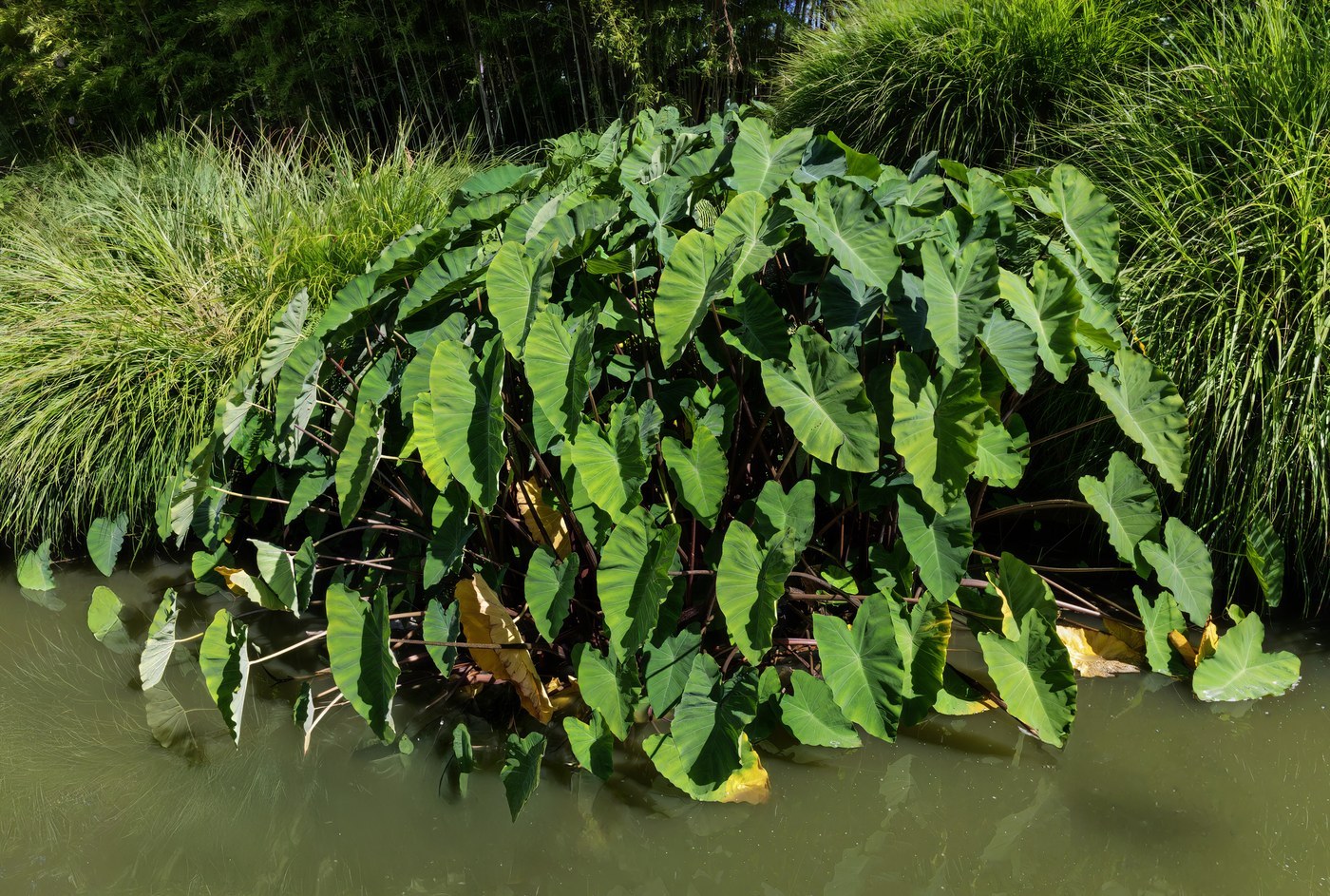
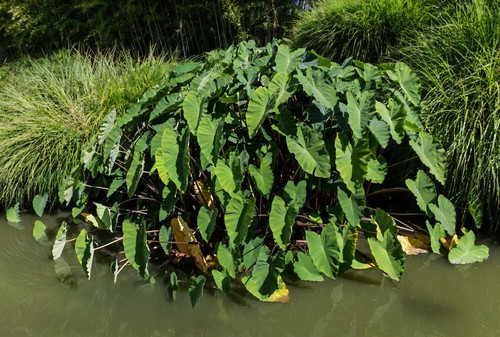
Elephant ear is grown for its enormous, heart-shaped leaves that can reach 2-3 ft across, lending a bold tropical look to gardens and large containers.
- Light
- Bright indirect to full sun
- Water
- Keep consistently moist
- Difficulty
- Moderate
Got a plant like this?
Identify any plant from a photo, free.
Overview
"Elephant ear" is a common name shared by several aroids, but it most often refers to Colocasia esculenta, a tropical plant grown as a dramatic ornamental.
It grows from a starchy underground corm, sending up long stalks topped by huge, downward-pointing, heart-shaped leaves. Cultivars range from glossy green to near-black and variegated forms.
It thrives in warmth, moisture, and rich soil, growing rapidly in summer to create an instant jungle effect. (The closely related, upward-pointing Alocasia is sometimes also called elephant ear.)
How to identify it
- Very large, heart- to arrow-shaped leaves, often 1-3 ft long, typically pointing downward
- Long, sturdy leaf stalks attached inside the leaf margin (peltate)
- Matte to glossy foliage in green, blue-green, purple-black, or variegated forms
- Grows from a thick underground corm; clumping habit
- Reaches 3-6 ft or more in a season; rarely produces an arum-type flower indoors
Care & growing
Light: Bright indirect light to full sun; more sun deepens color in dark cultivars but raises water needs.
Water: Loves moisture - keep soil consistently wet; some types tolerate boggy or shallow-water conditions.
Soil: Rich, humus-heavy, moisture-retentive soil.
Temperature: Warm-loving; protect from frost. In cold climates, lift and store corms over winter.
Feeding: Heavy feeder; apply balanced fertilizer regularly through the growing season.
Propagation: Divide corms or offsets in spring.
Habitat & origin
Colocasia esculenta is native to Southeast Asia and the Indian subcontinent, growing in wet, marshy ground and along streams. Cultivated for thousands of years, it has spread throughout the tropics.
It is grown worldwide as a summer ornamental and container plant.
Frequently asked questions
Is it the same as Alocasia?
Not exactly. Both are called elephant ears, but Colocasia leaves usually point down while Alocasia leaves point up.
How do I overwinter it?
In cold climates, dig up the corms after the first frost, dry them, and store cool and dry until spring.
Why are the leaves drooping or yellowing?
Most often from insufficient water - this is a thirsty, moisture-loving plant - or from cold exposure.
How large do the leaves get?
The heart-shaped leaves can reach 1-3 ft long, and a plant may grow 3-6 ft or more in a single warm season.
Elephant Ear Plant guides
In-depth guides for identifying, growing, and caring for Elephant Ear Plant.
How to Care for Elephant Ear Plant
Grow dramatic Elephant Ear Plant with bright light, constant moisture, warmth, and rich soil for huge heart-shaped leaves.
Elephant Ear Plant Identification Guide
Identify Elephant Ear plants (Colocasia, Alocasia, Xanthosoma) by their huge arrowhead or heart-shaped leaves on tall stalks. Covers leaf orientation, veining, and how to tell the genera apart.