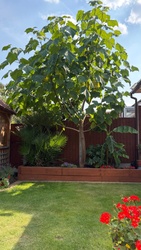
Empress Tree Identification Guide
Identify the empress (princess) tree, Paulownia tomentosa, by its huge fuzzy heart-shaped leaves, fragrant purple foxglove-like flowers, and woody seed capsules.
Read the full Empress Tree encyclopedia entry →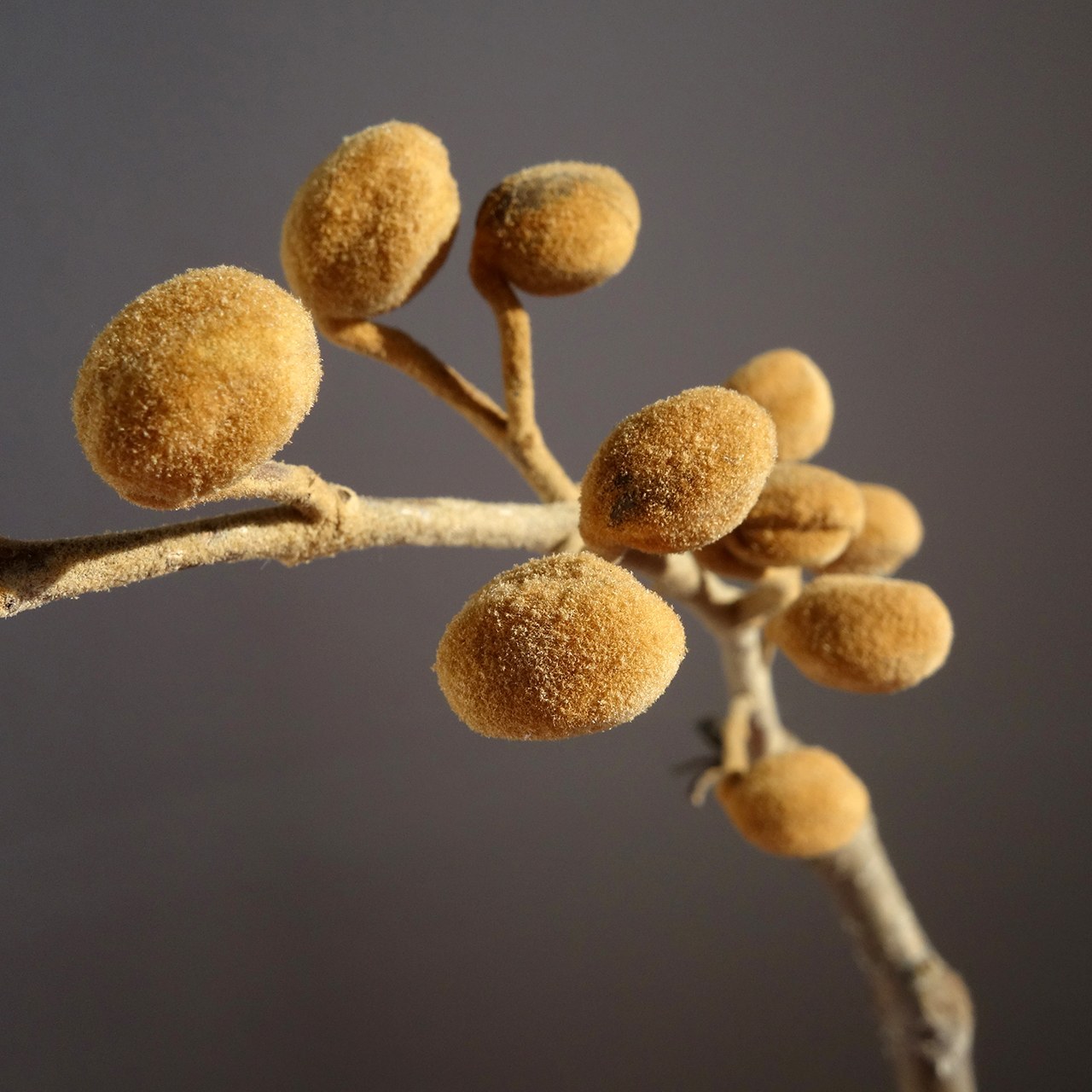
Key Identifying Features
The empress tree, or princess tree (Paulownia tomentosa), is a fast-growing tree known for enormous fuzzy heart-shaped leaves and showy upright clusters of fragrant lavender-purple, foxglove-shaped flowers in spring. It is widely planted but also an aggressive invasive in parts of North America.
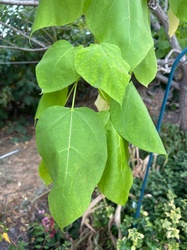
- Very large, heart-shaped leaves (often 5-12 in, up to 2 ft on young shoots), soft and hairy
- Panicles of trumpet-shaped purple flowers before leaves fully emerge
- Velvety brown flower buds visible all winter on the branch tips
- Pecan-shaped woody seed capsules that persist in clusters
Leaves & Stems
Leaves are opposite, simple, broadly heart-shaped (cordate), with a pointed tip and often shallow lobes on young vigorous growth. Both surfaces are densely soft-hairy (tomentose) - the species name tomentosa refers to this fuzz - and the leaves can be huge on saplings. Stems are stout, hollow-pithed, and brittle; bark is gray-brown with shallow fissures. A key winter clue: fuzzy tan flower buds sit clustered at branch tips through the cold months.
Flowers & Fruit
In mid-spring, before or as leaves expand, the tree bears erect 8-12 in panicles of vanilla-scented, pale violet to lavender flowers, each a 2 in tubular bell with darker spotting and yellow striping inside - strongly resembling foxglove. These ripen into green, sticky, egg-shaped capsules that dry to woody brown pods, splitting to release thousands of tiny winged seeds. Old capsules cling to the tree well into the next season.
How to Tell It Apart from Look-Alikes
- Catalpa: also has big heart-shaped leaves and showy flowers, but its flowers are white and it produces long bean-like pods (not clustered woody capsules); leaves are usually in whorls of three.
- Royal Paulownia vs catalpa flower color is the fastest tell: purple = Paulownia, white = catalpa.
- Tree-of-heaven (Ailanthus): large compound leaves (many leaflets), not single heart-shaped leaves.
- Mulberry seedlings: can have large lobed leaves, but they are alternate, not opposite, and lack fuzz.
The opposite fuzzy heart leaves + purple foxglove flowers + woody capsule clusters combination confirms empress tree.
Where You'll Find It
Native to China, it is planted as an ornamental and timber tree but readily escapes into disturbed ground, roadsides, riverbanks, and forest edges across the eastern and central US, where it is considered invasive. It thrives in poor soil and resprouts vigorously.
Quick ID Checklist
- Giant, fuzzy, opposite heart-shaped leaves
- Upright clusters of fragrant purple foxglove-like flowers in spring
- Velvety tan flower buds present through winter
- Clusters of woody, pecan-shaped seed capsules
- Stout, hollow-pithed, brittle stems
- Very fast growth, often on disturbed sites
Frequently asked questions
How do I tell an empress tree from a catalpa?
Check the flowers and seed pods. Empress tree has purple, foxglove-like flowers and clusters of short woody capsules. Catalpa has white flowers and long, slender bean-like pods. Both have big heart-shaped leaves.
Is the empress tree invasive?
Yes, in much of the eastern and central United States. It grows extremely fast, produces millions of wind-blown seeds, resprouts aggressively, and colonizes roadsides and disturbed land, so many regions list it as invasive.
What are the fuzzy buds on the branches in winter?
Those are next spring's flower buds. Paulownia carries clusters of velvety tan flower buds at its branch tips all winter, which is a reliable cold-season identification clue.
Why are the leaves on some plants so much bigger than others?
Young saplings and stump resprouts produce dramatically oversized leaves, sometimes two feet across, while mature flowering branches have smaller leaves. Both are the same species.
Empress Tree identified by the community
Recent Empress Tree specimens identified with Plant Identifier.