
Engelmann Spruce Identification Guide
Identify Engelmann Spruce (Picea engelmannii) by its four-sided blue-green needles on finely hairy twigs and pendant cones with ragged wavy-edged scales.
Read the full Engelmann Spruce encyclopedia entry →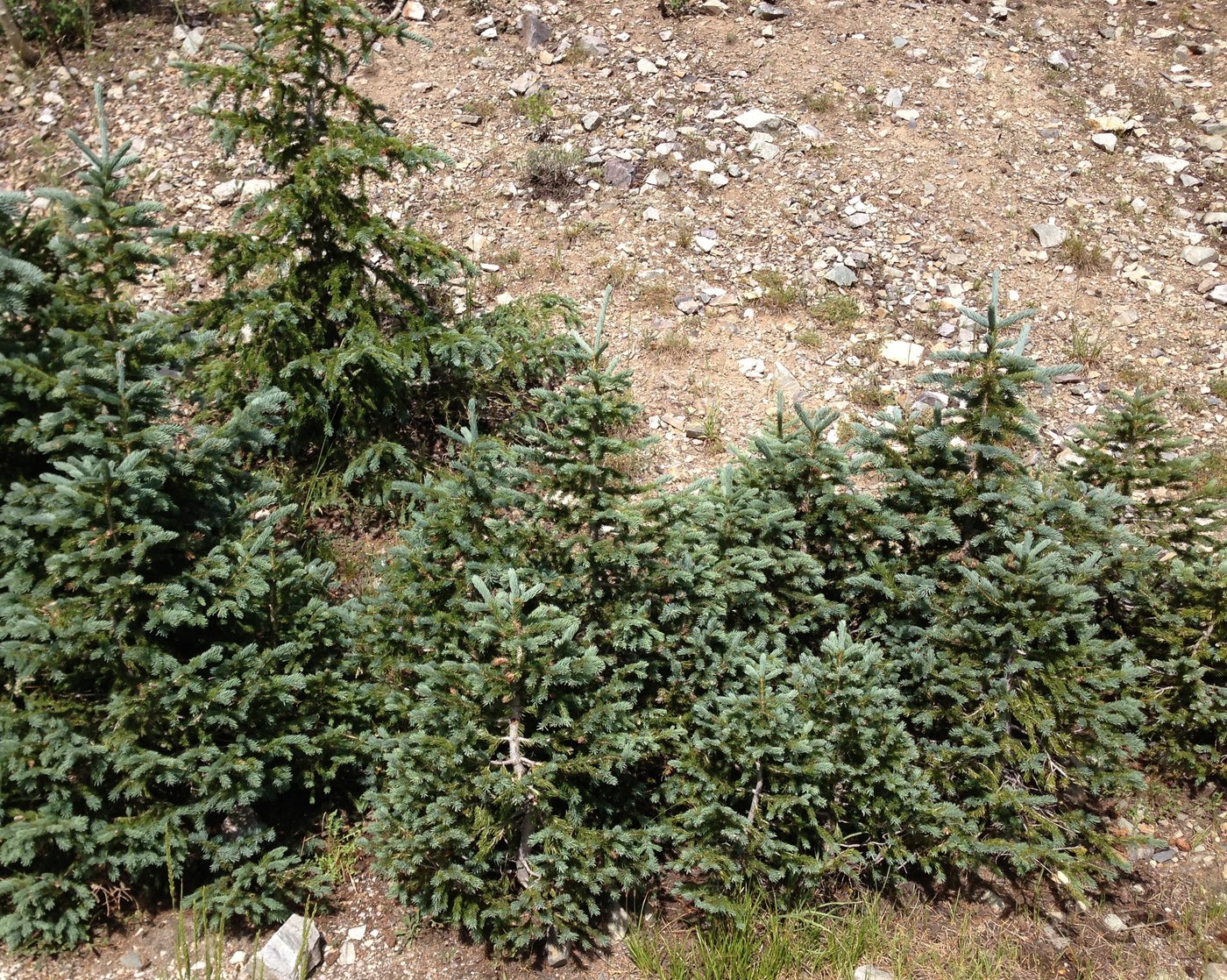
Key Identifying Features
Engelmann Spruce (Picea engelmannii) is the dominant high-elevation spruce of the western mountains, often forming subalpine forests with Subalpine Fir. Identify it by four-sided blue-green needles, finely hairy (downy) twigs, and hanging cones with thin, ragged, wavy-toothed scale tips.
- Narrow, spire-like conical crown
- Four-sided blue-green to silvery needles
- Minutely hairy twigs (use a hand lens)
- Light-brown cones with flexible, ragged-edged scales
- Foliage with a strong, sometimes unpleasant odor when crushed
Leaves & Stems
Needles are about 0.6-1 inch long, four-sided (square) and easily rolled between the fingers, blue-green to bluish and somewhat flexible with a sharp-ish but not stabbing tip. Crushing the needles releases a pungent, sometimes camphor-like odor. The most reliable separating trait from White Spruce is the twig: Engelmann twigs are finely pubescent (hairy), whereas White Spruce twigs are hairless. Needles sit on woody pegs, leaving rough twigs after they fall.
Flowers & Fruit
Engelmann Spruce reproduces by cones. Seed cones are 1-2.5 inches long, slender, light brown, and hang downward. The scales are thin, flexible, and conspicuously ragged/erose with wavy or toothed tips — a key feature separating it from the smooth-margined scales of White Spruce. Young cones are often purplish before ripening to tan; they fall after releasing seed.
How to Tell It Apart from Look-Alikes
- White Spruce (Picea glauca): hairless twigs and smooth, rounded cone-scale margins; lower elevations and more boreal. (The two hybridize where ranges meet.)
- Blue Spruce (Picea pungens): very stiff, sharply spine-tipped needles and larger cones; usually lower, drier sites.
- Subalpine Fir (frequent companion): flat soft needles, smooth twigs, and upright cones that break apart on the tree.
- Sitka Spruce: flattened sharp needles, coastal range.
Four-sided blue needles on hairy twigs with ragged-scaled hanging cones, at high western elevations, confirm Engelmann Spruce.
Where You'll Find It
Grows in the Rocky Mountains, Cascades, and interior western ranges from British Columbia to Arizona and New Mexico, mostly at high subalpine elevations (roughly 6,000-12,000 ft) near treeline. It favors cool, moist sites and often forms dense stands with Subalpine Fir.
Quick ID Checklist
- Four-sided blue-green needles, flexible, mildly pointed
- Twigs finely hairy (check with a lens)
- Pungent odor when needles crushed
- Hanging cones with thin, ragged, wavy-edged scales
- High western subalpine forests
Four-sided blue needles on downy twigs with ragged-scaled hanging cones at high elevation mean Engelmann Spruce.
Frequently asked questions
How do I tell Engelmann Spruce from White Spruce?
Check the twigs and cone scales: Engelmann has finely hairy twigs and cones with ragged, wavy-edged scales, while White Spruce has hairless twigs and smooth, rounded scale margins. Engelmann also grows higher in the western mountains.
How is it different from Blue Spruce?
Blue Spruce has very stiff, sharply spine-tipped needles and larger cones and grows on lower, drier sites, while Engelmann needles are more flexible and only mildly pointed, with smaller ragged-scaled cones at high elevations.
Are Engelmann needles four-sided like other spruces?
Yes. The needles are square in cross-section and roll easily between the fingers, and they sit on tiny woody pegs that leave the twig rough after they drop.
What grows alongside Engelmann Spruce?
It commonly forms subalpine forests with Subalpine Fir near treeline. The fir is easy to separate by its flat soft needles, smooth twigs, and upright cones.