English Ivy Identification Guide
Identify English ivy (Hedera helix) by its lobed, evergreen leaves, woody climbing stems with clinging rootlets, and its distinct adult leaf form and flowers.
Read the full English Ivy encyclopedia entry →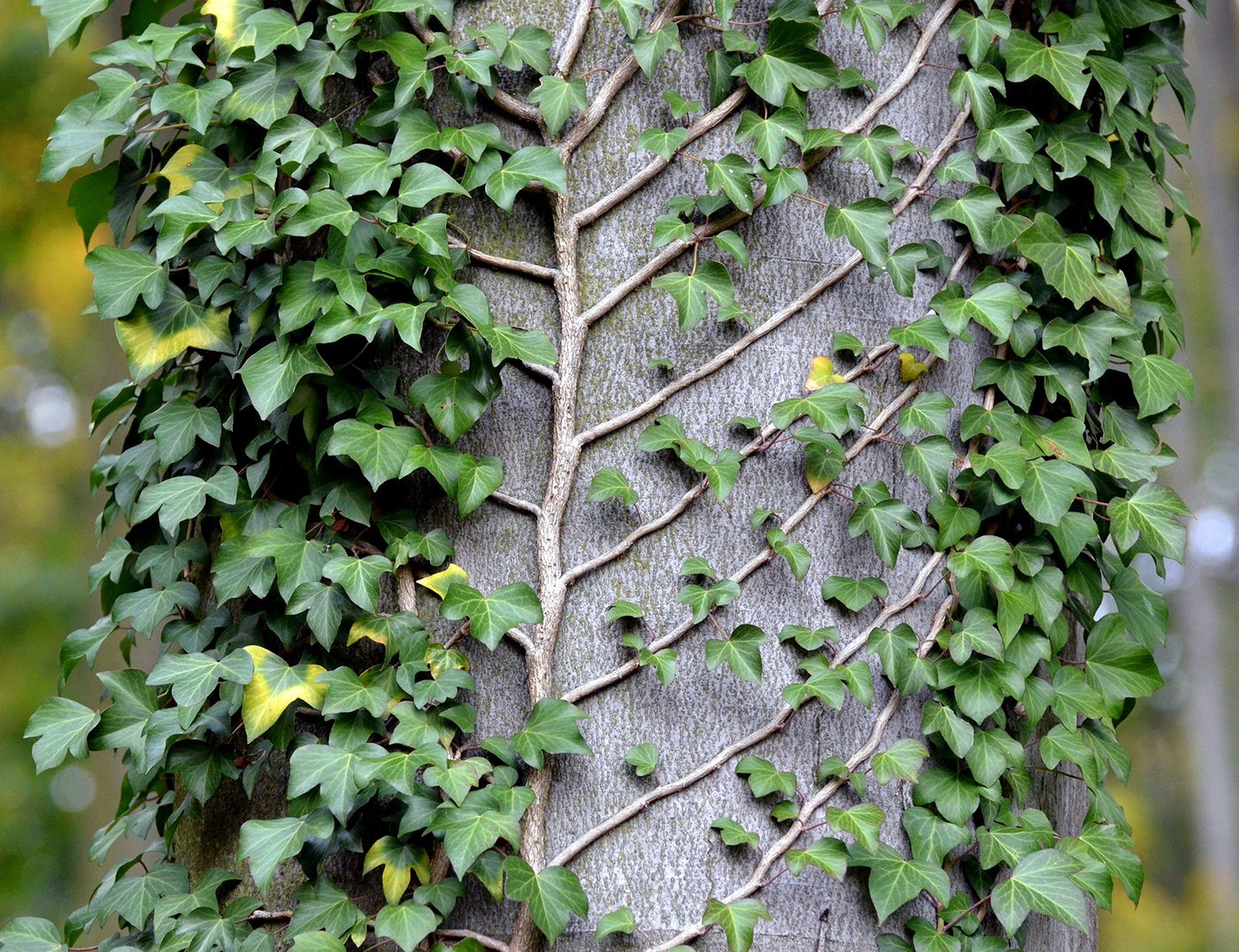
Key Identifying Features
English ivy (Hedera helix) is a woody evergreen climber identified by:
- Glossy, dark green, lobed leaves with pale veins, on juvenile climbing stems.
- Aerial rootlets along the stems that cling to walls, bark, and fences.
- A trailing or climbing habit that can blanket the ground or rise tens of feet.
Leaf shape changes dramatically between juvenile and adult phases.
Leaves & Stems
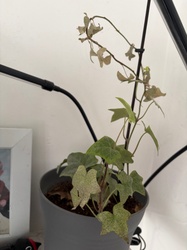
Juvenile leaves (the familiar form) are 3–5 lobed, palmate, leathery, and dark green with whitish or light-green veins, alternately arranged. Adult leaves (on mature flowering shoots) are unlobed, oval to diamond-shaped, and lack the classic ivy outline — a frequent source of confusion.
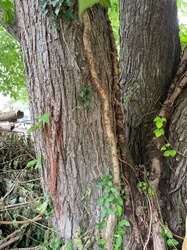
Stems are woody and flexible. Climbing stems bear dense mats of short brown aerial rootlets that adhere to surfaces (they don't penetrate living bark to feed, but anchor tightly). On the ground the plant roots at nodes and spreads aggressively.
Flowers & Fruit
Only mature (adult) growth flowers, usually in autumn: small, yellow-green flowers in rounded umbel clusters, rich in nectar for late-season insects. These are followed by clusters of black (occasionally yellow) berries in winter, eaten and spread by birds.
How to Tell It Apart from Look-Alikes
- Boston ivy / Virginia creeper (Parthenocissus): these are deciduous, turn red in fall, and have either three-part or five-part leaves with adhesive tendril pads, not woody rootlets. English ivy is evergreen with lobed single leaves and clinging rootlets.
- Poison ivy (Toxicodendron radicans): "leaves of three" and a hairy aerial-root vine — English ivy has 3–5 lobes on a single leaf, not three separate leaflets.
- Algerian ivy (Hedera canariensis): larger, less deeply lobed leaves with reddish petioles.
The clincher: evergreen, lobed single leaves with pale veins on a rootlet-clinging woody vine = English ivy.
Where You'll Find It
Native to Europe and western Asia. Widely planted as a groundcover and wall climber and invasive in many regions (notably the Pacific Northwest of North America), smothering trees and forest floors. Found on walls, fences, woodlands, and gardens (USDA zones 4–9).
Quick ID Checklist
- Evergreen, glossy, lobed (3–5 lobe) juvenile leaves
- Pale veins on dark green leaves
- Woody stems with clinging aerial rootlets
- Adult shoots have unlobed oval leaves + flowers
- Autumn yellow-green umbels, winter black berries
A clinging evergreen vine with lobed, pale-veined leaves and rootlet-covered stems is English ivy.
Frequently asked questions
Why do some ivy leaves have lobes and others don't?
English ivy has two leaf forms. Juvenile climbing growth bears the classic 3-to-5-lobed leaves, while mature flowering growth has unlobed, oval leaves. The same plant can show both, which often confuses identification.
How do I tell English ivy from poison ivy?
English ivy has a single lobed evergreen leaf with 3-5 lobes and clings with dense brown rootlets. Poison ivy has compound leaves of three separate leaflets, is deciduous, and turns red in fall. They're unrelated plants.
Do the aerial roots damage walls?
The rootlets cling tightly with a natural adhesive and can pull at old mortar or paint when removed, but they don't bore into sound masonry to feed. On trees, the weight and shade of heavy ivy can harm the host.
English Ivy identified by the community
Recent English Ivy specimens identified with Plant Identifier.