Eucalyptus Identification Guide
How to recognize eucalyptus trees by their aromatic foliage, shedding bark, and distinctive capsule fruit. Covers the features shared across the genus and the look-alikes most often confused with it.
Read the full Eucalyptus encyclopedia entry →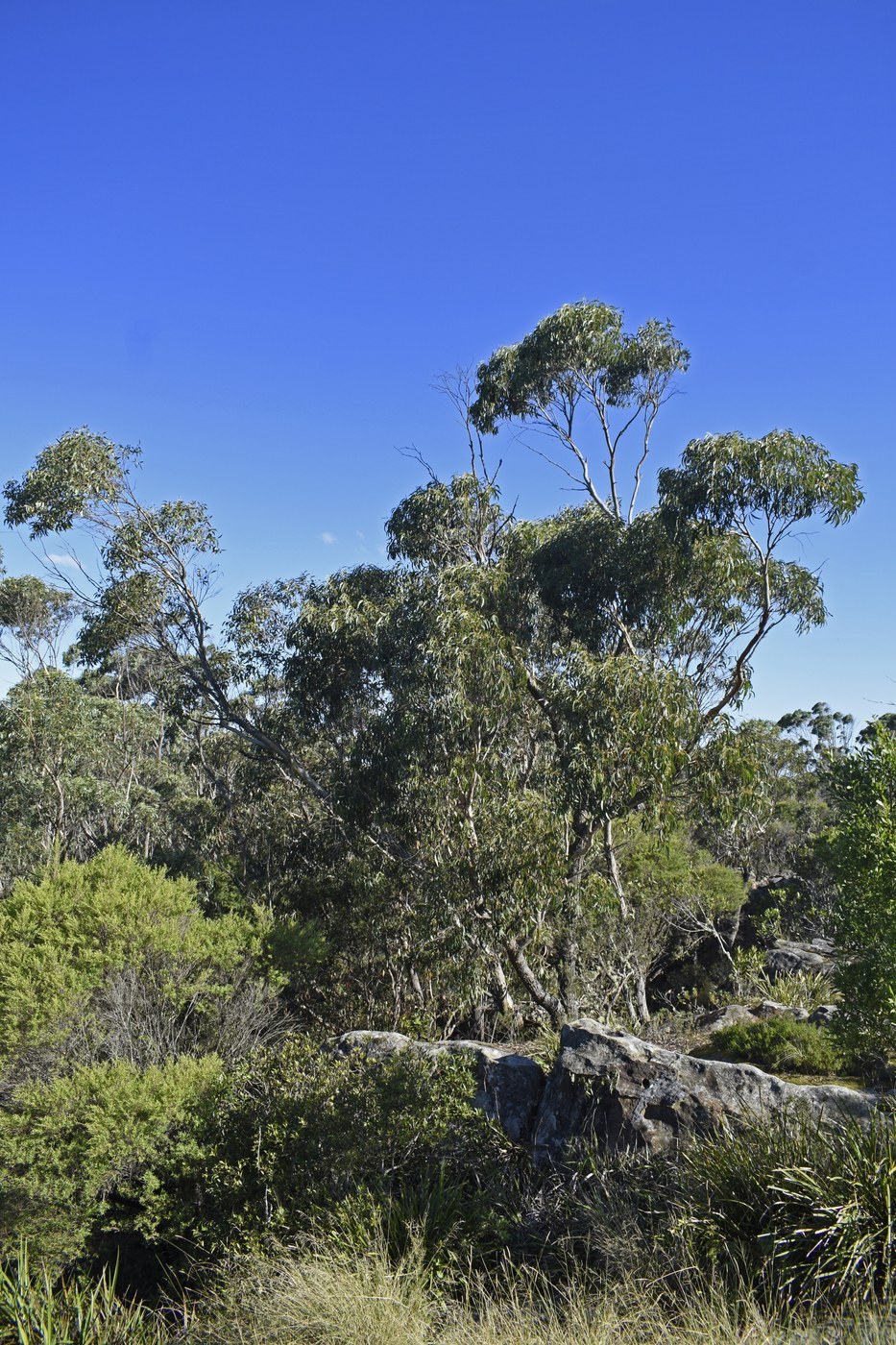
Key Identifying Features
Eucalyptus is a large genus of evergreen trees and shrubs native to Australia, now planted worldwide. The fastest way to confirm one is the strong, clean, menthol-camphor scent released when you crush a leaf. Combine that smell with smooth, peeling or ribboning bark and the small woody gumnut capsules, and you have a reliable identification.
- Aromatic leaves that smell of camphor or menthol when crushed
- Bark that sheds in long ribbons, flakes, or patches, often leaving a smooth, multicolored trunk
- Woody seed capsules (gumnuts) with a flat or domed top and pores that open to release tiny seeds
- Oil glands visible as translucent dots when a leaf is held to the light
Leaves & Stems
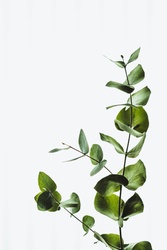
Many eucalyptus species show dimorphic foliage. Juvenile leaves are often rounded, bluish-grey, and clasp the stem in opposite pairs (the classic florist "silver dollar" foliage). Adult leaves are typically long, narrow, lance- or sickle-shaped, and hang vertically from the twig, which reduces midday sun exposure. Foliage color ranges from glossy green to a waxy grey-blue. Snap a young twig and you will usually catch the oil scent immediately.
Flowers & Fruit
Eucalyptus flowers have no petals. Instead, a cap (the operculum) covers the bud and is pushed off as a dense pom-pom of stamens emerges, usually white or cream, though some species flower red, pink, or yellow. After flowering, the woody capsule (gumnut) develops; its shape, size, and the position of the valves are key features botanists use to separate species. Capsules persist on the tree and litter the ground beneath it.
How to Tell It Apart from Look-Alikes
- Bottlebrush (Callistemon): has cylindrical brush-like flower spikes and lacks the operculum cap; eucalyptus flowers are clustered pom-poms.
- Tea tree / Melaleuca: papery layered bark and smaller capsules; leaves are aromatic but the scent differs and bark peels in soft papery sheets.
- Bay laurel or willow: superficially similar narrow leaves, but neither sheds bark in ribbons nor produces woody gumnuts, and the crushed-leaf scent is different.
The shedding bark plus woody capsules plus menthol scent trio rules out nearly all impostors.
Where You'll Find It
Eucalyptus thrives in warm, dry-summer climates: California, the Mediterranean basin, Portugal, parts of Africa, South America, and of course Australia. Look for it as a street and windbreak tree, in plantations grown for pulp and oil, and naturalized along roadsides and hillsides. Trees can be modest shrubs or soaring giants over 60 m (Eucalyptus regnans is among the tallest hardwoods on Earth).
Quick ID Checklist
- Crushed leaf smells strongly of menthol/camphor
- Bark peels in ribbons or patches, often smooth beneath
- Adult leaves narrow and hanging; juveniles rounded and grey-blue
- Petal-less pom-pom flowers from a capped bud
- Woody gumnut capsules on tree and ground
- Translucent oil dots in the leaf when backlit
Frequently asked questions
How can I be sure a tree is eucalyptus and not another aromatic tree?
Crush a leaf and smell it: eucalyptus gives a clean menthol-camphor scent. Then confirm shedding bark and small woody gumnut capsules. That combination is unique among common trees.
Why do some eucalyptus leaves look round and others long and narrow?
Eucalyptus often has dimorphic foliage. Juvenile leaves are rounded, grey-blue, and clasp the stem, while adult leaves are long, narrow, and hang vertically. A single tree can show both.
What are the little woody 'nuts' under the tree?
Those are gumnuts, the woody seed capsules. They open through small valves at the top to release tiny seeds and are one of the most reliable eucalyptus identifiers.
Are the flowers really petal-less?
Yes. The bud is sealed by a cap called an operculum, which is shed as the flower opens into a fluffy cluster of stamens. The lack of petals is a hallmark of the genus.
Eucalyptus identified by the community
Recent Eucalyptus specimens identified with Plant Identifier.