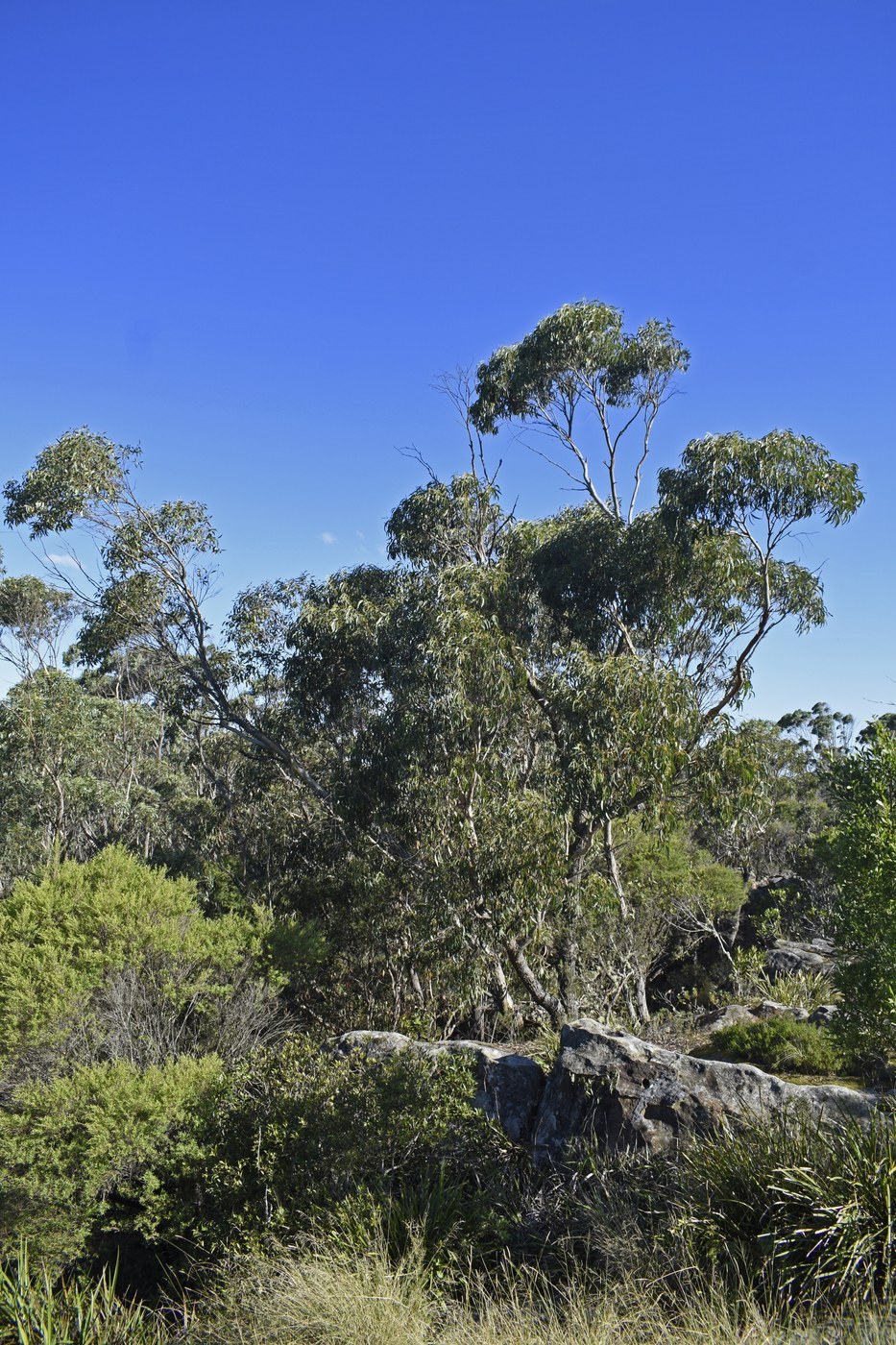
Eucalyptus
Eucalyptus globulus
Eucalyptus is a fast-growing, aromatic Australian tree prized for its fragrant, oil-rich foliage and distinctive peeling bark. The blue gum is one of the most widely planted species worldwide for timber and ornamental use.
- Light
- Full sun
- Water
- Drought-tolerant once established; water young trees
- Difficulty
- Moderate
Got a plant like this?
Identify any plant from a photo, free.
Overview
Eucalyptus is a vast genus of more than 700 species of flowering trees and shrubs, almost all native to Australia. They are among the fastest-growing trees on Earth, and several species dominate the landscape in their homeland and in plantations worldwide.
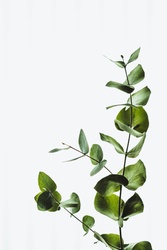
The foliage is intensely aromatic thanks to volatile oils, and the leaves famously change shape with age — rounded and silvery on young growth, longer and sickle-shaped on mature stems. The bark often peels in ribbons or patches, revealing smooth, multi-colored trunks.
Widely grown for timber, pulp, and as an ornamental, eucalyptus is also used in florists' cut foliage. Young plants and cut sprigs are popular indoors and in arrangements.
How to identify it
- Leaves: Juvenile leaves are rounded, blue-grey and clasp the stem in pairs; adult leaves are long, narrow, leathery and sickle-shaped, hanging downward
- Aroma: Crushed leaves release a strong menthol-camphor scent
- Bark: Smooth and peeling in many species, shedding in ribbons or flakes to reveal pale, mottled trunks
- Flowers: Fluffy, stamen-rich blooms (white, cream, yellow, pink or red) with no petals; capped buds give the genus its name (Greek eu-kalyptos, "well covered")
- Fruit: Woody, cup- or bell-shaped capsules ("gum nuts")
- Size: Highly variable; E. globulus can exceed 45 m (150 ft) in the wild
Care & growing
Light: Full sun is essential; eucalyptus will not thrive in shade.
Water: Drought-tolerant once established, but water deeply during the first year or two. Avoid waterlogged soil.
Soil: Well-draining soil; tolerates poor and sandy ground. Dislikes heavy, soggy clay.
Temperature: Hardiness varies widely by species; E. globulus is tender to hard frost, while species like E. gunnii and E. pauciflora tolerate cold.
Feeding: Generally not needed; eucalyptus is adapted to nutrient-poor soils and can suffer from excess fertilizer.
Propagation: Usually grown from seed (some species need a cold-stratification period); fast-growing seedlings establish quickly. Can be coppiced for juvenile foliage.
Habitat & origin
Eucalyptus is native to Australia, with a handful of species reaching into New Guinea, Indonesia and the Philippines. It occupies habitats from coastal forests to arid interior and alpine snow gum country.
Because of its fast growth, the genus has been planted across the world — in Mediterranean climates, California, South America, Africa, India and southern Europe — for timber, pulp and windbreaks. In some regions it has become invasive and is criticized for being highly flammable and draining groundwater.
Frequently asked questions
Why do my eucalyptus leaves change shape?
Eucalyptus produces distinct juvenile and adult foliage. Young plants and coppiced growth have rounded silvery leaves, while mature stems bear long, sickle-shaped ones. Regular pruning keeps the desirable juvenile look.
Can I grow eucalyptus in a pot?
Yes, especially smaller or juvenile-foliage species. Use a large container with excellent drainage, give it full sun, and prune to control its naturally fast growth.
How fast does eucalyptus grow?
Very fast — many species can grow 1–2 m (3–6 ft) or more per year in good conditions, which is why they are widely used in plantations.
Eucalyptus guides
In-depth guides for identifying, growing, and caring for Eucalyptus.
How to Care for Eucalyptus
Eucalyptus is a fast-growing, aromatic tree with silvery blue foliage. Sun-loving and drought-tolerant once established, it thrives on lean soil and space.
Eucalyptus Identification Guide
How to recognize eucalyptus trees by their aromatic foliage, shedding bark, and distinctive capsule fruit. Covers the features shared across the genus and the look-alikes most often confused with it.
Eucalyptus identified by the community
Real specimens identified with Plant Identifier.