
Evening Primrose Identification Guide
Identify Evening Primrose (Oenothera) by its four-petaled yellow flowers that open at dusk and its distinctive cross-shaped stigma. This guide covers leaves, seed pods, and look-alikes.
Read the full Evening Primrose encyclopedia entry →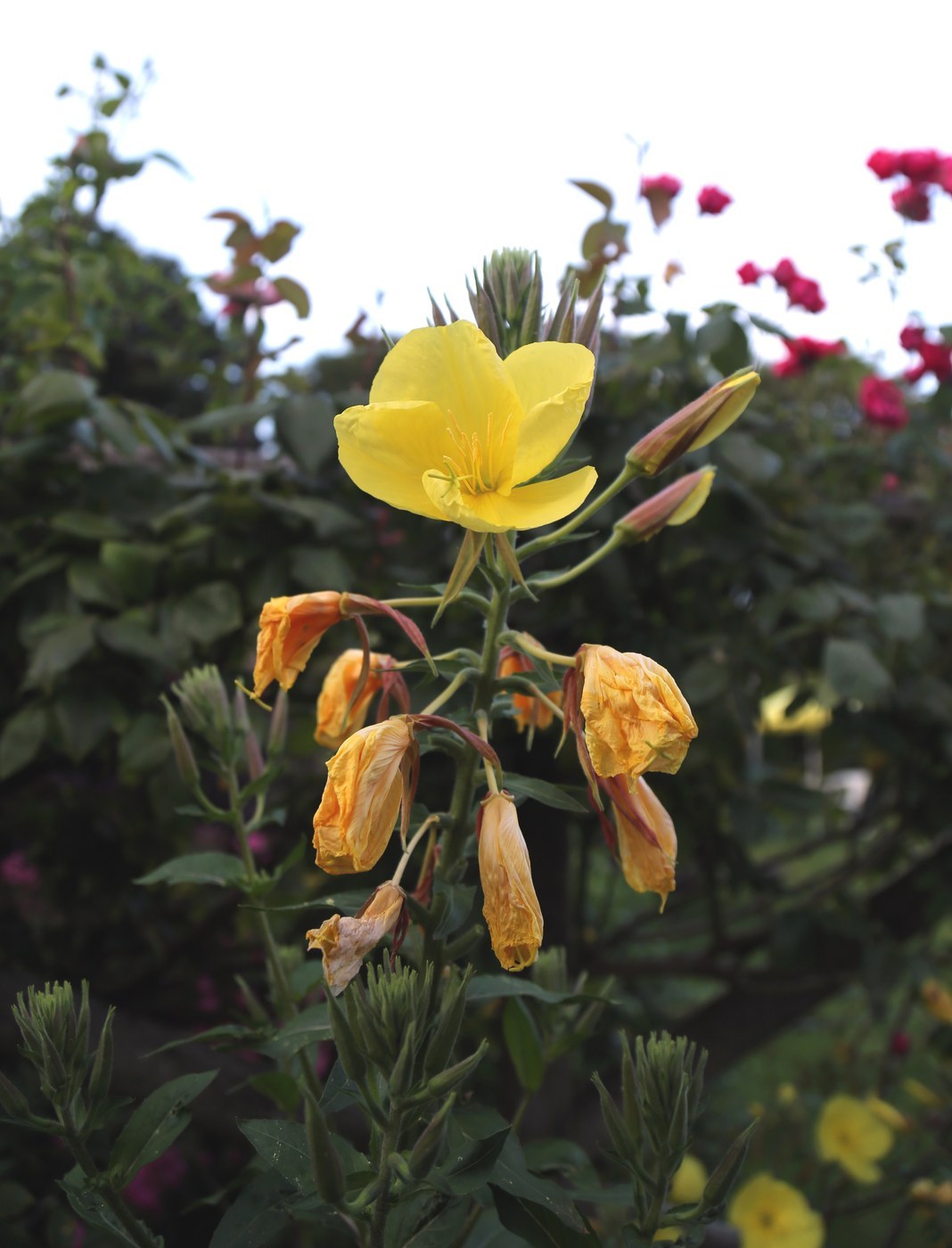
Key Identifying Features
Evening Primrose (genus Oenothera, especially O. biennis) is a tall biennial named for its yellow flowers that open in the evening and are pollinated by night-flying moths. The common form stands 2 to 5 feet (60 to 150 cm) tall with a leafy stem topped by a spike of pale-to-bright yellow blooms.
- Four broad yellow petals, often heart-notched at the tip
- A distinctive X- or cross-shaped stigma in the flower center
- Flowers open at dusk, fade by the next afternoon
- Tall stem with a leafy basal rosette in the first year
Leaves & Stems
In its first year the plant forms a flat rosette of lance-shaped leaves; in the second year it sends up a stout, often reddish, hairy stem. Stem leaves are alternate, lance-shaped, and slightly toothed or wavy-edged, often with a pale midrib. The stems are usually rough to the touch.
Flowers & Fruit
Each flower has four petals, four reflexed sepals, eight stamens, and a four-lobed cross-shaped stigma rising above the anthers. Flowers are lemon to golden yellow, fragrant, and typically open in the evening within minutes, lasting only a day. Blooming runs summer into fall. The fruit is an elongated, upright capsule that splits into four sections to release many tiny seeds.
How to Tell It Apart from Look-Alikes
- Sundrops (other Oenothera): similar yellow flowers but open during the day.
- St. John's wort: has five petals and clusters, not four-petaled solitary blooms.
- Common mullein: also a tall biennial with a basal rosette, but leaves are woolly-soft and flowers are small in a dense spike.
The four notched yellow petals plus the cross-shaped stigma confirm evening primrose; the evening opening is a strong behavioral clue.
Where You'll Find It
Evening Primrose colonizes roadsides, fields, meadows, railway banks, and disturbed open ground across North America and naturalized worldwide. It tolerates poor, dry soils and full sun. Look for it in summer evenings when the flowers glow against fading light.
Quick ID Checklist
- Four yellow petals, often notched
- Distinct X-shaped stigma in flower center
- Flowers open at dusk, last one day
- Tall hairy stem; first-year basal rosette
- Upright seed capsules splitting in four
- Sunny disturbed ground and roadsides
Frequently asked questions
Why is it called evening primrose?
Because the flowers typically open in the evening, often within minutes at dusk, and are pollinated by night-flying moths. By the following afternoon the blooms fade, and new ones open the next evening.
How do I confirm an evening primrose flower?
Look for four broad yellow petals, often notched at the tip, and a distinctive cross or X-shaped stigma rising in the center of the flower above the stamens. This stigma shape is a reliable feature.
Is evening primrose the same as sundrops?
They are close relatives in the same genus, Oenothera, but sundrops open their yellow flowers during the day, whereas classic evening primrose opens at dusk. Flower-opening time is a useful clue.
Where does evening primrose typically grow?
It is a pioneer of disturbed, sunny ground, common along roadsides, in fields, on railway banks, and in meadows. It tolerates poor, dry soil and is widespread across North America and beyond.