
How to Care for False Aralia
Grow Schefflera elegantissima, an elegant houseplant with lacy, coppery, saw-toothed leaflets that add fine texture and vertical drama indoors.
Read the full False Aralia encyclopedia entry →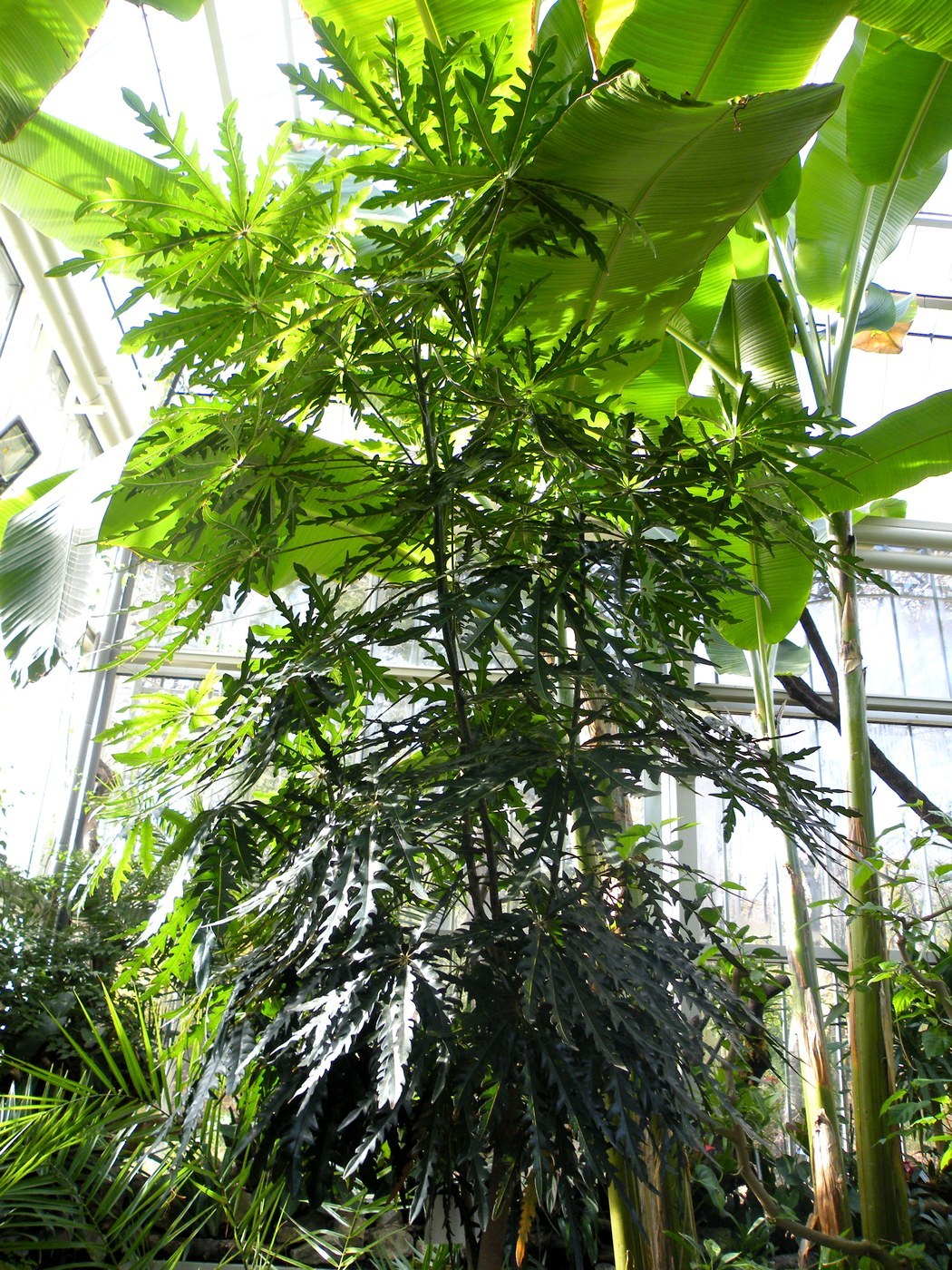
False Aralia (Schefflera elegantissima, formerly Dizygotheca elegantissima) is an elegant, fine-textured foliage houseplant prized for its slender, saw-toothed leaflets that emerge coppery-bronze and mature to dark green, arranged like airy fingers on a graceful upright plant. It has a reputation for being a little temperamental, rewarding stable, draft-free conditions with lush, feathery growth.
Light
Provide bright, indirect light for the best color and fullest growth. A spot near an east or west window, or set back from a bright south window behind a sheer curtain, is ideal. It tolerates medium light but grows leggier and thinner there. Avoid harsh direct midday sun, which can scorch and fade the delicate foliage. Rotate the plant occasionally for even, upright growth.
Water
Water when the top inch of soil dries, then water thoroughly until it drains from the bottom, discarding excess. False aralia is sensitive to extremes: consistently soggy soil causes root rot and leaf drop, while letting it dry out completely triggers dramatic leaf shedding. Aim for evenly, moderately moist soil and a steady rhythm. Reduce watering somewhat in winter when growth slows.
Soil & Potting
Use a rich, well-draining potting mix, such as a quality houseplant mix amended with perlite or bark for aeration. Good drainage is essential to prevent soggy roots. Choose a pot with drainage holes only slightly larger than the root ball, since this plant prefers not to sit in a large volume of wet soil. A container that keeps its tall growth stable is helpful as it matures.
Humidity & Temperature
False aralia loves warmth and moderate to high humidity, reflecting its tropical origins. Keep it in temperatures roughly between 65 and 80F and protect it from anything below about 60F, as well as from cold drafts, heating vents, and air-conditioning blasts, all of which trigger leaf drop. Boost humidity with a pebble tray, a humidifier, or by grouping plants, especially in dry, heated rooms.
Feeding
Feed during the growing season, spring through summer, with a balanced liquid houseplant fertilizer diluted to about half strength, roughly monthly. Do not overfeed, as excess fertilizer can burn the fine foliage and lead to salt buildup. Stop or greatly reduce feeding in fall and winter when the plant is not actively growing.
Propagation
False aralia can be propagated from stem tip cuttings, though rooting can be slow and inconsistent. Take a cutting with a few leaves, dip it in rooting hormone, and place it in moist, well-draining mix under warm, humid conditions, such as a covered propagation setup with bottom heat. Air layering is another option for a more reliable result on established plants. It can also be grown from fresh seed, but this is uncommon at home.
Repotting / Pruning
Repot every two to three years in spring, moving up only one pot size, since the plant resents disturbance and prefers to be slightly snug. Handle the root ball gently. Prune in spring to control height and encourage bushier growth: trim back leggy stems, and pinch growing tips on young plants to promote branching. As it ages, lower leaves may naturally drop, giving it a more tree-like form, which pruning can help manage.
Common Problems & Pests
Sudden leaf drop is the classic complaint and is almost always a reaction to stress: a change in location, cold drafts, overwatering, drying out, or a sudden temperature swing. Keep conditions stable to prevent it. Overwatering causes yellowing leaves and root rot; underwatering causes wilting and shedding. Watch for spider mites (fine webbing, stippled leaves), mealybugs, scale, and aphids, especially in dry air; treat with insecticidal soap or neem and improve humidity. Consistency is the key to a happy false aralia.
Seasonal Care Tips
In spring and summer, growth is active, so water regularly, feed monthly, and provide bright indirect light and warmth. In fall and winter, growth slows: reduce watering and stop feeding, and be especially vigilant about cold drafts and dry heated air, which cause winter leaf drop. Keep the plant in one stable spot rather than moving it around, and maintain steady humidity and temperature year-round for the fullest, most graceful foliage.
Frequently asked questions
Why is my false aralia dropping leaves?
Leaf drop is the plant's classic stress response, usually to cold drafts, a sudden move, temperature swings, overwatering, or drying out completely. Keep it in a stable, warm, draft-free spot with even moisture to prevent it.
How much light does false aralia need?
Bright, indirect light gives the best color and fullest growth. It tolerates medium light but becomes leggy, and harsh direct sun can scorch the fine foliage. An east or west window is ideal.
How often should I water false aralia?
Water when the top inch of soil dries, then thoroughly, letting excess drain. Avoid both soggy soil and complete drying out, since either extreme causes leaf drop. Ease off a bit in winter.
Why do the leaves change color as the plant matures?
Young leaflets emerge coppery-bronze to reddish and gradually darken to deep green as they mature. This natural color shift is part of the plant's ornamental appeal, not a problem.