False Aralia
Schefflera elegantissima
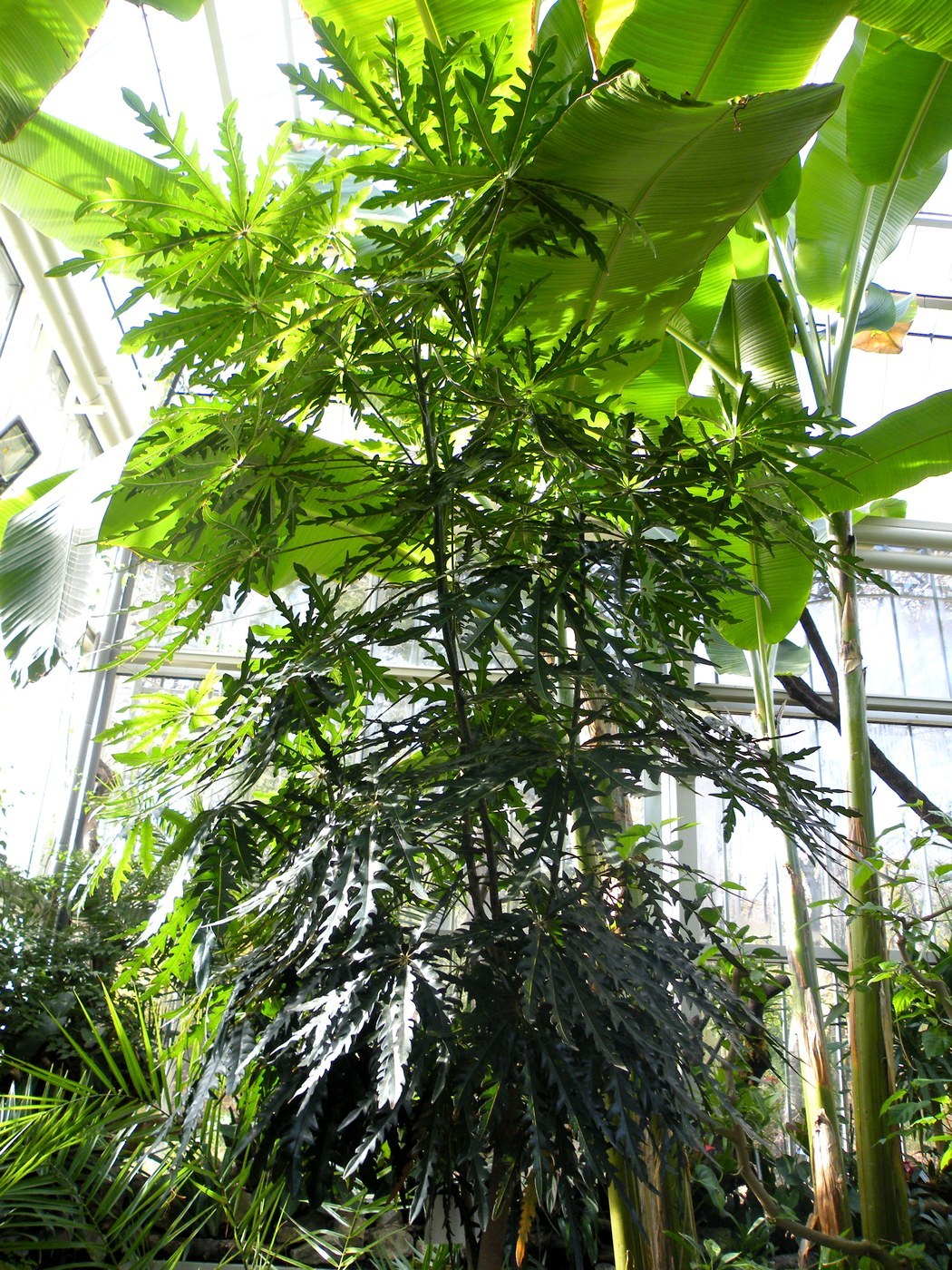
False aralia is grown for its delicate, lacy foliage - slender, saw-toothed leaflets that radiate like fingers and emerge coppery before darkening to near-black green. It brings a fine, airy texture to bright indoor spaces.
- Light
- Bright indirect light
- Water
- When top inch dries
- Difficulty
- Moderate
Got a plant like this?
Identify any plant from a photo, free.
Overview
Schefflera elegantissima (long known as Dizygotheca elegantissima) is a tropical shrub or small tree from the South Pacific, grown as a houseplant for its elegant, filigree foliage.
Young plants display the finest, most thread-like leaves; as the plant matures the leaflets broaden and the habit becomes more tree-like and upright.
It has a reputation for being a little fussy about consistency - it dislikes sudden changes in light, watering, or temperature - but rewards stable conditions with striking, fern-like texture.
How to identify it
- Palmately compound leaves with 7-11 narrow, finger-like leaflets radiating from a central point
- Leaflets are slender and coarsely saw-toothed (serrated) along the edges
- New growth emerges coppery-bronze, maturing to very dark green, almost black
- Slender, upright stems; reaches 4-6 ft or more indoors over time
- Juvenile foliage is much finer and more thread-like than adult leaves
Care & growing
Light: Bright indirect light. Too little light causes legginess and leaf drop.
Water: Keep lightly and evenly moist, letting the top inch dry. It is sensitive to both over- and under-watering, dropping leaves when stressed.
Soil: Well-draining, peat-based potting mix.
Temperature & humidity: Warm (65-80 F) and humid; avoid cold drafts and sudden swings.
Feeding: Balanced feed monthly in spring and summer.
Propagation: Stem cuttings or air layering; seed for the species.
Habitat & origin
False aralia is native to New Caledonia in the South Pacific, where it grows as an understory shrub to small tree in humid tropical forest.
It is grown worldwide as an indoor foliage plant and, in frost-free tropical climates, as a landscape shrub or specimen plant.
Frequently asked questions
Why is my false aralia dropping leaves?
It is sensitive to change - sudden shifts in light, watering, or temperature, plus cold drafts, commonly trigger leaf drop. Keep conditions stable.
Why do the leaves look different on older plants?
Juvenile leaves are very fine and thread-like; mature plants produce broader leaflets, a natural change with age.
Is it the same as true aralia?
No, it just resembles aralias; botanically it is a Schefflera, formerly placed in the genus Dizygotheca.
How big does false aralia get indoors?
Grown as a houseplant it slowly reaches 4-6 ft or more on slender upright stems, taking on a more tree-like form as it matures.
False Aralia guides
In-depth guides for identifying, growing, and caring for False Aralia.
How to Care for False Aralia
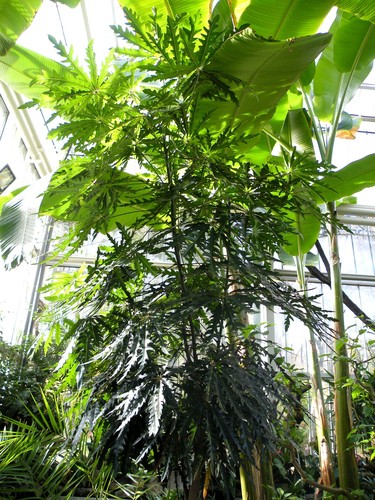
Grow Schefflera elegantissima, an elegant houseplant with lacy, coppery, saw-toothed leaflets that add fine texture and vertical drama indoors.
False Aralia Identification Guide
Identify False Aralia (Plerandra/Schefflera elegantissima) by its slender, finger-like, saw-toothed leaflets radiating from a central point. Covers leaf form, color change with age, and look-alikes.