
False Aralia Identification Guide
Identify False Aralia (Plerandra/Schefflera elegantissima) by its slender, finger-like, saw-toothed leaflets radiating from a central point. Covers leaf form, color change with age, and look-alikes.
Read the full False Aralia encyclopedia entry →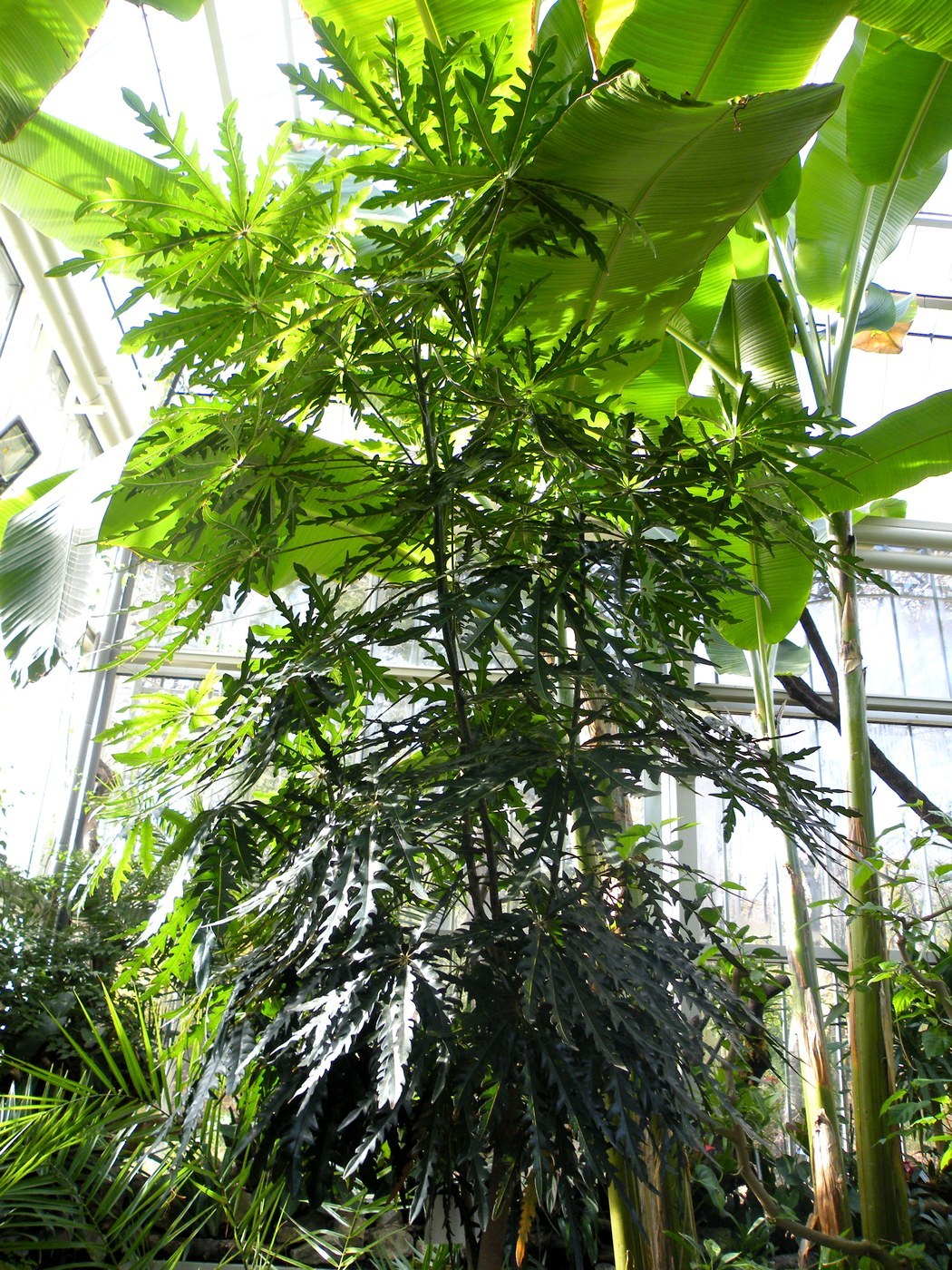
Key Identifying Features
False Aralia (Plerandra elegantissima, formerly Schefflera/Dizygotheca elegantissima) is a graceful foliage plant in the Araliaceae family, native to New Caledonia. It's grown indoors for its delicate, lacy silhouette. Identify it by:
- Palmately compound leaves with 7-11 narrow, finger-like leaflets radiating from a single point
- Leaflets with coarsely toothed (serrated) margins
- Very narrow, thread- to strap-like juvenile leaflets in coppery to near-black green
- A slender, upright stem and airy, fine-textured appearance
Leaves & Stems
The juvenile foliage most often seen on houseplants is the key feature: each leaf is divided into a fan of 7 to 11 long, thin leaflets, each leaflet only about a quarter- to half-inch wide and several inches long, with deeply notched, saw-toothed edges that give a jagged, lacy look. Young leaflets are a dark coppery-green, bronze, or almost blackish with a reddish underside. As the plant matures (often only after years or in the tropics), leaflets become much broader, leathery, and plain green so juvenile and adult forms look like different plants. The stems are slim and upright, sometimes with a finely mottled or speckled surface, holding the leaves on long petioles.
Flowers & Fruit
Flowering is rare in cultivation and essentially never indoors. In habitat, mature trees produce small flowers in branched clusters typical of the ivy/aralia family, followed by small fruits. These are not useful for everyday ID rely entirely on the distinctive foliage.
How to Tell It Apart from Look-Alikes
- Schefflera (umbrella tree, S. arboricola/actinophylla): also palmately compound, but leaflets are broad, oval, glossy, and smooth-edged, like umbrella spokes False Aralia's are narrow and toothed.
- Marijuana (Cannabis): sometimes confused at a glance because both have narrow toothed leaflets in a fan, but Cannabis has a distinct smell, opposite/whorled leaves, and palmate leaves with a different vein pattern False Aralia is a woody ornamental with coppery juvenile color.
- Cutleaf/Japanese maple: lobed single leaves, not truly compound separate leaflets.
- Tree Ivy / Fatsia: single lobed leaves, not divided into separate leaflets.
The fan of 7-11 narrow, saw-toothed, coppery leaflets confirms False Aralia.
Where You'll Find It
It is grown almost exclusively as an indoor houseplant in temperate regions, valued for its fine, feathery texture. It prefers bright, indirect light, warmth, and steady humidity, and dislikes cold drafts and sudden changes (which cause leaf drop). In frost-free tropical climates it can grow into a small tree outdoors.
Quick ID Checklist
- Palmately compound leaves: 7-11 leaflets from one point
- Leaflets narrow, strap-like, deeply saw-toothed
- Juvenile color coppery, bronze, to near-black green, red underside
- Airy, lacy overall texture on a slim upright stem
- Mature leaflets become broad and plain green
- Rarely flowers indoors
Frequently asked questions
Why do young and old False Aralia plants look so different?
It has strongly dimorphic foliage. Juvenile leaflets are very narrow, jagged, and coppery-dark, while mature leaflets become broad, leathery, and plain green so a mature plant can look like a different species.
How do I tell False Aralia from a Schefflera?
Both have palmately compound leaves, but Schefflera leaflets are broad, oval, glossy, and smooth-edged, while False Aralia leaflets are narrow, strap-like, and coarsely saw-toothed.
Why is my False Aralia dropping leaves?
It is sensitive to cold drafts, low humidity, and sudden changes in light or position, which commonly trigger leaf drop. This is a care response, not a sign of a different plant.
Is it related to true aralias?
It is in the same family (Araliaceae) but a different genus, which is why it is called 'false' aralia. It was long classified under Dizygotheca and Schefflera and is now placed in Plerandra.