
How to Care for False Indigo
Grow false indigo (Baptisia australis), a tough, long-lived native perennial with blue-purple spikes, in full sun and well-drained soil.
Read the full False Indigo encyclopedia entry →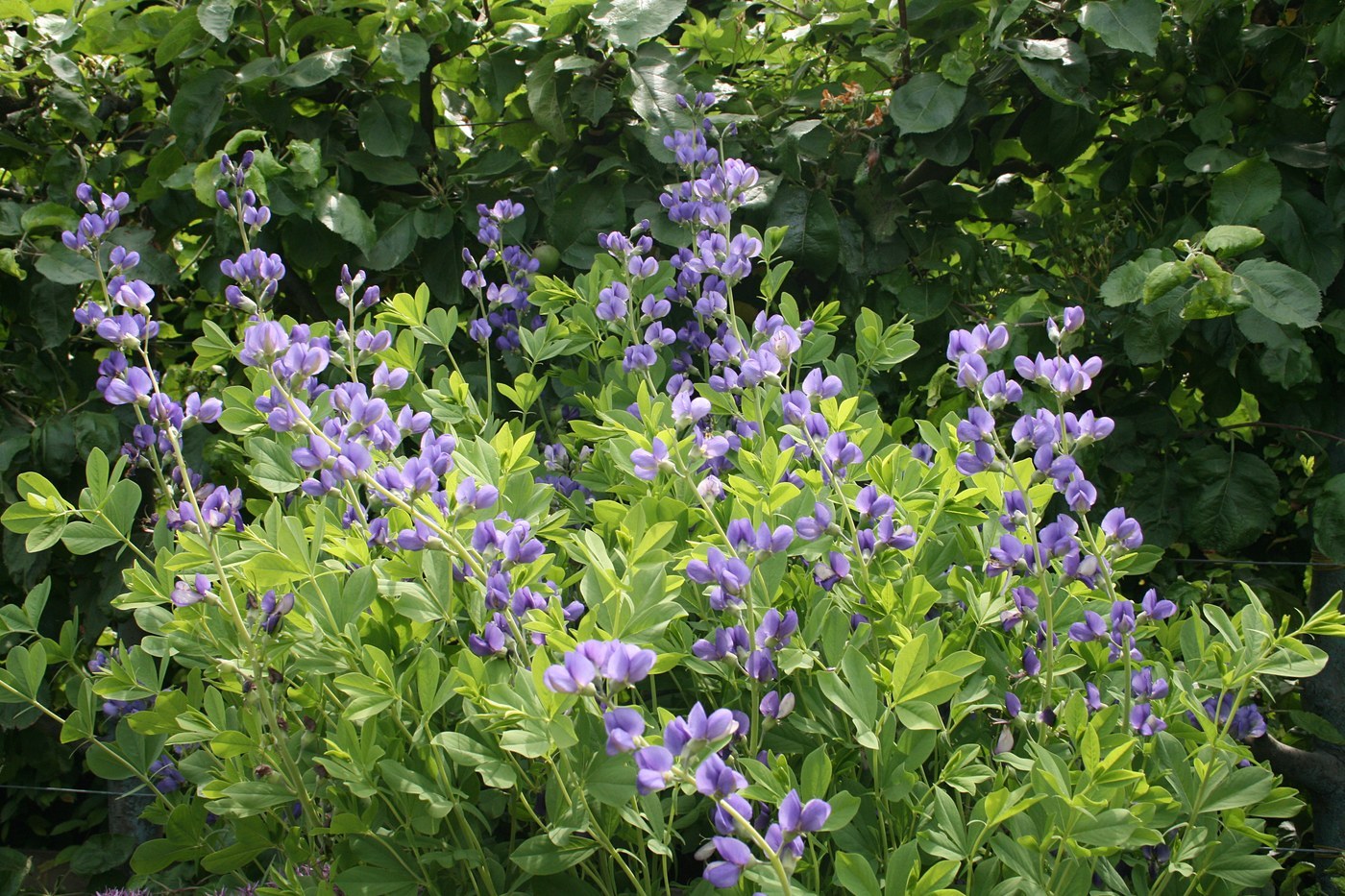
False indigo (Baptisia australis) is a robust, long-lived native perennial forming a shrubby mound of blue-green foliage topped with striking spikes of indigo-blue, pea-like flowers in late spring, followed by ornamental seed pods. Once established it is remarkably self-sufficient and drought-tolerant.
Light
Grow in full sun to light shade. Full sun gives the sturdiest, most upright clumps and the heaviest flowering. In too much shade the stems flop, the plant grows lax, and bloom is reduced, so choose the sunniest available spot.
Water
Water regularly during the first year to help the deep root system establish. After that, false indigo is notably drought-tolerant and needs little supplemental water, thriving on low moisture. Avoid overwatering and soggy soil, which it does not appreciate.
Soil & Potting
As a legume with a deep taproot, false indigo prefers well-drained soil and tolerates poor, lean, and even sandy or rocky ground. It fixes its own nitrogen, so it does not need rich soil. Avoid heavy, wet clay. Because of the taproot, site it where it can stay permanently, as mature plants resent disturbance.
Humidity & Temperature
A hardy temperate native, it withstands cold winters and tolerates summer heat and humidity with ease. No humidity management is needed. Its deep roots make it well suited to hot, dry sites where shallower-rooted perennials struggle.
Feeding
Feeding is largely unnecessary. As a nitrogen-fixing legume, false indigo makes much of its own fertility and grows well in lean soil. At most, a light spring topdressing of compost is plenty; rich feeding produces floppy growth and can reduce flowering.
Propagation
Propagate by seed, which benefits from scarification and cold stratification to break dormancy, sown fresh in autumn or stratified for spring. Division is difficult and often resented because of the deep taproot, so seed is the more reliable method, though seedlings take a few years to reach flowering size.
Repotting / Pruning
Little pruning is required. After flowering you can leave the decorative charcoal seed pods for interest or cut spent stems back. Cut the whole plant back to the ground in late autumn or early spring. Some gardeners lightly shear after bloom to keep a tidy shrubby shape. Avoid moving established plants, as the taproot makes transplanting risky.
Common Problems & Pests
False indigo is exceptionally trouble-free and largely pest-resistant. The most common issue is flopping stems, usually caused by too much shade or overly rich soil; more sun and lean conditions fix this. Occasional foliage spotting or weevil damage to pods is minor and rarely needs action.
Seasonal Care Tips
In spring, cut back old stems and enjoy the emerging spikes and late-spring bloom. Through summer, let it grow undisturbed with minimal watering, leaving seed pods for ornament. In autumn, foliage often takes on a silvery-charcoal tone and pods rattle attractively. In winter the plant dies back and is fully hardy underground.
Frequently asked questions
Why are my false indigo stems flopping open in the middle?
Flopping is usually caused by too much shade or overly rich soil. Grow it in full sun and lean, well-drained ground, and avoid heavy feeding. A light shear after flowering can also tidy the shape.
Can I move an established false indigo?
It is best not to. False indigo forms a deep taproot and strongly resents disturbance, so mature plants transplant poorly. Choose a permanent sunny spot from the start and propagate from seed instead.
How much water does false indigo need?
Water regularly only in its first year to establish the deep roots. After that it is quite drought-tolerant and needs little supplemental water, preferring lean, well-drained conditions over soggy soil.
Does false indigo need fertilizer?
Rarely. As a nitrogen-fixing legume it makes much of its own fertility and thrives in poor soil. A light spring topdressing of compost is more than enough; rich feeding causes floppy growth.