False Indigo
Baptisia australis
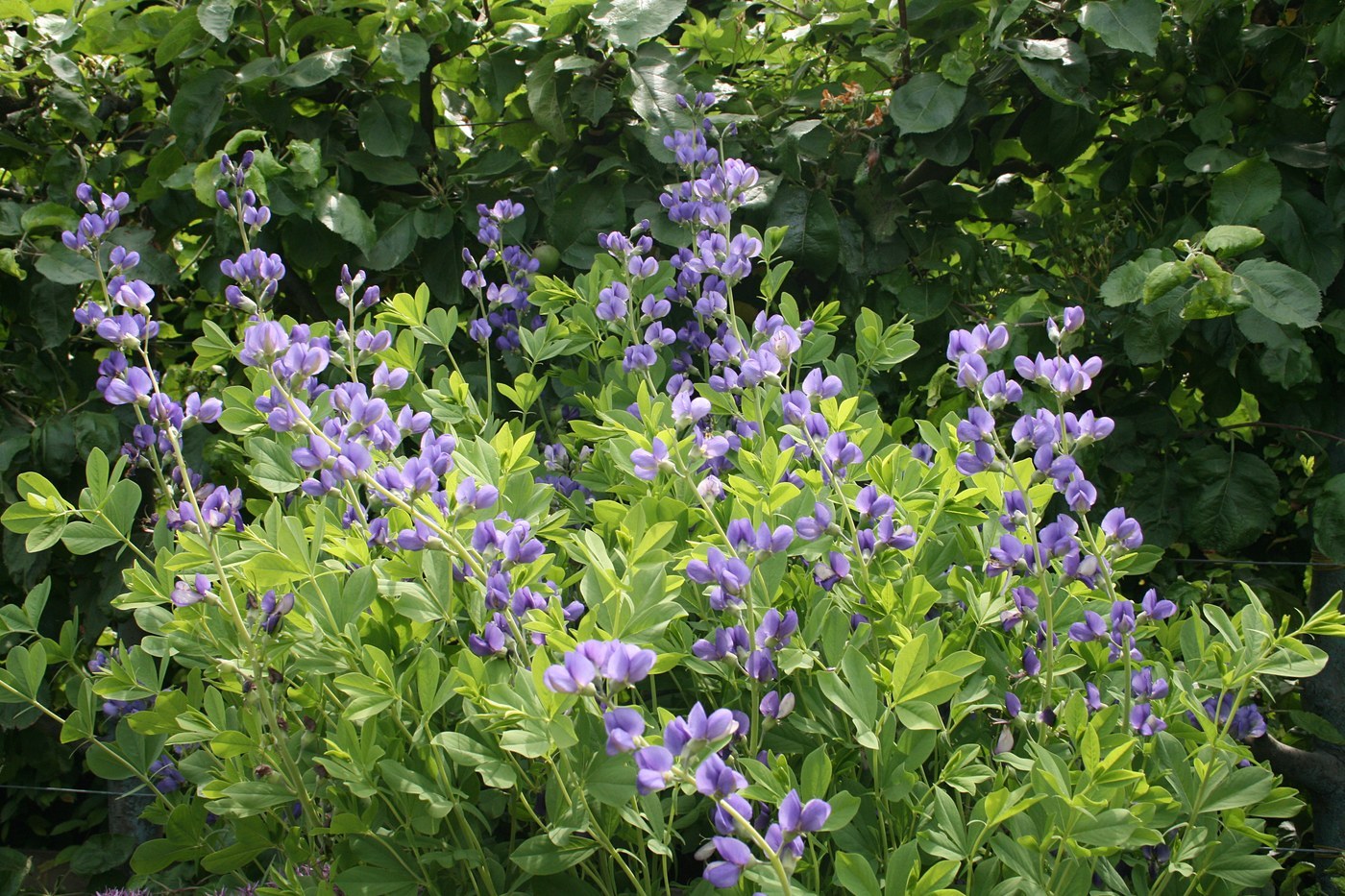
A long-lived, shrubby perennial legume with spires of indigo-blue, lupine-like flowers in late spring and attractive blue-green foliage all season.
- Light
- Full sun to light shade
- Water
- Low; drought-tolerant once established
- Difficulty
- Easy
Got a plant like this?
Identify any plant from a photo, free.
Overview
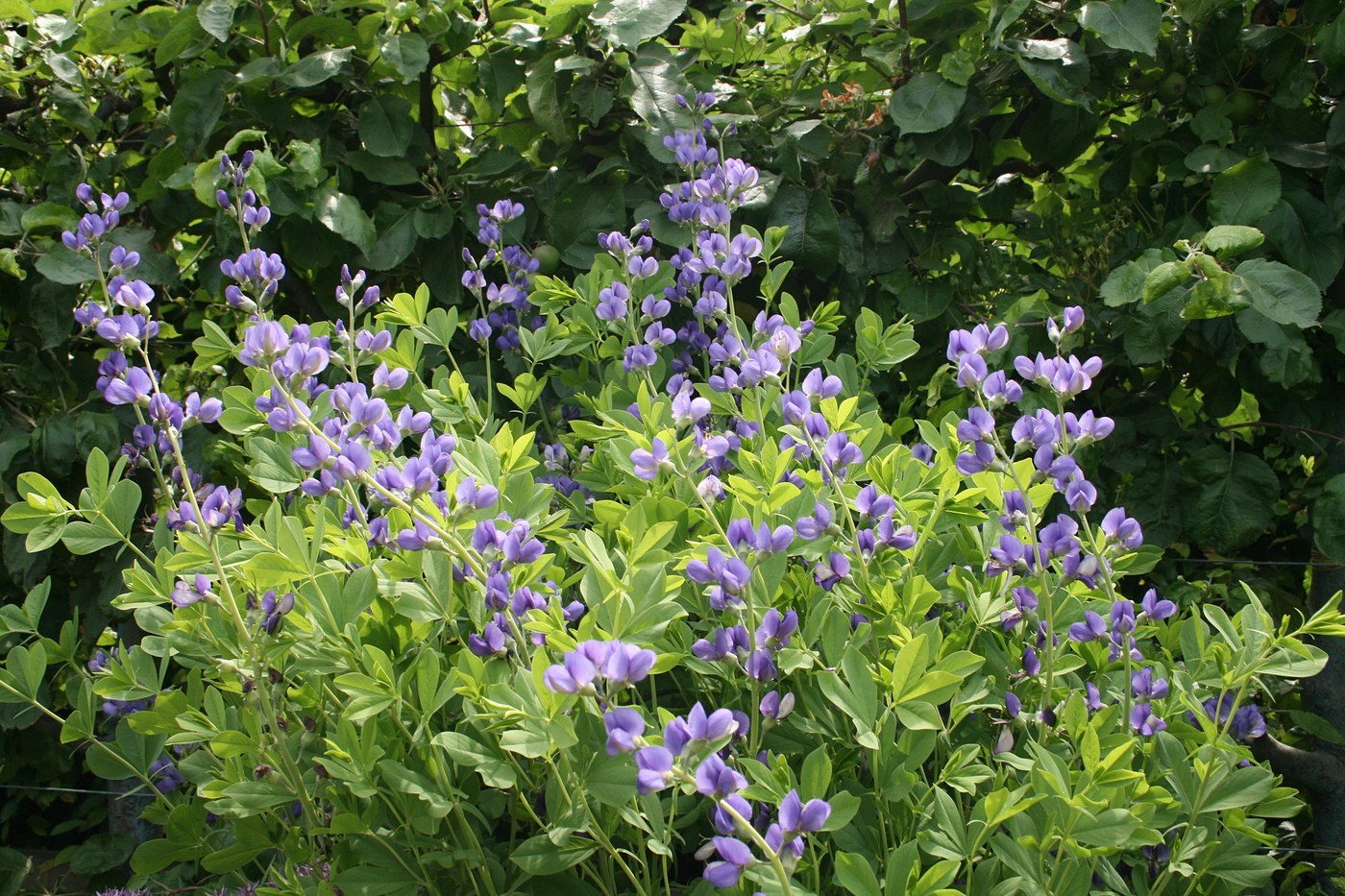
False indigo is a robust, deep-rooted perennial in the pea family, forming a bushy, almost shrub-like clump up to a meter or more tall. In late spring it sends up tall racemes of pea-shaped, indigo-blue flowers, followed by inflated seed pods that rattle and turn charcoal-black, adding interest into autumn.
The name comes from its historical use as a substitute for true indigo dye. Exceptionally long-lived and trouble-free, Baptisia develops a deep taproot that makes mature plants drought-tolerant but difficult to transplant.
How to identify it
- Flowers: Pea-like, indigo-blue, in upright spikes (racemes) 20-30 cm long in late spring.
- Leaves: Compound with three rounded blue-green leaflets (trifoliate), clover-like.
- Seed pods: Inflated, leathery, turning blue-black to charcoal; rattle when dry.
- Height: Typically 0.9-1.5 m, forming a rounded, shrubby clump.
- Habit: Upright bushy perennial with a deep taproot.
Care & growing
Light: Full sun for upright growth; tolerates light shade but may need staking.
Water: Drought-tolerant once established thanks to its deep root; avoid soggy soil.
Soil: Well-drained soil; tolerates poor, sandy ground and fixes its own nitrogen.
Temperature: Very hardy across temperate zones.
Feeding: None needed — as a legume it fixes nitrogen.
Propagation: Best from seed (scarify and stratify); mature plants resent division and transplanting due to the taproot. Place it where it can stay put.
Habitat & origin
Native to central and eastern North America, where it grows in prairies, open woodlands, stream banks, and along railroads and roadsides. It is well adapted to lean, well-drained soils.
It is widely cultivated in perennial borders and native plant gardens as a durable, low-maintenance specimen, and numerous hybrids now offer yellow, white, purple, and bicolor flowers.
Frequently asked questions
Why is it called false indigo?
It was used as a substitute for true indigo (Indigofera) to make blue dye, but it produces an inferior, less colorfast result — hence "false" indigo.
Can I move an established plant?
It's difficult. Baptisia forms a deep taproot and resents disturbance, so it's best sited permanently and propagated from seed rather than divided.
Does it need fertilizing?
No. As a nitrogen-fixing legume it makes its own nitrogen and thrives in lean soils without supplemental feeding.
How can I recognize false indigo?
Look for upright spikes of pea-like indigo-blue flowers in late spring above clover-like blue-green trifoliate leaves, followed by inflated pods that rattle and blacken.
False Indigo guides
In-depth guides for identifying, growing, and caring for False Indigo.
How to Care for False Indigo
Grow false indigo (Baptisia australis), a tough, long-lived native perennial with blue-purple spikes, in full sun and well-drained soil.
False Indigo Identification Guide
Identify False Indigo (Baptisia) by its tall spikes of pea-like flowers, blue-green clover-like leaves, and inflated rattling seed pods.