
False Indigo Identification Guide
Identify False Indigo (Baptisia) by its tall spikes of pea-like flowers, blue-green clover-like leaves, and inflated rattling seed pods.
Read the full False Indigo encyclopedia entry →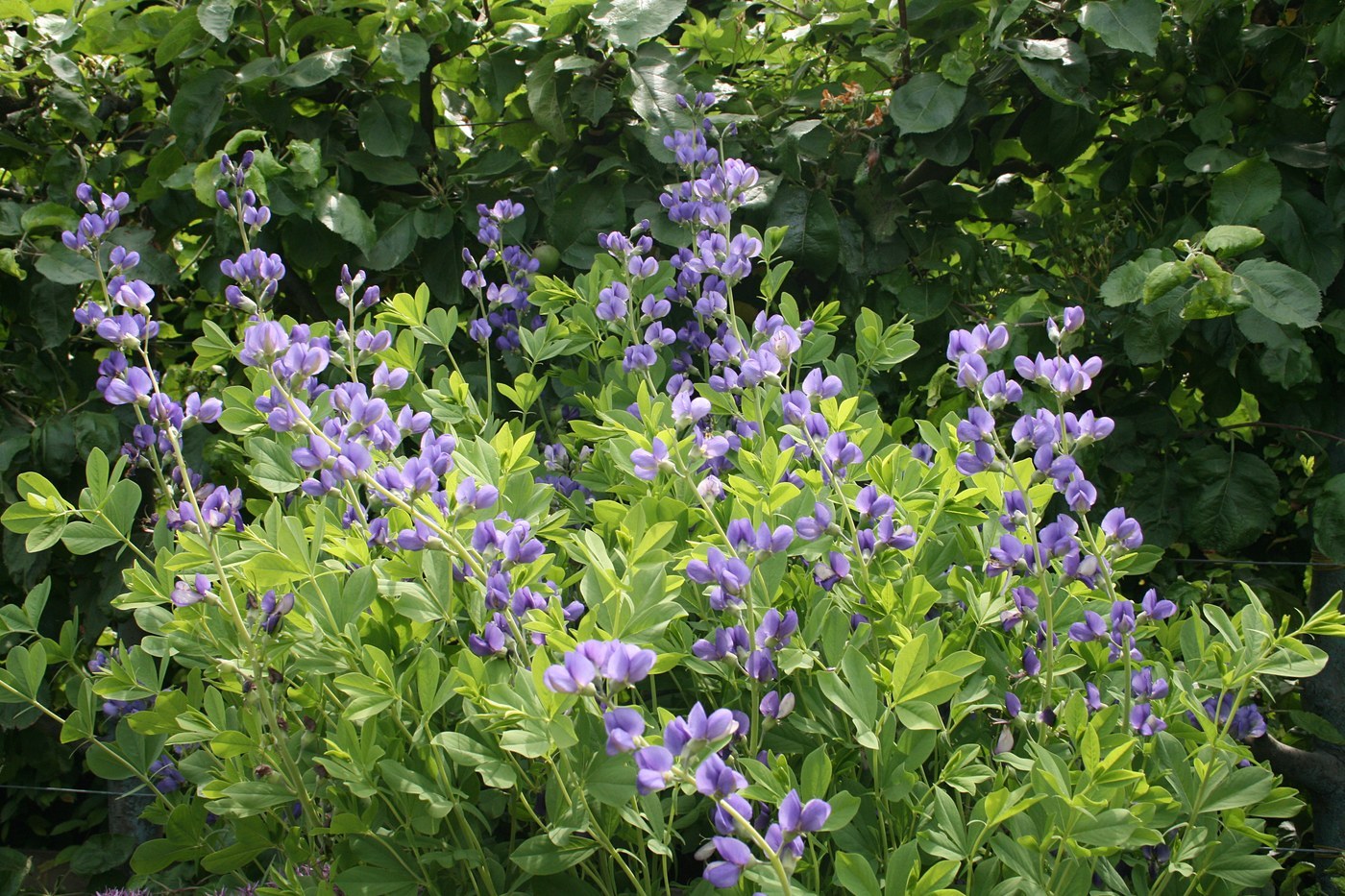
Key Identifying Features
False Indigo (Baptisia species, especially B. australis, Blue Wild Indigo) is a shrubby, long-lived legume of North American prairies and open woods. Look for:
- Upright spikes (racemes) of pea-like flowers in blue-purple, white, cream, or yellow depending on species.
- Three-part (trifoliate), clover-like leaves, often blue-green and smooth.
- Inflated, blackening seed pods that rattle when dry.
- A bushy, shrub-like clump 0.6–1.5 m (2–5 ft) tall.
Leaves & Stems
The stems are stout, smooth, and bushy, emerging in a vase-shaped clump each spring (the young shoots resemble asparagus spears). Leaves are alternate and divided into three rounded-to-oval leaflets (trifoliate, clover- or pea-like), frequently with a waxy blue-green or grey-green cast. At the base of each leaf stalk are small leaf-like stipules. The whole plant often turns silvery-black when cut or in autumn.
Flowers & Fruit
Flowering comes in late spring to early summer (May–July). The flowers are classic pea-family blooms — a banner, two wings, and a keel — arranged along erect terminal spikes. B. australis is indigo-blue to violet; B. alba is white; B. tinctoria and B. sphaerocarpa are yellow. After flowering, distinctive plump, oval pods form, turning charcoal-black and rattling with loose seeds inside — an excellent late-season ID feature.
How to Tell It Apart from Look-Alikes
- Lupines (Lupinus) have palmately compound leaves (many leaflets radiating from one point), not three leaflets.
- True Indigo (Indigofera) has many small leaflets and pinkish flowers.
- Vetches and clovers are sprawling or vining with smaller flowers and lack the inflated rattling pods.
- The combination of trifoliate blue-green leaves + pea flowers on spikes + inflated blackening rattle-pods is diagnostic for Baptisia.
Where You'll Find It
False Indigo grows in prairies, open woodlands, glades, stream banks, and roadsides across the central and eastern United States. It prefers full sun and well-drained soil, develops a deep taproot, and is very drought- and long-lived. It is widely planted as an easy, shrub-like native perennial.
Quick ID Checklist
- Spikes of pea-like flowers (blue, white, cream, or yellow)
- Trifoliate, clover-like, blue-green leaves
- Inflated pods that turn black and rattle
- Bushy, shrub-like clump, 0.6–1.5 m
- Asparagus-like young spring shoots
- Sunny prairies, glades, and roadsides
Frequently asked questions
Why is it called False Indigo?
Early settlers used Baptisia as a substitute for true indigo (Indigofera) to make blue dye, though the resulting color was inferior — hence 'false' indigo.
What are the black rattling pods?
After flowering, Baptisia forms inflated oval seed pods that dry to charcoal-black and rattle with loose seeds inside — a distinctive identifier that persists into winter.
How do I tell it from lupines?
Look at the leaves: False Indigo has three-part clover-like leaflets, while lupines have many leaflets radiating from a single point like a fan.
How can I recognize False Indigo in a garden?
Look for the bushy, vase-shaped clump 0.6–1.5 m tall, trifoliate blue-green leaves, and upright spikes of pea-like flowers in late spring, later followed by inflated rattling pods.