
Feather Cactus Identification Guide
Identify the Feather Cactus (Mammillaria plumosa) by its soft, feathery white spines that completely cover its clustering green stems.
Read the full Feather Cactus encyclopedia entry →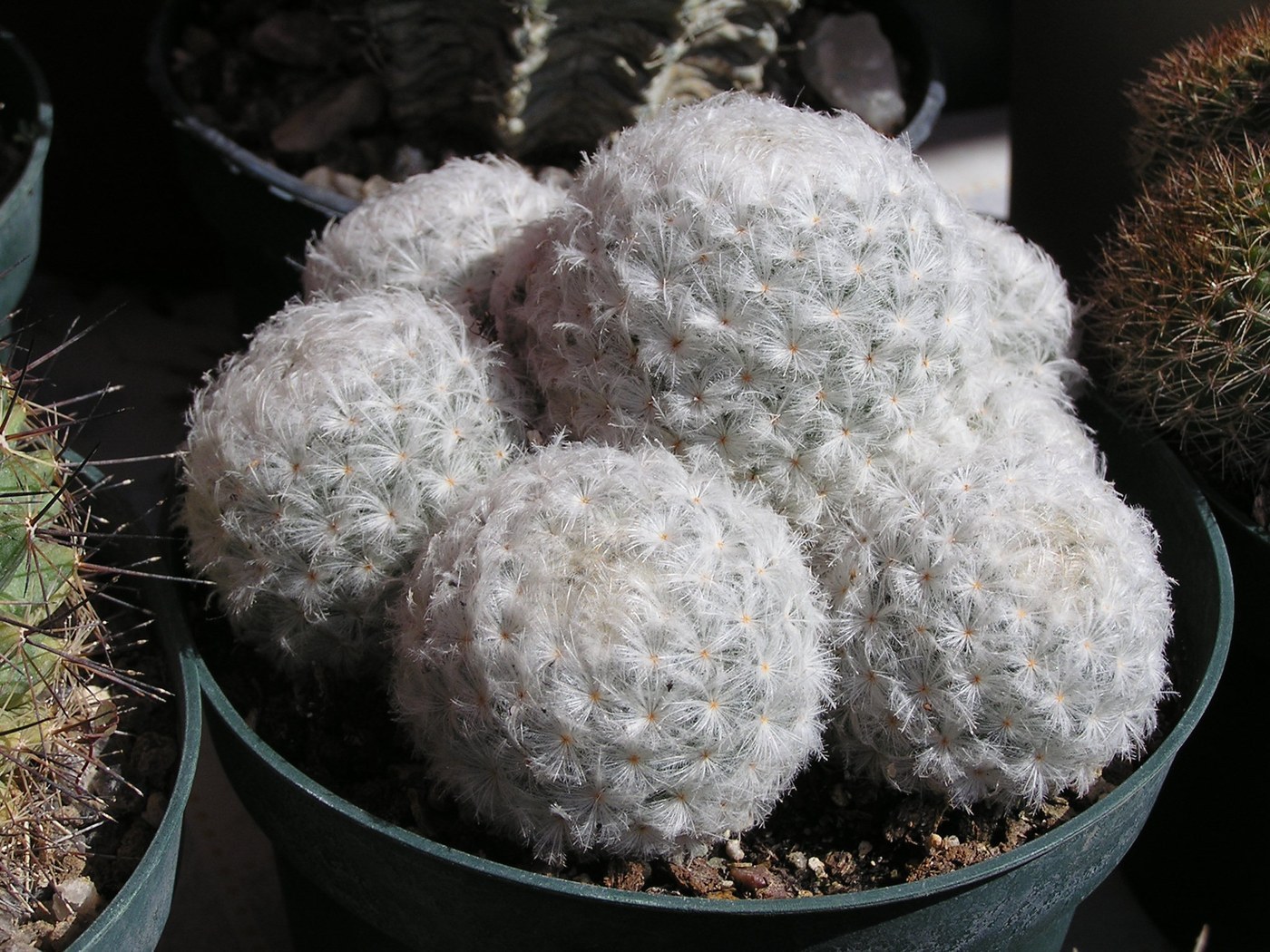
Key Identifying Features
Feather Cactus (Mammillaria plumosa) is unmistakable for a cactus covered in what looks like soft white down. Look for:
- Dense, feathery, pure-white spines that hide the body of the plant.
- A soft, fluffy texture — the spines are plumose (feather-like), not sharp.
- Low, clustering mounds of small globular stems.
Stems & Spines
The plant forms small, ball-shaped stems about 2-3 in (5-7 cm) wide that branch and clump into cushion-like mounds up to 1 ft (30 cm) across. The green body is arranged in the classic Mammillaria pattern of tubercles (small nipple-like bumps) rather than ribs. From each tubercle's areole grows a rosette of fine, white, interlacing spines that are feathery and soft to the touch — they branch like tiny plumes, giving the whole plant a snowy, fuzzy look.
Despite the soft appearance, the spines protect the plant from sun and frost. There are no leaves — this is a true cactus.
Flowers & Fruit
In fall to winter it produces small, funnel-shaped flowers in white to pale greenish-yellow or cream, sometimes with a pink midstripe, nestled near the top of the stems. Flowers are followed by small, club-shaped reddish fruits, often hidden in the wool.
How to Tell It Apart from Look-Alikes
- Mammillaria bocasana (Powder Puff): also white and fluffy but has hooked central spines hidden in the wool that catch the skin; Feather Cactus spines are soft and hookless.
- Mammillaria gracilis (Thimble): has firmer, more bristly white spines and elongated stems that detach easily.
- Espostoa / old man cacti: tall columnar with hair, not a low feathery cushion.
- Cephalocereus senilis (Old Man Cactus): tall and columnar with long white hair, not a soft cushion mound.
Where You'll Find It
Native to limestone cliffs in northeastern Mexico, it is widely grown as a windowsill and collector cactus. Hardy in USDA 9-11; elsewhere a potted plant needing bright light, gritty soil, and careful watering (the dense wool holds moisture and can cause rot if overwatered from above).
Quick ID Checklist
- Body hidden under soft white feathery spines
- Plumose (branched) spines — fluffy, not sharp
- Tubercles, no ribs; clustering into cushions
- Cream/white flowers in fall–winter
- No hooked spines (unlike Powder Puff)
Frequently asked questions
Are the feathery spines actually soft?
Yes. The spines of Mammillaria plumosa are plumose (branched and feather-like) and soft to the touch, unlike most cacti. They protect the plant from sun and cold rather than by being sharp.
How do I tell it from the Powder Puff Cactus?
Both look white and fuzzy, but Powder Puff (M. bocasana) hides sharp hooked central spines that snag skin. Feather Cactus has no hooks and stays soft.
Why is my Feather Cactus rotting?
The dense wool traps water against the body. Water at the soil level, not over the top, and use gritty, fast-draining mix to avoid rot.
Does it flower?
Yes, it produces small cream to pale yellow funnel-shaped flowers, usually in fall and winter, tucked near the top of the stems.