Feather Cactus
Mammillaria plumosa
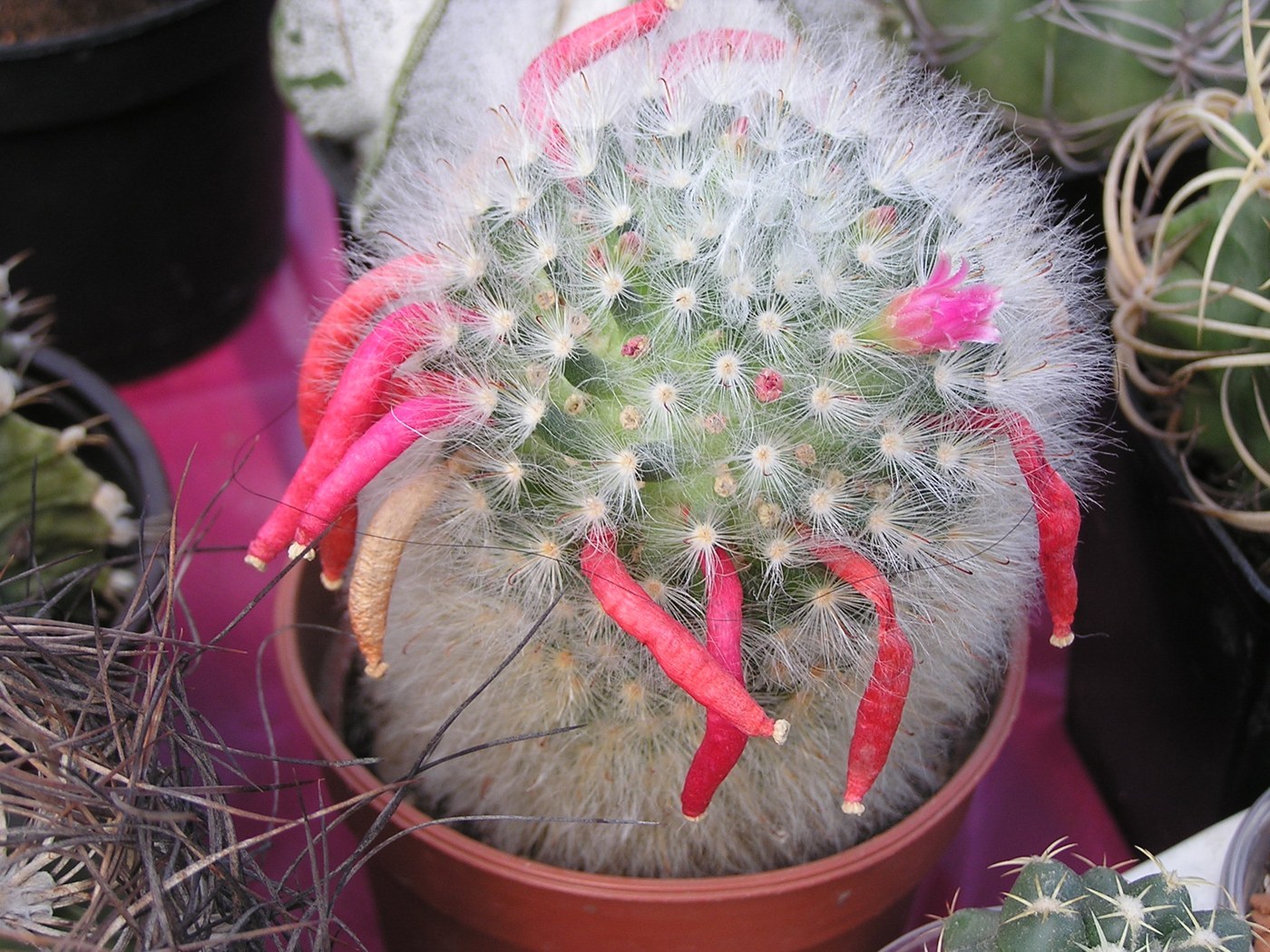
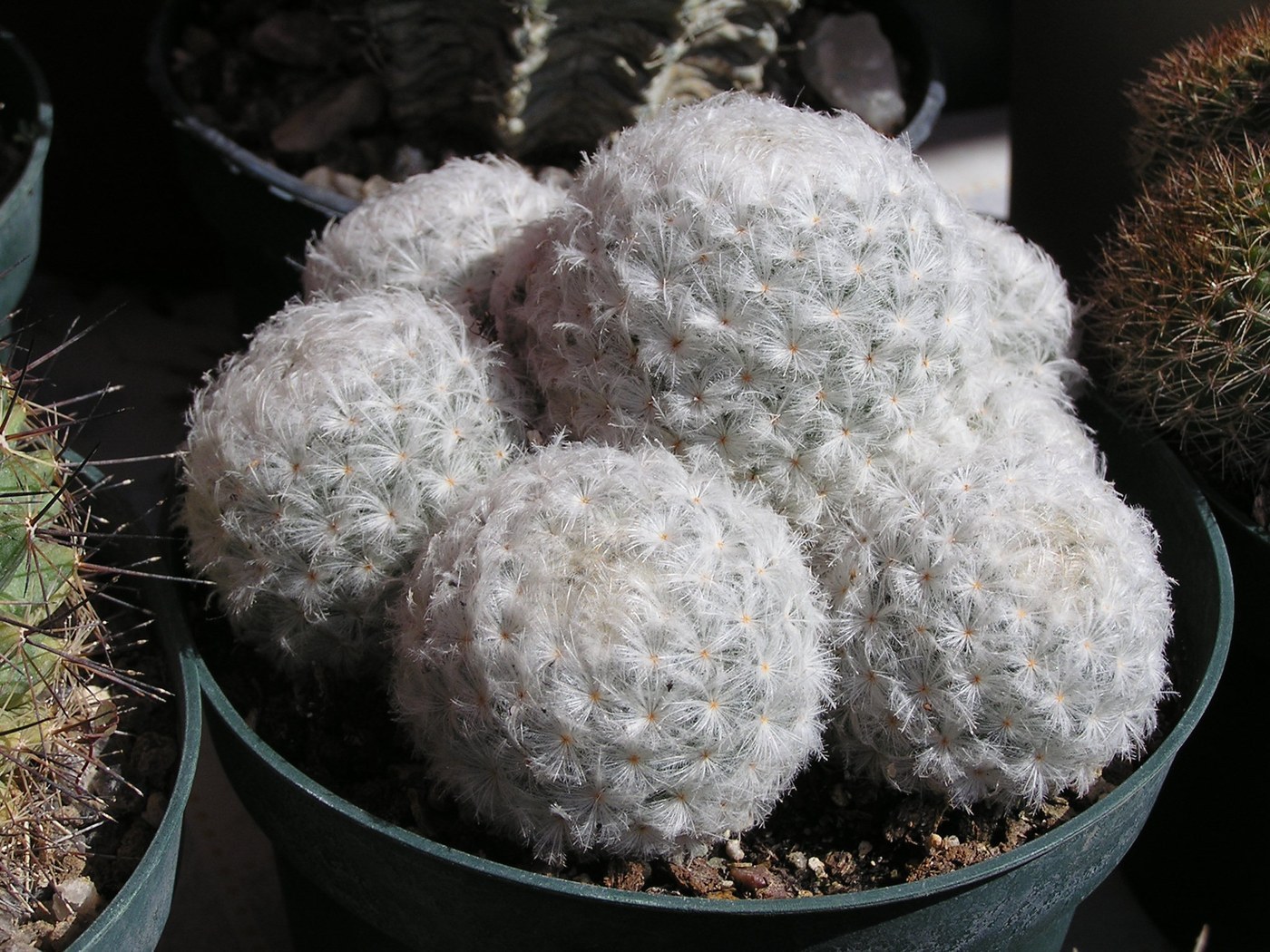
A clustering cactus completely cloaked in soft, feathery white spines that look and feel like down. The fluffy coating hides the body and gives it a snowball appearance.
- Light
- Bright light to some direct sun
- Water
- Sparingly; let soil dry fully
- Difficulty
- Moderate
Got a plant like this?
Identify any plant from a photo, free.
Overview
Feather Cactus is one of the most beguiling small cacti, its globular bodies entirely covered in fine, feathery, pure-white spines. Unlike most cactus spines these are soft and plumose, giving the plant a cloud-like, almost touchable texture (though it's best admired rather than handled).
It forms low, spreading mounds of many small heads, building into a snowball-like cluster over time. Small cream to pinkish flowers nestle among the fluff, often in late fall and winter.
Its feathery armor is beautiful but makes the plant prone to rot if water lodges in the spines, so careful watering is the key to success.
How to identify it
- Small globular stems, 1-3 in (3-7 cm) wide, fully hidden under spines
- Spines are fine, soft, feathery and pure white, resembling down or feathers
- Clustering habit, forming dense low mounds of many heads
- Inconspicuous, small cream to greenish-pink flowers tucked into the woolly surface
- No visible green body — the plant reads as a fuzzy white ball
Care & growing
Light: Bright light with some direct sun; good light keeps the feathery coat dense.
Water: Water sparingly, letting the soil dry completely. Water at the base or soak from below to keep the spines dry and avoid rot.
Soil: Very gritty, fast-draining cactus mix, ideally with extra perlite or pumice.
Temperature: Warm growing conditions; keep cool and nearly dry in winter, and protect from frost.
Feeding: Dilute low-nitrogen cactus fertilizer occasionally in the growing season.
Propagation: By separating offsets or from seed.
Habitat & origin
Native to northeastern Mexico (Coahuila and Nuevo Leon), where it grows on limestone cliffs and rocky outcrops, often in crevices in partial shade.
Its feathery spines help reflect intense sun and reduce moisture loss in this hot, dry habitat. It is grown worldwide by collectors as a prized container specimen.
Frequently asked questions
Are the white spines soft to touch?
Yes, they're unusually soft and feathery, but it's still best not to handle the plant — pressing the spines mats them and traps moisture that can cause rot.
How should I water it without ruining the fluff?
Water at the soil line or soak the pot from below so water doesn't sit in the feathery spines, then let the mix dry out completely.
Why is my Feather Cactus rotting?
Almost always from too much water or moisture lodged in the spines. Use a very gritty mix, water sparingly, and keep it nearly dry and cool in winter.
Does it flower?
Yes, it produces small cream to pinkish flowers, often in late fall and winter, nestled among the white spines.
Feather Cactus guides
In-depth guides for identifying, growing, and caring for Feather Cactus.
How to Care for Feather Cactus
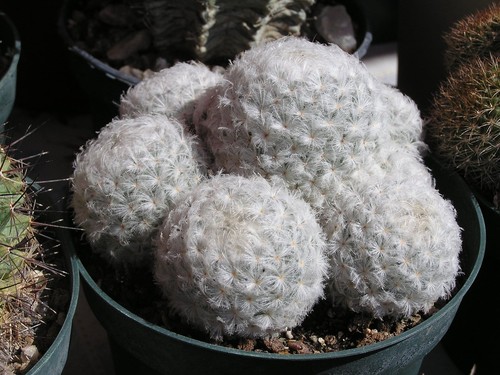
Grow Mammillaria plumosa, a cushion-forming cactus cloaked in soft white feathery spines, with bright light and a careful dry-side watering routine.
Feather Cactus Identification Guide
Identify the Feather Cactus (Mammillaria plumosa) by its soft, feathery white spines that completely cover its clustering green stems.