
Fennel Identification Guide
Recognize fennel by its tall feathery thread-like foliage, glossy ridged stems, large yellow flower umbels, and strong anise-licorice scent. Includes how to separate it from dill and hemlock.
Read the full Fennel encyclopedia entry →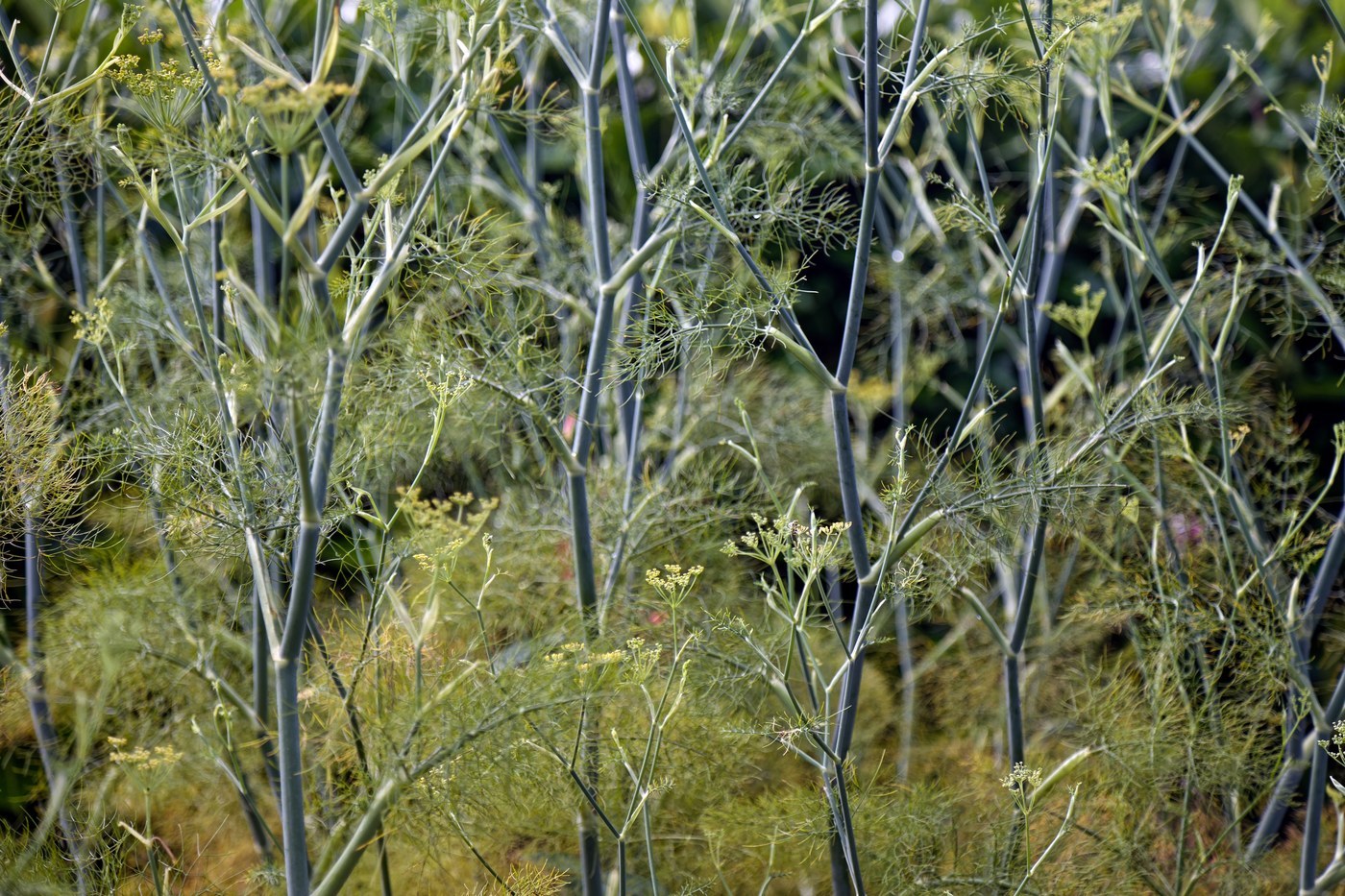
Key Identifying Features
Fennel (Foeniculum vulgare) is a tall aromatic perennial in the carrot family (Apiaceae). It is recognized by its finely divided, thread-like feathery foliage, glossy, ridged, often bluish stems, large flat yellow flower umbels, and an unmistakable sweet anise/licorice aroma throughout the plant. It grows 1-2.5 m tall.
Leaves & Stems
- Leaves are finely cut into soft, hair-like thread segments (3-4 times pinnate), very feathery.
- Foliage is bright to blue-green, and leaf bases form sheaths that clasp and wrap the stem.
- Stems are erect, solid-to-finely-hollow, glossy, ridged, and often glaucous (bluish), branching above.
- Florence fennel forms a swollen white bulb-like base of overlapping leaf stalks.
- Every part smells strongly of licorice/anise when crushed.
Flowers & Fruit
- Flowers form large, flat-topped compound umbels 5-15 cm across.
- Tiny bright yellow flowers without showy outer rays.
- Fruits are oblong ridged seeds (4-10 mm), greenish to brown, strongly anise-scented.
How to Tell It Apart from Look-Alikes
- Dill (Anethum graveolens) looks similar but is an annual with a single main stem and a grassy-caraway (not licorice) scent; fennel is a perennial smelling of anise.
- Poison hemlock (Conium maculatum) has finely cut leaves but purple-blotched stems, white flowers, and a foul musty smell — fennel has plain stems, yellow flowers, and a sweet licorice scent.
- Wild carrot has white flowers and hairy stems.
- The anise/licorice aroma plus yellow umbels and clasping sheaths confirms fennel.
Where You'll Find It
Native to the Mediterranean, fennel is grown in herb and ornamental gardens and has naturalized widely on roadsides, coastal slopes, and waste ground in warm climates, sometimes becoming weedy. It prefers full sun and well-drained soil.
Quick ID Checklist
- Feathery thread-like foliage with clasping sheaths
- Glossy ridged, often bluish stems
- Yellow flowers in large flat umbels
- Strong anise/licorice scent throughout
- Perennial; no purple stem spots (rules out hemlock)
Frequently asked questions
How do I tell fennel from dill?
Both have feathery leaves and yellow umbels, but fennel is a perennial that smells strongly of licorice and has clasping leaf sheaths, while dill is an annual with a grassy-caraway scent and a single hollow stem.
How is fennel different from hemlock?
Both have finely cut foliage, but hemlock has purple-spotted stems, white flowers, and a musty smell, whereas fennel has plain glossy stems, yellow flowers, and a sweet anise aroma.
Why does fennel smell like licorice?
All parts of fennel contain anethole, the same aromatic compound responsible for the sweet anise or licorice fragrance, which is a key way to confirm its identity.
What is the bulb at the base of some fennel plants?
That swollen white base is found in Florence fennel, formed by tightly overlapping leaf stalks. Wild and herb fennel typically lack this enlarged bulb.