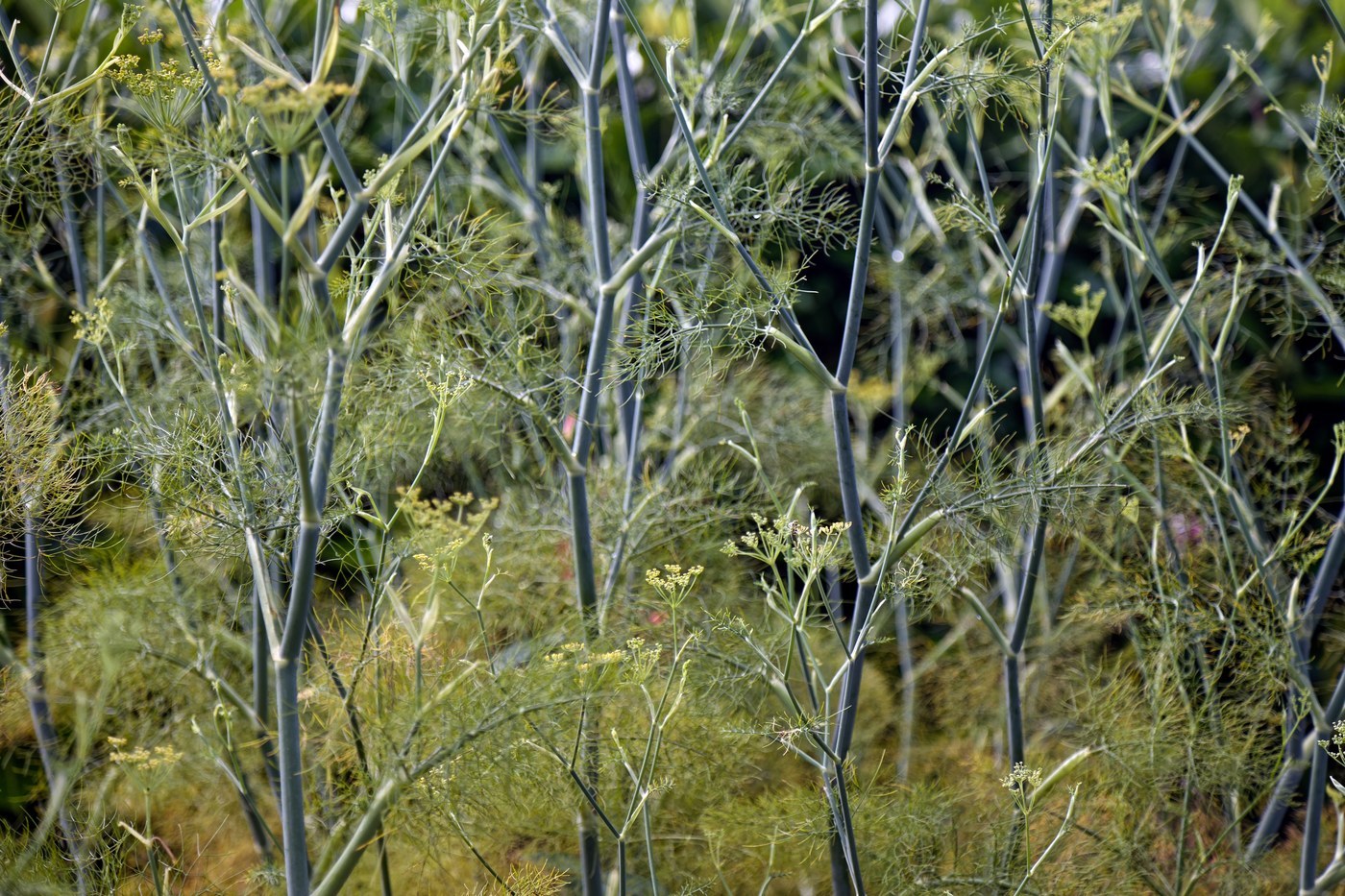
Fennel
Foeniculum vulgare
Fennel is an aromatic, feathery herb grown in gardens for its finely divided foliage and airy yellow flower heads; the Florence type forms a swollen bulb at the base of the leaves.
- Light
- Full sun
- Water
- Moderate; keep evenly moist
- Difficulty
- Easy
Got a plant like this?
Identify any plant from a photo, free.
Overview
Fennel is an aromatic perennial herb in the carrot family, grown in gardens for its feathery foliage and, in the Florence type, a swollen leaf-base bulb. It has a distinctive anise-like aroma.
Tall and graceful, common fennel sends up airy yellow flower umbels that attract many beneficial insects. The bronze-leaved ornamental form is also popular in borders.
Fennel has been cultivated since antiquity and now grows across temperate and Mediterranean regions worldwide.
How to identify it
Fennel is recognized by its feathery foliage, yellow flowers and anise scent.
- Leaves: Very finely divided, soft, feathery and thread-like, bright green (or bronze in ornamental forms)
- Stems: Upright, hollow, ridged, blue-green and glossy
- Flowers: Tiny yellow blooms in large flat-topped umbels
- Seeds: Ribbed, oval, greenish-brown, strongly aromatic
- Bulb: In Florence fennel, the overlapping leaf bases swell into a white bulb at ground level
- Height: Common fennel reaches 1.5-2 m (5-7 ft)
Care & growing
Fennel is easy in sun but does not like to be transplanted.
- Light: Full sun
- Water: Keep evenly moist, especially Florence fennel, which bolts and splits if stressed
- Soil: Fertile, well-drained soil
- Temperature: Prefers warm conditions; common fennel is hardy, Florence fennel is grown as a cool-season annual
- Feeding: Moderate; rich soil benefits bulbing types
- Propagation: Sow seed directly, as fennel dislikes root disturbance. Note keep fennel away from dill, as they can cross-pollinate.
Habitat & origin
Fennel is native to the Mediterranean region and has naturalized widely across temperate parts of the world, including North America and Australia, where it can become invasive along roadsides and in disturbed ground.
It is cultivated globally in herb and vegetable gardens. It thrives especially in warm, sunny Mediterranean-style climates.
Frequently asked questions
What is the difference between herb fennel and Florence fennel?
Herb (common) fennel does not form a bulb, while Florence fennel (finocchio) is bred for a swollen leaf base that develops into a bulb at ground level.
Why is my Florence fennel not forming a bulb?
Bulbing fennel bolts and fails to swell if stressed by heat, drought or transplant shock. Keep it consistently watered, grow it in cool conditions, and sow seed directly.
Can I grow fennel near other herbs?
Keep it away from dill, since the two can cross-pollinate. Fennel is also said to inhibit some neighboring plants, so many gardeners give it its own space.
Is fennel the same as anise?
No. Both are in the carrot family and share an anise-like aroma, but anise is a different plant (Pimpinella anisum).
Fennel guides
In-depth guides for identifying, growing, and caring for Fennel.
How to Care for Fennel
Growing guide for fennel (Foeniculum vulgare), a tall, feathery, sun-loving aromatic with lacy foliage and golden umbel flowers.
Fennel Identification Guide
Recognize fennel by its tall feathery thread-like foliage, glossy ridged stems, large yellow flower umbels, and strong anise-licorice scent. Includes how to separate it from dill and hemlock.