
Fenugreek Identification Guide
Identify fenugreek by its clover-like three-part leaves, pale yellowish-white pea flowers, long slender beaked seed pods, and the characteristic maple-curry aroma.
Read the full Fenugreek encyclopedia entry →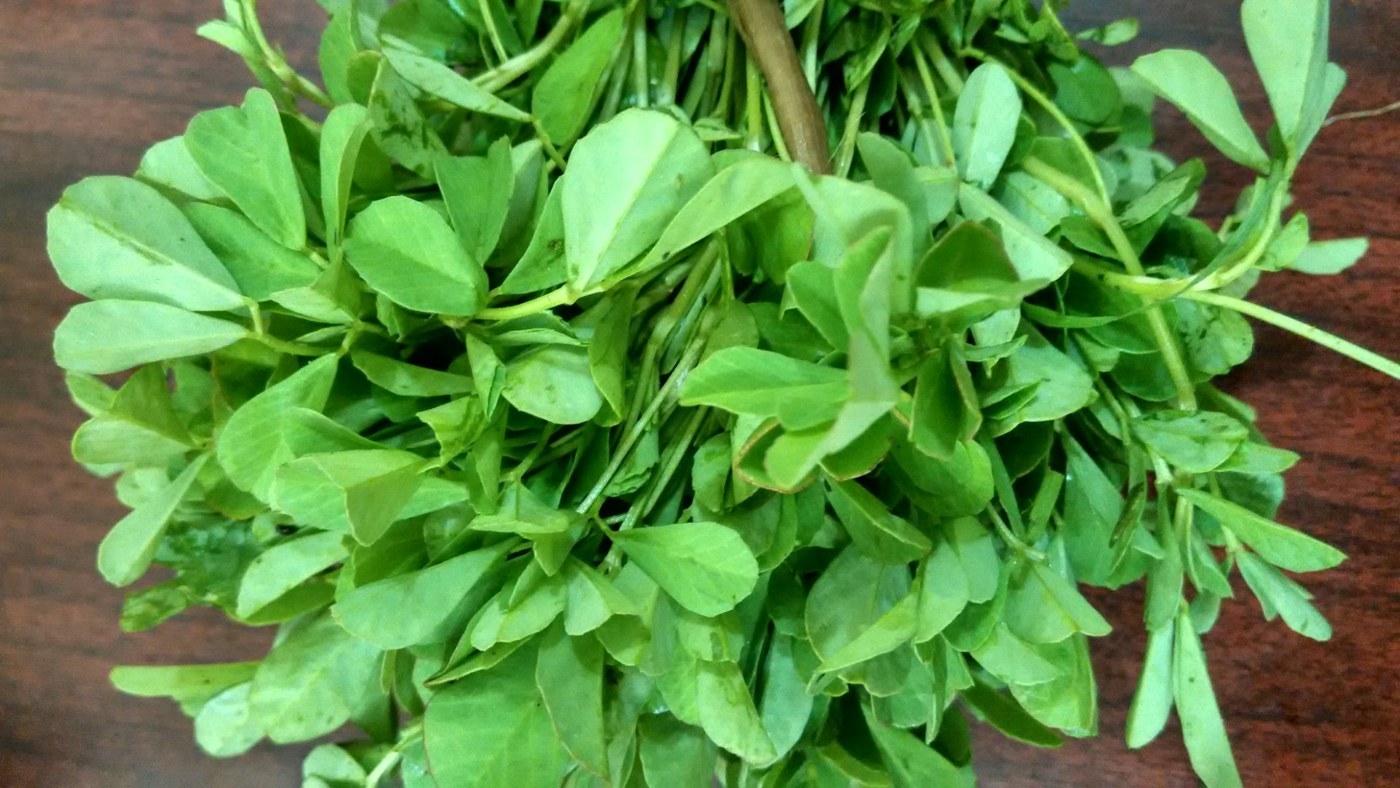
Key Identifying Features
Fenugreek (Trigonella foenum-graecum) is an annual herb in the pea/legume family (Fabaceae). It is identified by its clover-like (trifoliate) leaves of three leaflets, small pale yellowish-white pea-type flowers, and long, slender, curved seed pods with a distinctive narrow beak, each holding the hard, angular yellow-brown seeds with their famous maple-syrup / curry aroma.
- Erect, somewhat sparse plant 30–60 cm (1–2 ft) tall
- Three-part (trifoliate) clover-like leaves with toothed leaflets
- Small pale yellow-white pea flowers in leaf axils
- Long, slender, beaked seed pods
- Strong sweet maple/curry smell
Leaves & Stems
Leaves are compound with three obovate (spoon-shaped) leaflets, each 1–3 cm long with toothed margins toward the tip, resembling clover or medick. They are alternate along the erect, branching, somewhat soft green stems. Crushed foliage gives off a distinctive aroma. The plant has an open, upright, slightly leggy habit.
Flowers & Fruit
Flowers are typical pea-family blooms (papilionaceous): small, about 1–1.5 cm, pale yellowish-white (sometimes with a faint lilac base), borne singly or in pairs in the leaf axils. The fruit is highly diagnostic: a long (6–10 cm), slender, slightly curved (sickle-shaped) pod ending in a distinct long narrow beak, containing 10–20 hard, oblong, yellow-brown seeds with a deep diagonal groove.
How to Tell It Apart from Look-Alikes
- Clovers (Trifolium) and medicks (Medicago): also trifoliate, but clovers have rounded flower heads and small coiled or rounded pods, not the long beaked pods of fenugreek.
- Alfalfa (Medicago sativa): purple flowers and coiled pods.
- Sweet clover (Melilotus): taller flower spikes and different pods.
The long, narrow, beaked pods plus pale pea flowers and the maple-curry scent uniquely confirm fenugreek.
Where You'll Find It
Native to the eastern Mediterranean and western Asia, fenugreek is cultivated worldwide (especially India) as a field and fodder crop. It grows in full sun and well-drained soil, is fast-growing from seed, and as a legume fixes nitrogen, making it a common green-manure and field crop in warm, dry climates.
Quick ID Checklist
- Clover-like three-leaflet (trifoliate) leaves, toothed
- Pale yellow-white pea flowers in leaf axils
- Long, slender, curved, beaked seed pods
- Hard angular yellow-brown grooved seeds
- Sweet maple-syrup / curry aroma
A clover-leaved legume with pale pea flowers, long beaked pods, and a sweet maple-curry smell is fenugreek.
Frequently asked questions
How can I distinguish fenugreek from clover?
Both have trifoliate (three-leaflet) leaves, but fenugreek bears small pale yellow-white pea flowers in the leaf axils and produces long, slender, beaked seed pods, whereas clovers have rounded flower heads and small, rounded or coiled pods.
What does fenugreek smell like?
The crushed leaves and especially the seeds have a distinctive sweet maple-syrup and curry-like aroma, which is one of the most reliable identification cues.
What do the seed pods look like?
Long (6–10 cm), slender, slightly curved (sickle-shaped) pods that taper into a distinctive long, narrow beak, each holding 10–20 hard, grooved, yellow-brown seeds.
What plant family is fenugreek in?
It belongs to the pea/legume family (Fabaceae), which explains its pea-type flowers, beaked pods, and its nitrogen-fixing ability as a green-manure crop.