
How to Care for Fig Tree
Grow an easy, ornamental fig tree with full sun, deep occasional watering, and simple pruning for handsome lobed foliage.
Read the full Fig Tree encyclopedia entry →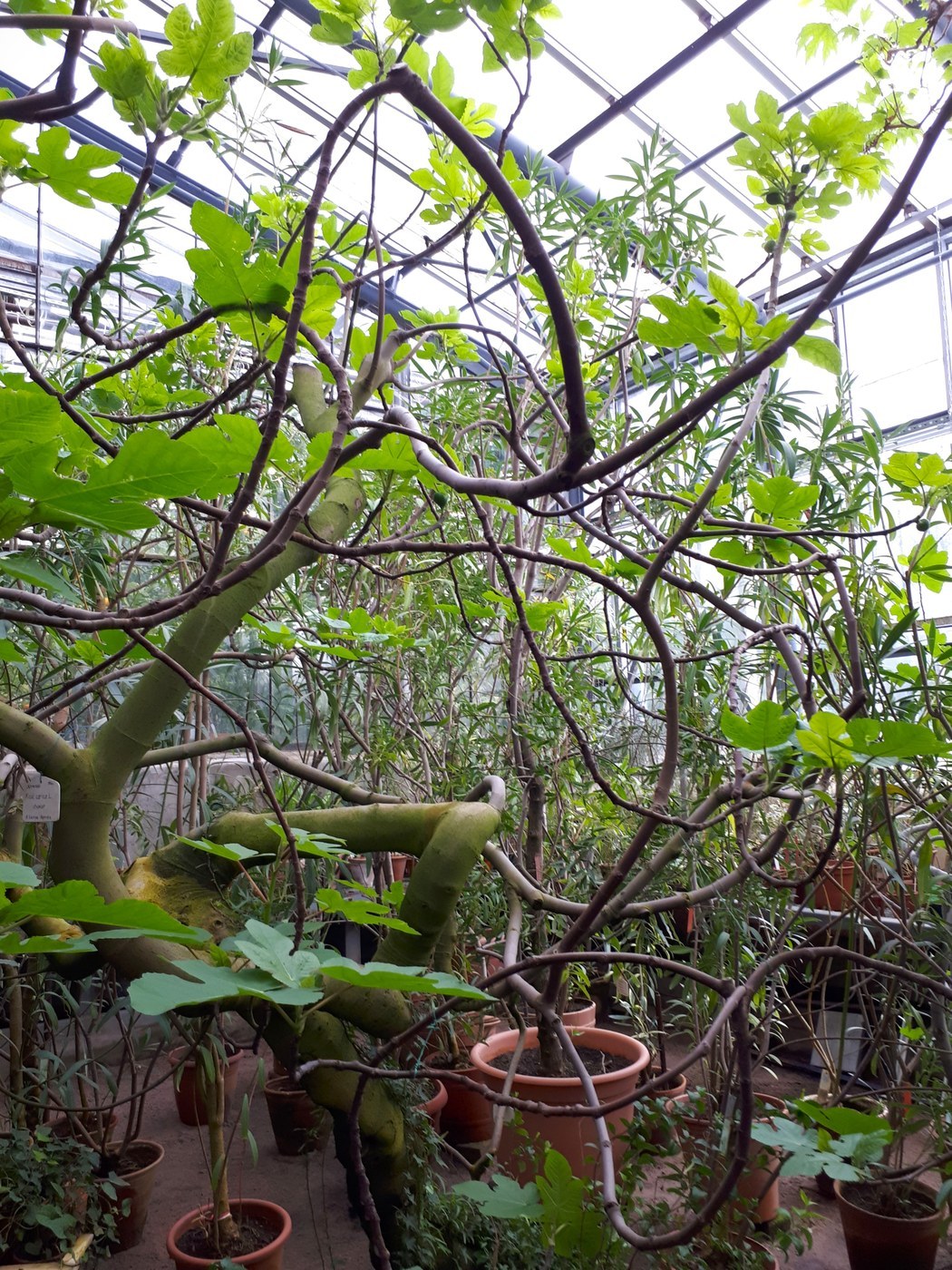
The common fig (Ficus carica) is a deciduous Mediterranean tree grown as an ornamental for its bold, deeply lobed leaves, sculptural branching, and handsome silvery bark. It is an easy, forgiving plant that adapts readily to garden beds and large containers, making it a favorite for warm-climate and patio gardeners.
Light
Figs demand full sun, ideally 6 to 8 hours or more of direct light each day. Abundant sun drives strong growth and keeps the canopy dense and well-formed. In shade the tree stretches, thins out, and grows weakly. Against a sunny, sheltered wall it benefits from reflected warmth, which suits its Mediterranean nature especially well in cooler regions.
Water
Water regularly during the summer growing season, then let the soil dry somewhat between waterings. Figs are quite drought tolerant once established but grow and look best with deep, consistent moisture during active growth. Deep, infrequent soaks encourage strong roots better than frequent shallow watering. Container figs dry out faster and need closer attention. Ease off in autumn and keep roots only barely moist through dormancy.
Soil & Potting
Figs are adaptable but prefer a well-drained, loamy soil and dislike constantly soggy ground. They tolerate a range of soil types as long as drainage is good. In containers, use a rich, free-draining potting mix in a sturdy large pot; figs actually flower and set well when their roots are somewhat confined, which makes them excellent pot subjects. Always provide generous drainage holes.
Humidity & Temperature
As a Mediterranean species, the fig loves heat and tolerates dry air with ease. It is deciduous and drops its leaves in winter, with hardiness varying by cultivar; many take light frosts once established but tender new growth and young trees can be damaged by hard freezes. In cold regions, grow figs in containers to move under cover, or wrap and mulch garden trees for winter protection.
Feeding
Figs are moderate feeders. A balanced fertilizer or compost in spring supports healthy growth, but avoid heavy nitrogen, which pushes excessive leafy growth. Container figs, with limited soil, benefit from regular light feeding through the growing season. Stop feeding in late summer so the tree can harden off before dormancy rather than putting out frost-tender new shoots.
Propagation
Figs root very easily from hardwood cuttings taken during dormancy. Take pencil-thick lengths of the previous season's wood, insert them into a gritty, well-draining medium, and keep them lightly moist; many will root readily. Softwood cuttings in summer and ground-layering of low branches also work well. This ease of propagation is part of why figs are such approachable trees.
Repotting / Pruning
Prune while the tree is dormant in late winter to shape the canopy, remove crossing or dead wood, and control size; figs tolerate hard pruning and respond with vigorous new growth. Container figs should be repotted every couple of years into fresh mix, or root-pruned and returned to the same pot to keep them manageable. Refresh the topdressing of container specimens annually.
Common Problems & Pests
Figs are generally trouble-free but can face a few issues. Root rot follows waterlogged soil, so drainage is essential. In some regions rust and fungal leaf spots cause yellowing and premature leaf drop; improve airflow and avoid overhead watering. Scale insects and spider mites may appear, particularly on stressed or indoor plants. Leaf yellowing often traces to overwatering or nutrient shortfalls in pots.
Seasonal Care Tips
In spring, prune before growth begins, feed, and refresh container soil. Through summer, water deeply and regularly and enjoy the lush foliage. In autumn, reduce watering and stop feeding so the tree hardens off, and expect it to drop its leaves. In winter, protect tender and container-grown trees from hard frost by moving them under cover or wrapping and mulching garden specimens.
Frequently asked questions
When should I prune my fig tree?
Prune during dormancy in late winter, before new growth starts. This is when you can best see the structure to remove dead, crossing, or crowded branches and shape the canopy. Figs tolerate hard pruning and respond with strong new growth in spring.
Can I grow a fig tree in a pot?
Yes, figs are excellent container plants and often grow well with slightly confined roots. Use a large, sturdy pot with rich, free-draining mix and good drainage holes, place it in full sun, water regularly in summer, and repot or root-prune every couple of years.
How much water does a fig tree need?
Water regularly and deeply through the summer growing season, letting the soil dry somewhat between waterings. Established figs are drought tolerant but grow best with consistent moisture. Container figs dry faster and need more frequent attention; ease off in autumn and winter.
How do I protect a fig tree over winter?
Figs are deciduous and drop their leaves, and hardiness varies by cultivar. In cold regions, grow figs in containers you can move under cover, or wrap the trunk and heavily mulch the roots of garden trees to shield tender wood from hard freezes.