Fig Tree
Ficus carica
The common fig is a deciduous Mediterranean tree grown for its large lobed leaves and distinctive fruiting form. Easy to grow and forgiving, it is one of the oldest cultivated trees and thrives in warm gardens and containers.
- Light
- Full sun
- Water
- Regular in summer; let soil dry between waterings
- Difficulty
- Easy
Got a plant like this?
Identify any plant from a photo, free.
Overview
The common fig is a deciduous tree or large shrub in the mulberry family, native to the Mediterranean and western Asia. It was one of the first plants ever cultivated, with evidence of figs grown by humans more than 11,000 years ago.
Figs are notable for their unusual fruit, which is botanically an inverted flower cluster (a syconium) — the "fruit" encloses hundreds of tiny flowers. Many cultivated varieties are self-fruitful and set fruit without pollination.
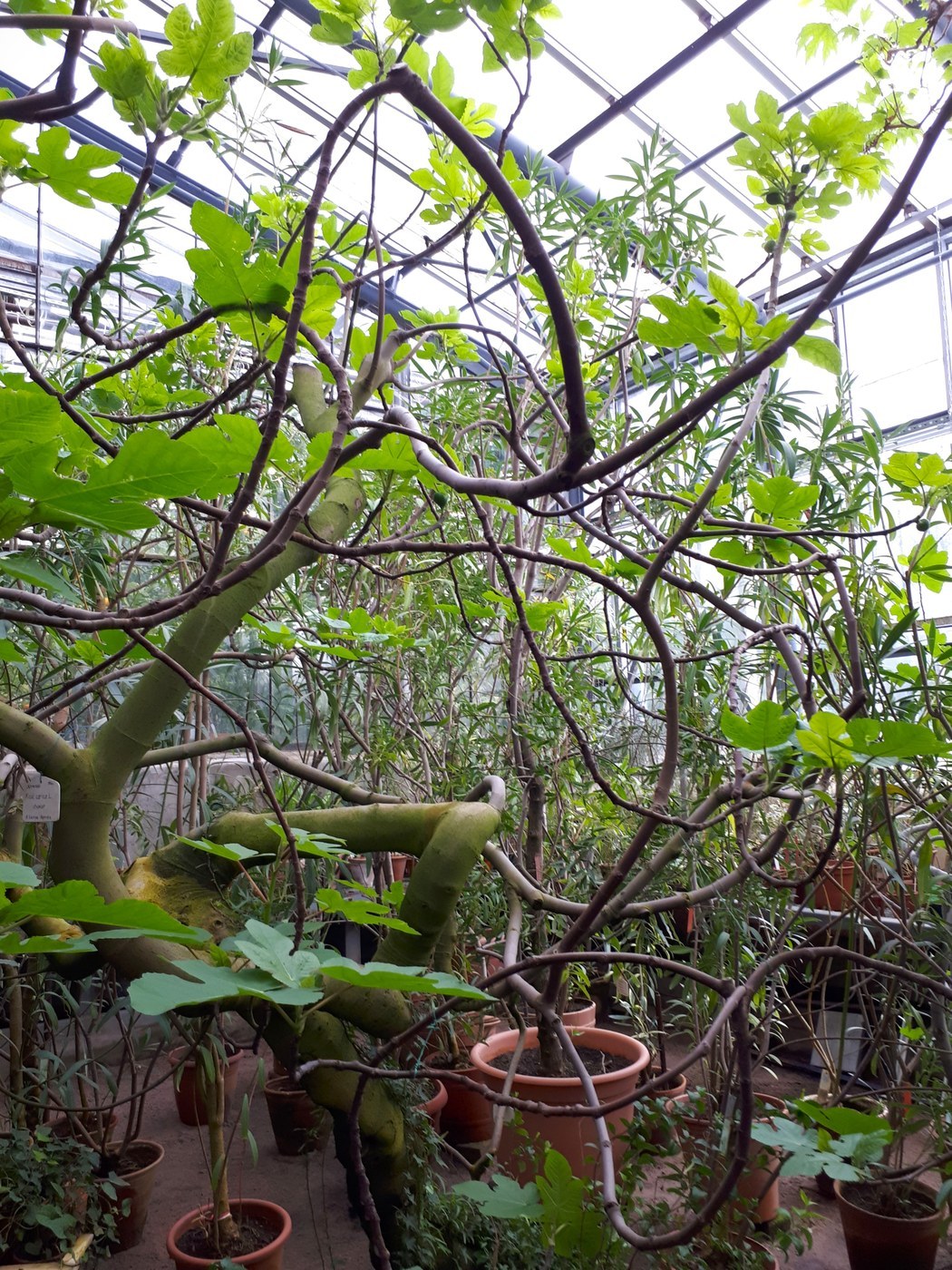
With its broad, deeply lobed leaves, smooth grey bark and spreading habit, the fig is also an attractive ornamental and adapts well to containers and wall-trained forms in cooler climates.
How to identify it
- Leaves: Large, thick, deeply lobed (usually 3–5 lobes), rough-textured and bright green, releasing milky sap when cut
- Bark: Smooth and silvery-grey
- Fruit: Pear-shaped syconium, green ripening to purple, brown or yellow depending on variety
- Flowers: Hidden inside the fruit; not visible externally
- Sap: White and latex-like when stems are cut
- Size: Typically 3–10 m (10–30 ft); often kept smaller by pruning
- Habit: Spreading, multi-stemmed, deciduous
Care & growing
Light: Full sun for the strongest growth and fruit set.
Water: Water regularly during the growing season, letting the soil dry somewhat between waterings. Reduce in winter. Inconsistent watering can cause fruit to split or drop.
Soil: Well-draining, fertile soil; tolerates a range of soils including alkaline. Restricting roots (in a pot or a planting pit) can encourage fruiting.
Temperature: Hardy to roughly -10 to -15 °C (5–15 °F) depending on variety; protect or mulch in cold winters. Many figs die back and resprout after frost.
Feeding: Light feeding in spring; avoid excess nitrogen, which promotes leaves over fruit.
Propagation: Very easy from hardwood or softwood cuttings; also from suckers and air-layering.
Habitat & origin
Ficus carica is native to the Mediterranean region and western Asia, from the Canary Islands through to Afghanistan. It naturally grows in dry, sunny, rocky habitats.
Figs are now cultivated across warm-temperate and subtropical regions worldwide, including the Mediterranean, the Middle East, California and Australia. In cooler climates they are grown against sunny walls, in greenhouses or in containers that can be moved under cover in winter.
Frequently asked questions
Do fig trees need a pollinator?
Most common garden figs (the 'common' type, such as 'Brown Turkey') are self-fruitful and set fruit without pollination. Some other fig types require a specific fig wasp, but these are rarely grown in home gardens.
Why are my figs not ripening?
Usually insufficient heat or sunlight, a too-short growing season, or over-fertilizing. Figs need a long, warm, sunny season to mature their fruit fully.
Can I grow a fig tree in a pot?
Yes — figs grow very well in containers, and restricting the roots often encourages fruiting. Potted figs are also easy to move under cover for winter protection in cold climates.
How do I get two crops of figs?
In warm climates many figs produce an early 'breba' crop on last year's wood and a main crop on new growth. Avoid heavy spring pruning if you want to keep the breba crop.
Fig Tree guides
In-depth guides for identifying, growing, and caring for Fig Tree.
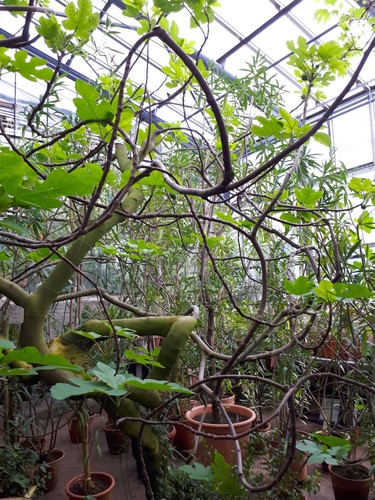
How to Care for Fig Tree
Grow an easy, ornamental fig tree with full sun, deep occasional watering, and simple pruning for handsome lobed foliage.
Fig Tree Identification Guide
Recognize the common fig by its large lobed leaves, milky sap, smooth grey bark, and unique syconium fruit. Includes how to distinguish it from castor bean and other big-leaved look-alikes.